A Rising Tide, A New Blueprint: Rethinking How We Build on the Seacoast [Podcast]
Show Notes
You've probably heard the phrase “a rising tide lifts all ships”, but does this saying still hold true when rising water levels are threatening coastal buildings? Can flooding force us to rethink how we build and connect with the natural world around us?
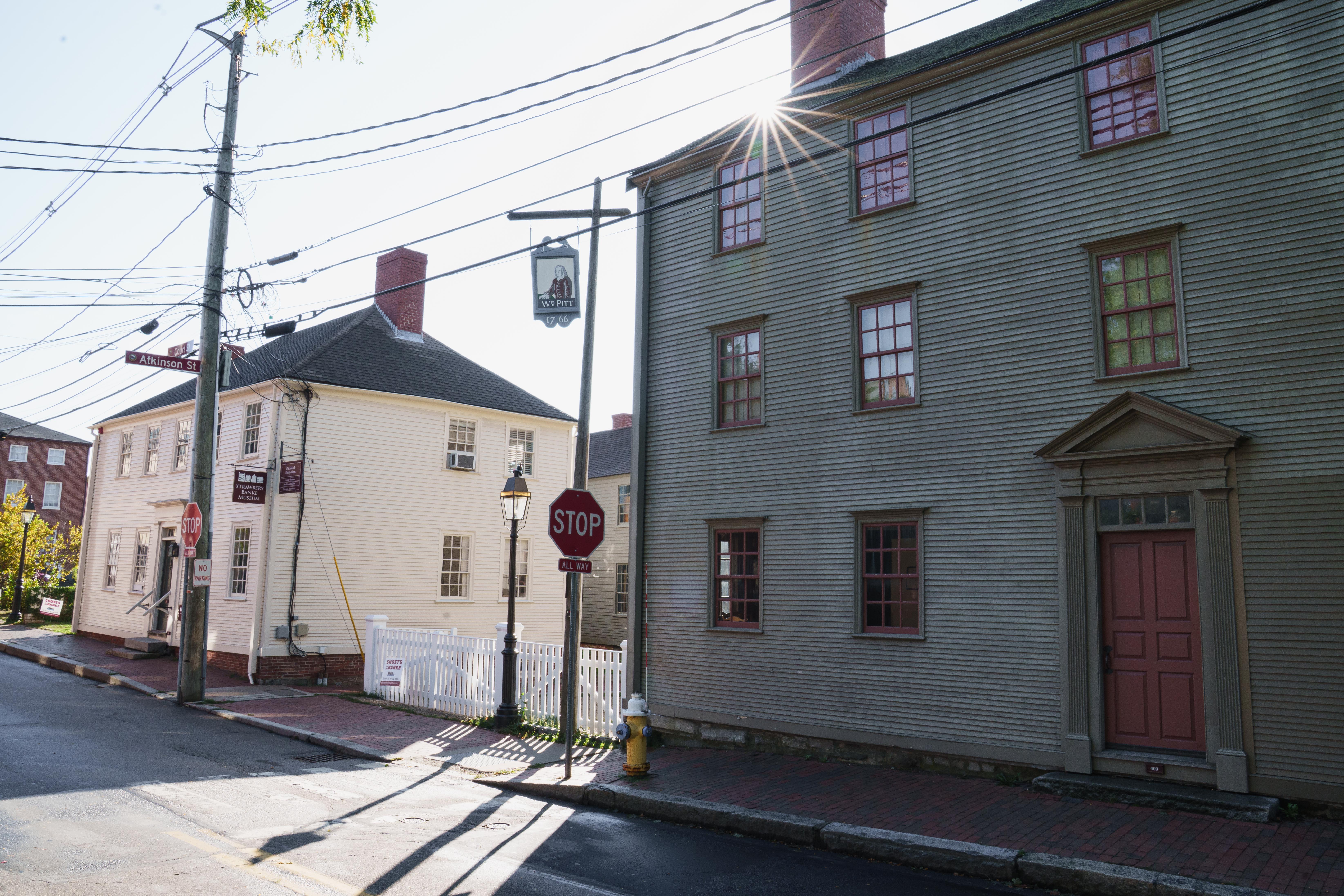
Uncover lessons from the past in part-two of our podcast series discussing Strawbery Banke Museum’s Sea Level Rise Initiative. Previously, we heard about the unique history of Portsmouth and how coastal flooding threatens to wash away the neighborhood’s past. Today, we explore what it takes to protect a port city’s history, while writing the next chapter.
Up first, John Hyde, Director of Sustainability at Chapman Construction and Design, discusses the five lenses through which construction projects can look at sustainability. John also shares his ‘silver bullet’ solution to reducing carbon emissions while meeting the growing demand for development.
Next, Brian Murphy, Architect and Design Principal at Placework, discusses his idea of the farm-forest-city. Brian's hope for the future is simple, that the built environment connects us to nature rather than isolates us from it.
Strawbery Banke Museum in Portsmouth, New Hampshire, is a historic site facing flood risks from rising seas, coastal storms and changing rainfall. Join host Brian Yurasits as he tries to envision what the Seacoast could look like 50 years into the future, if we get it right.
Full episode transcript is available below.
Guest Speakers
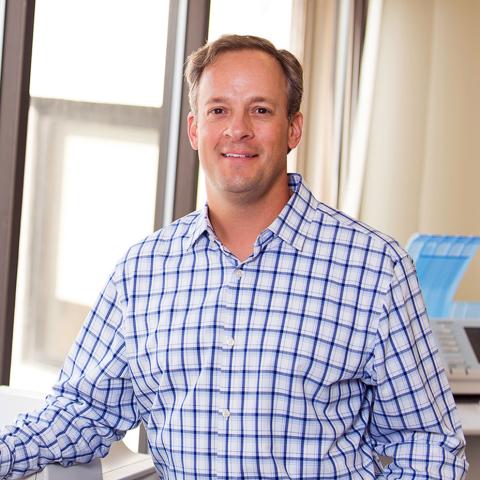
John Hyde
Director of Sustainability, Chapman Construction and Design

Brian Murphy
Architect and Design Principal, Placework
Meet Your Host
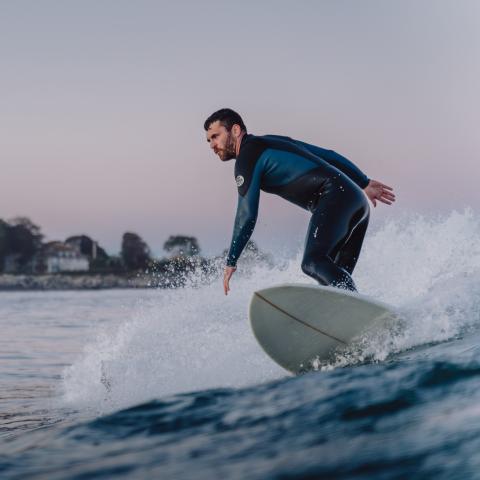
Brian Yurasits,
Host & Producer
Science Communication Specialist,
New Hampshire Sea Grant
More Episodes?
We've got you covered! Time and Tide is available wherever you get your podcasts.
Episode Transcript
Brian Murphy: [00:00:00] I have this concept in my head of the farm-forest-city, and I don't ask AI this question because I don't care. I don't wanna see what AI has to say about this or how AI would interpret this. I try to imagine what it would look like if we lived closer to or even in among our food sources, if we lived in a more diverse ecosystem like a forest.
I think on a very practical level, those things would solve a lot of issues we have.
Brian Yurasits: Portsmouth is a fast-changing port city. People are moving here, housing prices are skyrocketing, and slowly but surely, flooding is becoming a more common part of our daily lives. On our last episode, we traveled to Strawbery Banke Museum to talk about the challenging balance of [00:01:00] preserving history while also adapting to a wetter future.
Today, an architect and contractor helping Strawbery Banke meet this moment share their perspectives on how we can build a better future for coastal New Hampshire. What does it take to be more sustainable when we design and build new homes and businesses? And if we get it right, what could that future look like here in the Granite State?
I'm your host, Brian Yurasits, and welcome to Time and Tide, the podcast from New Hampshire Sea Grant where we explore the science, stories, and people behind our changing coastlines. In act one, we speak with John Hyde, the director of sustainability at Chapman Construction and Design, who explains five ways that construction projects can limit their impact on the environment.
John also dives deeper into his work with Strawbery Banke, describing how exactly he was able to help this historic site deal with water, while at the same time limiting greenhouse gas emissions during construction. In act two, we get into that age-old saying, "A rising [00:02:00] tide lifts all ships," with Brian Murphy, architect and design principal at Placework.
In this case, that rising water is bringing people together to answer tough questions about flooding, and the power of partnerships comes into full display.
Swim along with us as we explore what the future of coastal New Hampshire could look like.
Some quick background on the different people involved with Strawbery Banke's sea level rise initiative. Strawbery Banke identified this existential threat of flooding to their historic sites. To help the museum solve this problem, Chapman Construction and Design, Placework, Horsley Witten Group, and Stimson Landscape Architects joined forces and came up with a plan.
John Hyde: So, John Hyde, I'm the director of sustainability at Chapman Construction.
We do work in Massachusetts, New Hampshire, a little bit of Rhode Island.
Brian Yurasits: [00:03:00] Do you have a particular bit of history in New Hampshire that you like or are fascinated by?
John Hyde: Portsmouth used to be called Strawbery Bank because like the wild strawberries that used to grow here. I didn't know that and so I thought that was kind of interesting.
You know, I didn't even know we're working at Strawbery Bank and I didn't realize that like that was its name before Portsmouth.
Brian Yurasits: So John, how long have you been working in sustainability, and what does sustainability look like in construction operations?
John Hyde: So I was in construction operations for like 20 years, and then I shifted over into sustainability full time, which is somewhat unique for a company of our size.
It's been a great opportunity to try to help our project management team and our partners, Brian at Placework and Rodney at Strawbery Bank, to try to help them figure out how can we align construction operations with their mission, like what they want to do, like what's the purpose of the project and how can we infuse sustainability into the different things that we have control over?
And there's a lot of different ways that we can do that. It's like 38% of global emissions is actually attributed to buildings. Why are we building so much? Do we need to build this much? Can we build [00:04:00] less? Can we build differently? So each day is a good opportunity to try to figure out how can we impact our buildings and our sites and be more regenerative.
So that's kinda what I do every day is like looking at materials, talking about different ideas or what are the new materials in the markets. What are the different methods people are using to reduce their impact? Some of it is a little obscure, but it actually has like a huge impact. The industry's undergoing a huge shift right now and focusing on climate and resilience and, uh, in many ways, any innovation in construction has really been sustainability.
Reducing the amount of carbon in a building or using bio-based materials or healthier materials, you know, that's all innovating in the direction of sustainability for environmental and health benefits. So it's really a fun time to be looking at everything that we're doing. And then on top of that, trying to figure out, okay, how do we overcome the perception that building sustainably is more expensive?
So like oftentimes carbon and price are somewhat related. You know, the more energy intensive something is, burning more fossil fuels, more manufacturing, more shipping, all these different things costs money. So if you can reduce that by choosing, [00:05:00] you know, how can we get wood from the New Hampshire forest instead of like Europe, fewer emissions from trucking it, and wood is a great carbon storing material.
You know, trees pull carbon out of the atmosphere and we can store that carbon in a building.
Brian Yurasits: I heard you mention that there's certain things that are higher impact when it comes to sustainability in your field of construction. Is there anything in particular that's like a silver bullet in a way?
Something that people are really leaning into today?
John Hyde: I'm looking at sustainability basically through five lenses, and it's materials, carbon, job site wellness, you know, physical and mental wellness, water and then waste. So those are kinda the five lenses that we're looking at everything through. But to your point about the silver bullet, the silver bullet is reuse, building reuse.
Might sound weird coming from a construction company, but the silver bullet for climate change is actually reusing existing buildings and also salvaging and reusing existing materials, so circularity. If you think about thrifting, you know, somebody goes you know, store and they're like, "Oh, I like that shirt. I'll buy that shirt for $5", you know? It's great. They get a bargain. Shirt didn't go in a landfill. Person who [00:06:00] donated it has a little more room in their closet. I'm really focusing heavily on buildings the same way. It's like harvesting a building. We go into office buildings and they're like, "We wanna get rid of this. The colors don't match our color scheme." If you can imagine the carbon emissions that go up in the atmosphere from manufacturing that office furniture, it's already in the environment, right? We've already experienced the carbon emissions. So if we can avoid new carbon emissions by taking that furniture and finding a new home for it, you know, that's one way we can avoid carbon emissions for a new project.
We're trying to lean into that. Beyond the reuse, like concrete is like a huge one, and cement is really the big thing. So, 8% of global emissions results from the production of cement, so that's huge when you think about it. You know, there's concrete in everything. First question is, do we need concrete? So we look at do we need a 18-inch wall?
Can it be 12 inches? So it's like optimizing the design. And again, all these things have stacked benefits. It's like, if you reduce the amount of concrete, you reduce the amount of labor, the amount of material, the amount of emissions. It really makes sense. So we've been looking at concrete and trying to figure out how can we replace the cement in the concrete, and so [00:07:00] we've used some pretty cool products.
Pozzotive is a ground glass. If we can take a product like glass that is abundant, grind it up, and put it in concrete, then we're using that glass to replace cement, in some cases up to 50% of the cement, and the concrete performs just as well, if not better in New England.
Brian Yurasits: Part of sustainability is that it makes things cheaper, and it sounds like things are working their way out so that more sustainable construction practices can be cheaper.
John Hyde: There's also, like, the health impact. Taking highly processed materials and sticking them in your building, those materials off gas, and we know there's health risks to a lot of those. In terms of sustainability, we're looking at supply chains. Where is this material being manufactured? You know, what are the risks to the workers that are actually manufacturing this product?
Brian Yurasits: Have we always known about these five elements of sustainability in construction, and are there standards for this in your field? For example, I think something most people might be familiar with is the acronym LEED, L-E-E-D, which is a green building rating system that stands for Leadership in Energy and Environmental Design.
John Hyde: [00:08:00] Sustainability used to be focused primarily on, like, energy efficiency, like renewable energy, energy reduction. It wasn't so much on embodied carbon. And then back in the 2000s, LEED came out. United States Green Building Council had this program called... It was like a LEED certification that you can get for your buildings.
There used to be a lot of LEED projects that were happening in the area, but part of the goal of those programs is to, like, educate people on the right way to build and educate clients on what they want in their buildings and architects, how they wanna design. In some ways, designing and building a LEED building became, like, just standard practice, right?
Fast-forward a decade, then there's a certification called Passive House that came out. Effectively looked at passive heating and cooling first and human comfort and indoor air quality. So, I think of this analogy: if you're skiing in a fleece, right, you're gonna be freezing, right? If you're sitting there, sun's on you, no wind, you're okay.
Fleece is kinda like an insulation layer on a building. Yeah. And then if you put on a hard shell, skiing down the slope, all of a sudden I'm warm If it's open and unzipped, air's coming in through, then you're cold again. So that's kinda like the same theory [00:09:00] applies to like a building. You wanna insulate it and you wanna air seal it.
And when you do that, it's much more comfortable on the inside for the occupants, and you use far less energy to heat and cool the building. So that's the progression, there's LEED, and then there's Passive House. And so the way that relates to climate is if you have a building that's like a net zero energy, that's using very little electricity to heat and cool the building, you don't have any fossil fuels, you can put some solar panels on top and provide all the energy that you need to heat and cool and condition the building.
So now that's cool. Now we have a building that is essentially for its lifetime not gonna contribute to climate change. And so we figured out how to do that, and it's like, okay, box checked.
Brian Yurasits: Kinda moving the baseline it sounds like.
John Hyde: Yeah. And so that brings us to where we are now. If the only emissions that are related to a building result from the materials and the way that we install them, let's start looking at that and try to figure out how can we reduce those emissions.
Brian Yurasits: Talking about the issue of a lack of housing supply, it seems like development is just a central question and concern in New England, but like especially like coastal New Hampshire, kinda where we are. I'm curious where you [00:10:00] think sustainability fits in with the current demand for development.
John Hyde: As far as building affordable housing in a sustainable way, there's no cost premium for it. You know, that's been proven over and over. There's case studies in many different states, and it's like a necessity. It's like we can't continue to build energy hog buildings. Affordable housing that is sustainable should not cost any more money.
That's on the construction side. And if you look at the operational side, it's much cheaper. If you're using 20% of the energy, obviously you're gonna be saving 80% of your money. If you can build a tight building and electrify it, then you can use the same system to heat and cool your building. You don't need two systems, you just need one.
So you need one system to maintain. The wiring, the panels, the breakers, the service size, that all gets smaller because you've added more insulation, and the people inside are more comfortable.
Brian Yurasits: I've also heard people talk about how it's an opportunity in ways, like if we are developing in New Hampshire to meet these needs of housing and business space and whatnot, that's a chance to like start fresh in a way that is sustainable, right?
John Hyde: Yeah. So when [00:11:00] like building codes evolve and when architects start thinking about these things, what that does is that sends a signal to manufacturers that, okay, here's a real demand, so we're gonna start producing more of these types of materials and fewer of the ones that aren't being requested as much.
And then the workforce needs to be trained on how to install these things. As people get more comfortable with that, there's definitely a lot more sustainable housing coming on the market, which is encouraging.
Brian Yurasits: I'm curious if you could tell me your story of how this project at Strawbery Banke came to be. How did this team form, and what was your first thought about this project?
John Hyde: I was with Brian Murphy. We were actually up in Vermont at the Bio-Based Materials Collective Summit, and we were touring farms. Take agriculture byproducts, put them in buildings. And so I was sitting with Brian on a little school bus as we're driving from the farm to see a straw bale house.
So that was, like, when we first learned about it. Here's the issues that they're facing. Storm water, sea level rise and different tides. We often meet as a group to decide which projects to pursue. Here's an organization that's trying to do the right thing and try to maintain this historic [00:12:00] character of Strawbery Bank, while also there's an educational component, a communication component.
So it really checked a lot of the boxes. So there's not a big building component in here. It's all site work. What could we do as a contractor to help educate the public on what's happening, and also do our work without contributing to climate change? You know, which is the whole reason why we're here in the first place.
So it's kinda like flipping things around a little bit and be like, okay, if there wasn't climate change and sea level rise, they wouldn't be dealing with this issue. So we wanted to make sure that our impacts for construction weren't gonna contribute to future issues, you know? A lot of people try to hide construction from the public, and so we were thinking about, like, what are ways that we can, like, connect the dots for the people that are there to see these old buildings and structures, and then learn about the project.
Brian Yurasits: You mentioned site work. Could you describe where would the public see this work that you're doing to address flooding in Strawbery Bank?
John Hyde: They're gonna see it generally across the site. We're essentially managing the water. You know, we're getting more rain in a shorter period of time. And so the challenge is, if they happen to coincide with, like, a high [00:13:00] tide, groundwater is really close.
So if the ground's saturated and they get all this rain, where does the rain go until the tide goes out and the water has a chance to go somewhere? So basically we're gonna try to reuse the soils that are on site to redirect the water away from buildings. It's a real challenge. You can't go down. If you could go down, just dig a deep hole and have everything go into it, that'd be fine, but if you dug a deep hole, it'd be filled with water.
So it's trying to figure out ways, where could we temporarily store water? A place to store water could be, you know, below the soil. It could be a bunch of gravel that has big open voids. So, like, creating these, like, little dry wells essentially below the soil, or swales in, like, little bioretention basins.
So you create a swale, and you can put some native plantings in there. In an event where they get a lot of rain, you could direct the rain into those bioswales so that you could hold the water. The tide goes out, the water goes back into the ground. And you can avoid the flooding. They wanna maintain the historical grading and sort of scenery the way it looks.
But, we've gotta change some stuff because it needs to be able to adapt and be there for, you know, years to [00:14:00] come. So some of the areas are gonna be, "hard-scaped", which means putting down, you know, changing out some soil and putting in some pavers and things like that. Stuff that fits with the character of the site.
There's also the artifacts that are down below. We have restrictions when we're digging. There's an archeologist that's gonna monitor the digging. So yeah, so that's why it takes a whole team of people.
Brian Yurasits: Could you talk a little bit directly about the ways that you're reducing carbon emissions in the operations?
John Hyde: Wood's good, right? You know, we talked about wood. Use some local weather-resistant wood. You know, Rodney talked about the Eastern White Pine. You know, that's like local wood. That's what they would've used a few hundred years ago when they were building these places. So, let's use those wood products instead of steel.
That pavilion needs to sit on a foundation of some sort. And so does it need to be concrete? And it requires you to dig, so you have to have a piece of equipment running on diesel to dig. So could we potentially instead use like a helical pile, which is basically like a screw that you can screw into the ground, and it screws in to a certain resistance and basically resists sinking into the ground.
It's like a foundation. We talked about [00:15:00] pavers. You know, pavers are often made of concrete, and if you're making something out of concrete, it has cement in it. Okay, let's look for somebody that's using ground glass Pozzotive in their pavers. Is there something salvaged somewhere? Does somebody have a yard full of some pavers that were, like, sitting around that they didn't need? And maybe we can try to find some of those.
Brian Yurasits: And so these are all a bunch of different options, and it sounds like these are options that folks can maybe even use in their own life.
John Hyde: Absolutely, 100%. Two of the other big ones that we're doing, so we're in charge of the construction. And a site work project, a lot of your emissions come from burning fossil fuels from big, heavy equipment, right?
And running tools. Instead of using a big excavator that's running off of diesel, we can perhaps source biodiesel. Biofuels right now are available. You know, they do cost a little bit more money. Do we really need a huge excavator, or can we get away with smaller excavators, you know, perhaps one that's electric?
You know, a lot of these manufacturers like John Deere and Volvo are making equipment that's now electric. Could we source renewable energy from the grid and charge that equipment? And then also we're not producing local air pollution, so when you think about [00:16:00] a lot of heavy equipment, it runs, it really stinks.
It's also a lot quieter. You know, we have people walking around the site, you're not disturbing them. So our workers on site, their physical and mental health is something we're looking at. You know, why should they be sacrificing their health for the sake of an end user? So we're really looking hard trying to make sure that the workers are being protected as well.
So that's kinda the site work component where we can have a huge impact.
Brian Yurasits: Every decision that you make is under this lens of sustainability. You're not figuring this all out and then keeping those findings to yourself. It sounds like you're making it so folks don't have to reinvent the wheel every time they wanna do a project like this.
John Hyde: Construction industry historically has kept everything tight to the vest, you know? There's like a strategic advantage to the way that your means and methods, the way you bid a project, you approach or schedule a project. So there's a lot of different levers that you pull, and you wanna keep that sort of secret sauce to yourselves.
But it's been refreshing that sustainability seems to be very much the opposite of that. I'm in a few groups of people, sustainability leaders from across the country, and we meet on a regular basis and just share [00:17:00] ideas. New England and the Pacific Northwest and California, and actually Denver in the Colorado area are really, like, leading the charge. So, we're kind of on the cutting edge up here in New England.
Brian Yurasits: How do you adapt a historic site to future changes? It's like these two goals that are butting heads. I'm curious how you go about answering that question in your work.
John Hyde: There needs to be a real honest evaluation of the project. Maintaining the historical character is one thing, but if the building's gone 'cause it gets, like, swept out to sea in 20 years, then there's nothing.
So I guess you have to try to think of what's the story that you wanna tell, and that is what I take my hat off to Strawbery Banke in embracing it. So then that becomes a part of history. That's what we had to do in order to preserve these buildings was, you know, the site's gone, but the building's here, and now we have this lesson of, like, you know, what we should not be doing and here's why we shouldn't be doing it.
In reality, if you want to protect the history of the site, you gotta make sure the building's gonna be there and people have a place to go visit to learn about it. You know, you don't want them to be learning about it on the [00:18:00] internet.
Brian Yurasits: Having spent all this time working with Strawbery Banke, is there anything that you have learned from the history?
Because I know that's one of the important things of history is that we're learning from the lessons of the past.
John Hyde: They weren't sourcing materials from Asia, although they did clear cut every tree and use it to make masts for British ships and stuff like that. But, that's a takeaway. Using local, regional materials, what do you have available?
Building things that are appropriately sized. Water has a way of finding its way back, and you gotta build with Mother Nature. You gotta include her in the conversation. She's a collaborator that you need to have as a part of the team.
Brian Yurasits: We're in a very fast-changing time. The Gulf of Maine is changing very quickly. Our climate is changing, and the built landscape is changing pretty quickly. In an ideal world, what do you hope that this New Hampshire coastal area looks like in 50 years, in 100 years? We're faced with an opportunity to build the future we want to see. What does that future look like to you?
John Hyde: I feel like we have all the tools and technology.
We [00:19:00] have everything we need. We just don't have that will. I feel like we need something to align communities to understand what's at risk, and that's that waterfront, right? You go to the coast, you look at the water, and it recharges you, and it lets you know ...that's like the beauty and the thing that we're trying to protect.
My hope and vision for the next 100 years, I feel like the coast is gonna change. It'll be different. What I hope that is preserved is people's passion. I feel like people are often in their cars, driving, you know, not looking out at the trees, and those are important elements for, like, humans as a species to, like, get out into nature.
And so in some ways, how do you get people to understand the importance of nature and the appreciation of nature and what we have and what we're at risk of losing? You know, we are losing, so what do we do to, like, sort of preserve what we do have? In some ways, I feel like we're making a lot of progress.
I'm really encouraged by the youth. They're really engaged, and they get it, and they're the ones that are coming up with some really innovative ideas, and I feel like, you know, if we're working collaboratively across generations, to me, that's encouraging.
Brian Yurasits: Yeah. [00:20:00] What I'm hearing from you is that the solutions are there. A lot of the knowledge and data is there. We just need the connection again to the outdoors, and we need more people to sit by a bench by the ocean and just take it all in and understand why it's so worth protecting. It's worth implementing these, like, solutions that we have at our fingertips.
John Hyde: You know, we spend a lot of time in buildings, so how can you, like, create buildings and spaces that connect people to nature?
Let's bring that in. That's biophilic design. Let's have some wood. Let's have some, like, windows behind you, like a big oak tree, you know, or a maple tree. What can we do to, like, connect people back to nature and make them appreciate what it is that we have or give them access to outside? You're not gonna fight for something if it doesn't hurt.
If, like, you don't feel, like, the sense of loss when you look out and, like, see things happening to places that you love and you know, that recharge you. If you don't feel a little bit of hurt and anger in the inside, I feel like that's kinda what drives you to fight for the stuff. And so I feel like the more we can expose people to those things and let them know what's happening, the more willing [00:21:00] they're able to jump on board and fight and advocate for the things that I think we need.
Brian Yurasits: I think that's a hopeful answer.
John Hyde: Sometimes I ride high, and sometimes I ride low. But in general, I'm, like, really encouraged by the fact that people are engaging, and it seems like there's a shift. I'm encouraged that people are looking beyond and looking out 5 or 10 years, starting to have a longer horizon.
Brian Yurasits: There's light on the horizon. But John, thanks for taking the time and sitting down and sharing your vision of what this future on the coast could look like.
John Hyde: Yeah. Thanks, Brian. Yeah, appreciate all you're doing, and thanks for having me in.
Brian Yurasits: Up next, Brian Murphy from Placework helps us design a future where we work together to solve some of the most pressing issues facing coastal communities in New Hampshire, from development and housing to flooding.
Don't float away
Brian Murphy: Hi, I'm Brian Murphy, and I'm an architect, and I work in a [00:22:00] firm in Portsmouth called Placework.
Brian Yurasits: What is your favorite piece of history around the Seacoast?
Brian Murphy: I don't know exactly how true it is, but many years ago, there was a group of people in town that wanted to honor a particular part of Portsmouth history, a very specific thing. And that was, there was this heavy metal singer back in the, like, '70s and '80s, his name was Ronnie James Dio. And, you know, he's pretty famous, and apparently he lived in Portsmouth for some period of time. Some people said that he was born in Portsmouth, and we wanna have a statue in Prescott Park to honor this rock star. But I did a little digging around, and I think the truth may be that he only lived there for a period of time when he was a kid.
But I think that's pretty cool anyway, and I wish they would've succeeded in getting that statue, 'cause that would've been super cool. But I also have a favorite natural place. I live pretty close to downtown Portsmouth, and my sort of exercise, I guess, I go for walks in the morning before I start my day, and I walk through the South Cemetery and down Little Harbor Road, and there's some [00:23:00] land down there that's in the stewardship of the Forest Society, Creek Farm, and I walk around the Little Harbor Loop Trail, and walk along Little Harbor itself.
And I've been spending years doing that, and it really, it grounds me, and I love it, and I'm so grateful that I have access to that.
Brian Yurasits: I kayak from Goat Island, back in Little Harbor. We just do that big loop around Leachs Island, and just in that one kayak, you're surrounded by history and, like, you have the Wentworth Hotel right there, and there's these structures even just in that little harbor.
There's, like, a tidal bath in a way. I don't know if you ever heard of this.
Brian Murphy: Oh, totally.
Brian Yurasits: And then you have the yellow museum right over there.
Brian Murphy: Mm-hmm. Wentworth Coolidge, yeah.
Brian Yurasits: Wentworth Coolidge, and so just kinda anywhere you go around Portsmouth and the Seacoast, it feels like you're confronted with some form of history.
What brought you to work around this issue of coastal resilience?
Brian Murphy: Our first connection with Strawbery Banke Museum was many years ago, probably around [00:24:00] 2011 or 2012. It was trying to recreate some historic arches or arch gateways that were based on historic precedent from around the area. It grew into a range of many projects over the years.
Everything from a seated arbor in the herb garden to a chicken coop. They wanted to recreate a chicken coop that they had historic photos of. On to the other end of the spectrum to renovating historic houses through the Heritage House Program there. And then currently we're working on this project for climate change resilience and we just feel so aligned to that work that we're so happy to be their architects.
Brian Yurasits: Those must be fun emails to receive. Can you restore this historic chicken coop for us?
Brian Murphy: Yeah. It's great, and it's with a straight face, too. You know, it's earnest, you know. You know, we're doing serious work here, so.
Brian Yurasits: And I wanna talk about your expertise for a second. When it comes to coastal resilience, is it a space that you're frequently working in?
Is it a space that a lot of people in architecture are thinking about today? I'm curious if you could talk a little bit about how coastal [00:25:00] resilience enters your life as an architect.
Brian Murphy: It's not a direct path right to coastal resilience. We don't identify that as our mission or the core of our work.
What we're in it for at our firm and the team that I work with, we want to engage people and communities with their environment, and that includes the natural environment. You know, we're all part of an ecosystem. It just so happens that humans do all this crazy stuff to make their habitat, i.e., building buildings and other kinds of infrastructure, and it's super impactful.
And that is why we are talking about coastal resilience in a way because of the way we've gone about shaping our environment. We believe that we could address that through a different way of thinking about how we shape the built environment, how we make the human habitat. Our perpetual question that we bring into every project is how can we rethink the way we do this so that we are more in harmony with living systems?
Brian Yurasits: What is in your tool belt as an architect that you can [00:26:00] go to, to better connect us to our natural spaces?
Brian Murphy: Sure, yeah. So green roofs are a great one, and also building envelopes. Inherently, we're gonna pump energy into the building, right? And if you construct the building envelope, the enclosure, the thing that separates the inside from the outside, we're effectively making two different climate zones, right?
So to take care in the technology for how that envelope is created, it can, you know, make us use less energy. There are other things about how we manage inputs and outputs. Everything we take in, water, energy, other materials, all the flows of those things through buildings, and then there's an output on the other end, and what happens to that?
So what are we taking in? What are we taking out? Where does it come from? Where does it go? Those are all the kind of technical things that are in the tool belt, as you say. We, in the construction world, we know enough, we don't know everything, but we know plenty to do better and bring the built environment in better relationship [00:27:00] with the natural environment.
We know plenty to do better. The obstacle is our own mindset and inertia in all the things we already do, and being able to transition away from those degenerative practices that degrade the ecosystem, that degrade where we live. That's where my interests lie. How can we engage people more deeply in the conversations, the early conversations about what we build, how we build, where we build, to lead to better outcomes?
Brian Yurasits: Looking back on the past in a way, how the Seacoast was built, was the natural environment, do you think, top of mind when folks were constructing buildings and designing our built landscape back during that time? And have we come a long way since then?
Brian Murphy: Things that were built in the 16, 17, 1800s, that roughly covers the time period when most things were built at Strawbery Banke Museum.
Which, by the way, is a 10-acre campus, and they have about 35 to 40 buildings, among other artifacts, you know, that humans have [00:28:00] made. When those things were constructed, my sense is the relationship with the natural world maybe was a more engaged and more aware relationship in that they were making simple shelter.
You know, it wasn't primitive, but it was a lot simpler. They used simple natural materials by and large, stone and wood. And then, you know, some more process-intensive like glass and plaster. Still pretty close to the natural materials that they accumulated to make these things. As opposed to how we go about it now, which is way more industrial-intensive.
It's deeper extraction minerals and petroleum. We still use natural fiber that grows on the surface of the earth, which is something that I think we need to keep moving more toward, and we are, and that is happening out there. So, I do believe, back to your question, yes, I think that there was a different kind of relationship with the natural environment.
Brian Yurasits: I often think about how technology tends to pull us away from our relationship to the natural [00:29:00] world in many ways, and it sounds like construction materials used today confirm these thoughts. But is the same to be said for how cities were designed? I think of the Strawbery Banke area and how it was filled in, how there was landfill that filled in the Puddle Dock area.
Do you think that if when Portsmouth was first constructed, if people had a better sense of urban planning and design and the way that water would flow, that they would have designed it differently? And can you talk a little bit about how those design decisions made in the past are affecting us today and your work at Strawbery Banke today?
Brian Murphy: As an urban area develops, there's a lot more hardscape. You know, roads and sidewalks and driveways and roofs, and all of that concentrates water. And so, that's inherent in any urban system, you're going to have a stormwater management system. I know that once upon a time, that would just outlet right [00:30:00] into the river or into one of the mill ponds, and that's where the water went. Where it would ultimately naturally go anyway, but it's concentrating it and directing it, which then means volume and velocity and force.
I think that changes landscapes, too. In this particular case, in this project that we're working on currently with the stormwater management, it in a way is trying to reconnect it with the natural flow of water, with the natural hydrology there. You have to kind of manage it in between the buildings and out of the walkways.
Ultimately, it's going to the lowest point in that particular area, and it's got, sort of, a bowl in the middle there. Ultimately, we're putting it right back where it would want to go, giving it a different pathway around things that we're trying to preserve.
Brian Yurasits: Less so you're trying to revert this space back to what naturally it would look like, and more so you're working with what you have today.
Brian Murphy: It's sort of ironic because it's a historic preservation effort, right? [00:31:00] But which history are we preserving? Our focus is not that hydrological history. It's the built history, the human history there. To be fair, historic preservation isn't about taking things back to what they were or even keeping them as they are.
It's knowing what's important to the story of this place and taking care of that. And it's really not just about history, it is about our future. It's about preserving the story and what happened here and what we know about this place so that may inform how we behave going forward.
Brian Yurasits: We have this history that we need to learn from and preserve for these reasons, but we also can't be afraid to move into what's coming next into the future.
People want to be here on this stretch of coastline. It's a beautiful coastline, and it attracts people for a reason, right?
Brian Murphy: Like you said, it attracts people. Some people come to Portsmouth after having lived most of their lives somewhere else, and they visit here, and they're just allured by the beauty and the culture and all the wonderful stuff.
[00:32:00] And so they make a significant change for themselves and their lives to come and live here and be part of that. Then there are people who have grown up here, and their parents grew up here, and their parents grew up here, and for all of these people, change is hard. And all of these people have seen lots of change. If you've been here for even a year, you've seen a lot of change in Portsmouth.
Brian Yurasits: If you could describe for us your role with Strawbery Banke, what is the most recent project that you're working on with the team over there? If you could describe that project and what are your goals for it.
Brian Murphy: The current project is a storm water management project, and it emerges from a particular experience that the museum is having.
They sit at perhaps the lowest point in Portsmouth, only about 8 or 10 feet above sea level at the lowest point. There are other points that are higher. Because of the nature of that infill area where the inlet used to be at Puddle Dock, the water table really infiltrates that. And as we know, when sea level rises, [00:33:00] it puts pressure on groundwater in the coastal areas, and that brings the water table up higher.
Strawbery Banke Museum is really experiencing that in a vivid, in real life kind of way. When that happens, when you have a high water table, when there's an intense storm event and there's a lot of water coming off of that urban hardscape upland and rolling down to that area and it doesn't have anywhere to go, there is hard drainage infrastructure underground, but it's inadequate. The city is working on that.
But still, when these events overlap, they have water laying in the middle of their campus, and it has impact. There's the sort of nuisance stuff, but then there could be more severe consequences from that. It does damage to the buildings. The rainwater, of course, is one thing, but that water that's coming up from the water table is brackish, and that has impacts on the foundations.
So that's the nature of this project. For now, we're really focused on just how to manage the storm water and how to keep [00:34:00] everything as balanced as possible until the water can flow away.
Brian Yurasits: It's the groundwater that's just sitting below, but also the storm water and the coastal storms as well. All of those are happening at the same time.
And it sounds like there's not as much that you can do about the groundwater levels. The source of water that you have the most control over might be that storm water and the fresh water inputs. Is that correct?
Brian Murphy: That's accurate. And just to add a little bit to the point you made, that third condition, which is the storm event, the storm surge, they do indeed have water coming- over land from storm surge from the river.
Brian Yurasits: That's that brackish water that you mentioned that can, kind of, wreak havoc on infrastructure because it has that salt content in there.
Brian Murphy: Yes, for sure. As well as the groundwater. It has salt content as well. So three different directions, the trifecta for water at Strawbery Banke, yes.
Brian Yurasits: What are some of those tools that you're trying to implement at Strawbery Banke, and what's shown the most promise?
How do you go about coming up with a plan to get water to stop coming into these basements [00:35:00] and this historic infrastructure there?
Brian Murphy: Stopping it from coming in the basements, for some of the basements, depending on the location, could be a lost cause to prevent it from coming into the basement. So, for one particular structure, the Penhallow House, we reconstructed the foundation to allow water just to come in and go away.
And then we had to do some particular preventative measures to keep the wood structure that sits on top of that foundation protected from the moisture that comes in with it. It's designed, they call it wet flood proofing, which allows water just to flow into the basement, and that could be coming up from below.
The floor is actually gravel and not a concrete slab. So it allows it to rise right up into the basement. And then there are places where it can flow down in and then go away. Then, to try to keep water away from these foundations, the water that's flowing on the surface at grade, we just try to shape the contours of the land to move it in the right places.
And it's not just buildings, it's walkways, and [00:36:00] it's the skating rink, and it's the patio outside of the visitor center where there are events, the parking lot, all these different things. Here would be a really good place to mention that it's not just me and my team at Placework. We have a great team of consultants and designers.
Horsley Witten Group is a landscape architecture and civil engineering and environmental planning. They are doing the more technical stuff, that's out of the architect's lane. And then we also have another landscape architect, Stimson. They are looking at the historic narrative and how to integrate these practices for managing the water into the visitor experience, telling the story.
And this also is another thing that needs to be mentioned, the beauty of Strawbery Banke Museum and the way they go about their mission. They are telling the story of everything that happens there, of course, from the time period that they're focused on and the evolution of the Puddle Dock neighborhood, but they are also telling the story of what's happening here now.
Part of their mission in this particular project is to make sure that [00:37:00] we do this in a way that we can talk about it and tell the story so other people who are up against the same situations, they can learn. We want this to be a learning and teaching experience for everybody, from the people in the community living in the town, visitors that come from far away. Tons of school kids come through this place daily.
To be able to tell this story and not just stand in front of it and say, "And here we did this, and there we did that," that you can see it, you can read it in the landscape. And the things that we're doing are going to, in fact, highlight the hard edge of the wharf where it once was.
There are some of those artifacts below grade in the soil. So that's maybe my favorite part of the whole project.
Brian Yurasits: What is going to look different after you and your team, your work is complete in this location? What are some of the big features that someone might visibly notice, and maybe what might they not notice that's working kind of in the background?
Brian Murphy: The museum's vision, from the leadership down to the staff and volunteers, when [00:38:00] we first embarked on this project, their vision was that this is a cohesive experience from arrival the whole way through and after you leave. That you have a better read of the cohesiveness of this neighborhood. And it really does in a way rest upon that fact again that there was a wharf there, a working waterfront. So you'll see maybe in a new way the whole neighborhood vis-a-vis this working waterfront. I'm not sure what you wouldn't see that might be behind the scenes except for what might be below grade.
Brian Yurasits: Are there any lessons in particular that you've learned working with the team over at Strawbery Banks so far?
Brian Murphy: I guess I'm always relearning the lesson of the power of collaboration. That's a good one to direct specifically at the design professions because our training is so intensive and our work is complex, and sometimes that causes us to focus, so we think that our thing is the most important thing.
The work [00:39:00] is more landscape and civil engineering intensive, and just to be working alongside these people who all bring and have brought and always bring a very collaborative spirit, I can't imagine any other way to do it. And Strawbery Banke Museum was adamant that community members from very different angles come in and be part of this and hear their perspectives on these things, not to just tell them what's going on, to really listen to what they have to say about this, and that also has been a great lesson for me personally and professionally.
Brian Yurasits: We're at an interesting moment of great change on the Seacoast, both in our natural environment and our built landscape, and the issues that we face today, like housing being a huge issue, development being just something that's constantly on people's mind. But at the same time, the Gulf of Maine is changing faster than, you know, most of our world's oceans.
We are confronted with these changes on a daily basis. Like, yes, it's a huge challenge that we're faced with, but it's also an opportunity in [00:40:00] ways to build a better future for ourselves. What could that future look like? When someone looks at the Seacoast 50 years from now, what are you hoping that it looks like?
Brian Murphy: Oh, I love that question. And I will say that I spend a lot of my time in that space, and I've turned part of my work into bringing more people into thinking through that question. In addition to practicing architecture, I have the great privilege to work with young learners, both here at UNH and in a high school program in the summertime.
And I start every course with that question, how can we reimagine human habitation, you know? And that is big and maybe, you know, up in the clouds by some standards, but I believe that is the kind of thinking that we need now. We need to not just build as a prescriptive practice. So having that opportunity, how would we reimagine how we inhabit the Earth?
And I feel like my job as a designer and [00:41:00] an architect is to draw that out of the people around me. I have this concept in my head of the farm-forest-city, and I don't ask AI this question because I don't care. I don't wanna see what AI has to say about this or how AI would interpret this. I try to imagine what it would look like if we lived closer to, or even in among our food sources, if we lived in a more diverse ecosystem like a forest.
I think on a very practical level, those things would solve a lot of issues we have.
Brian Yurasits: I love how you're thinking of things at the system level. How do we solve the problems of today by looking to nature?
Brian Murphy: We've trained ourselves to think that we are apart from all of this, that we are apart from all these other living things.
I hope people will really consider this because I think many think that this is very hokey and dreamy. We are an expression of the ecosystem, just like the tree is or the frog is, and it is so important that we come back to that.
Brian Yurasits: When you think of preserving [00:42:00] history and adapting for a changing future, these seem to be forces at opposition with each other.
How do you think about that challenge, essentially, to preserve our history so we can still learn from it in a way that is forward-looking to what this place can look like in the future and will look like in the future as it changes?
Brian Murphy: I like to think of it as a continuum. They aren't two different things.
It's a flow from the history of the past into the present, into the future. Again, historic preservation isn't about keeping everything as it is or was. It is important to preserve stories and know about who we are and where we've been, and preserving physical artifacts are a part of that. So, that has meaning and purpose and power, but there's also other things that are emerging that have to be folded into that.
So I think of it as a continuum.
Brian Yurasits: Brian, thank you so much for sharing your insights [00:43:00] into the work that you're doing at Strawbery Banke and sharing your vision for what the future of the Seacoast could look like.
Brian Murphy: Of course, yeah. Thank you. Thank you for inviting me here. It's a privilege to do the work that I do, and it's a privilege to be here.
Brian Yurasits: That wraps up our two-part series of Time and Tide, covering the fascinating work being done at Strawbery Bank to preserve an important part of New Hampshire's past while simultaneously trying to adapt for a wetter future.
As you've heard, while working to solve these problems together, we're also writing our own page in the history books. How will future generations look back at how we met this moment? Only time will tell.
Time and Tide is produced by New Hampshire Sea Grant. Explore more episodes featuring the latest coastal science happening right here in the Granite State wherever you get your podcasts.
And if you like what you've heard, please consider leaving us a review.
See you next time on Time and [00:44:00] Tide.
Credits
Produced by Brian Yurasits, New Hampshire Sea Grant.
Photos by Brian Yurasits.
Transcribed by Descript. Edited by Brian Yurasits.
Time and Tide is a production of New Hampshire Sea Grant at the University of New Hampshire. Views expressed on this podcast are not necessarily those of the university, its trustees, or its volunteers.
New Hampshire Sea Grant works to enhance our relationship with the coastal environment to sustain healthy and resilient ecosystems, economies, and communities through integrated research, extension, education, and communications efforts. Based at the University of New Hampshire, New Hampshire Sea Grant is one of 34 programs in the National Oceanic and Atmospheric Administration’s National Sea Grant College Program, a state-federal partnership serving America’s coasts.
University of New Hampshire is an equal opportunity employer, learn more.
Author(s)


