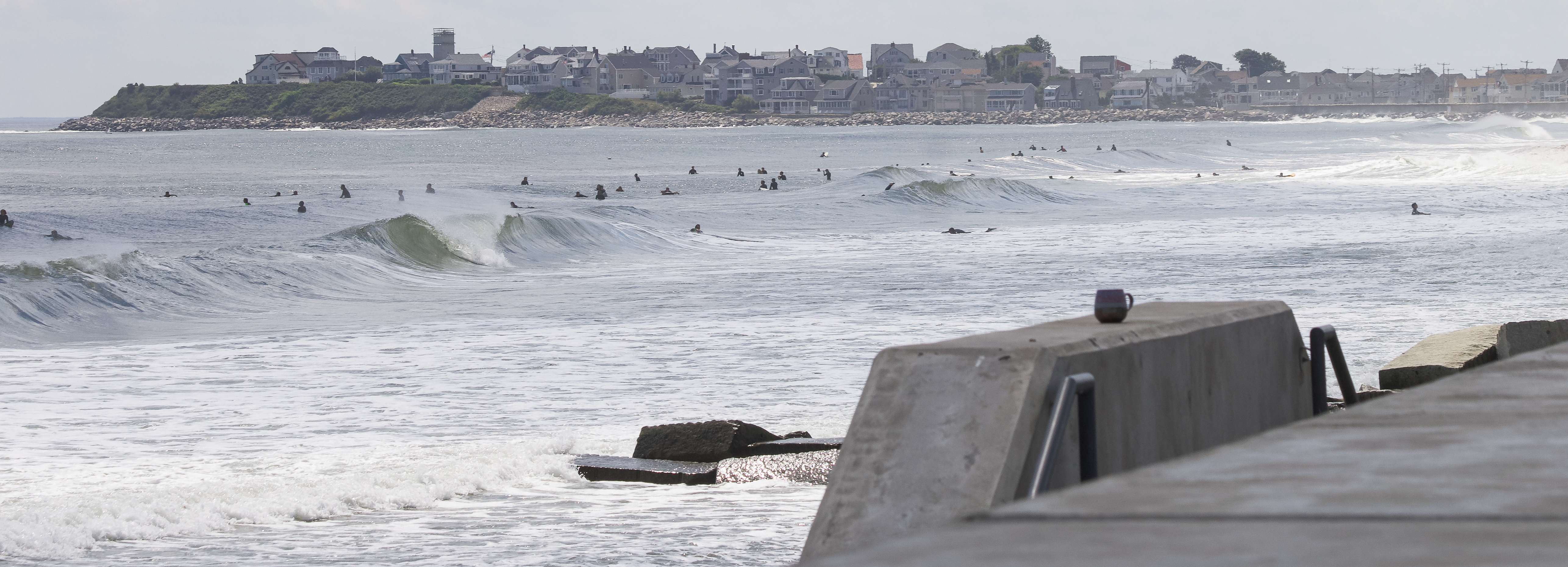
Providing tools and support for communities to restore and maintain the health of coastal ecosystems and anticipate adaptation strategies needed to address new challenges.
NewHampshire’s coastal watershed is home to over 25% of the state’s population, and building resilience requires recognizing the interrelationships among social, environmental, and economic dimensions in coastal communities. While community leaders know their communities well, they often have limited access to technical, financial, and human resources to deal with complex challenges. Building resilience crosses economic, social, and environmental boundaries. Preserving ecosystem services, safeguarding and adapting economic and social systems, and recognizing cultural values are key steps for building community resilience.
Current Projects

Flood Ready Neighborhoods
Flood Ready Neighborhoods
Flood Ready Neighborhoods provides direct support and services to neighborhoods experiencing impacts from coastal and stormwater flooding and erosion.

Living with Water: Resources for Realtors
Living with Water: Resources for Realtors
A course to help realtors become the ‘source of the source’ for your clients when it comes to questions about what it means to live near the water and coastal habitats.

Adapting Together: Project Builder
Adapting Together: Project Builder
Project Builder offers a mix of mentorship, strategy-building, and creative problem-solving to help you shape a strong grant proposal.

Coastal Landowner Technical Assistance Program
Coastal Landowner Technical Assistance Program
LTAP seeks to provide consistent, technical assistance to interested coastal landowners to help understand potential risks and opportunities to increase resilience on their properties.

Coastal Flood Risk Summary
Coastal Flood Risk Summary
Information about the 2025-2026 summary update and the New Hampshire Coastal Flood Risk Model.
NH Coastal Adaptation Workgroup

The New Hampshire Coastal Adaptation Workgroup (CAW) is a collaboration of over 30 organizations working to ensure coastal watershed communities are resourceful, ready and resilient to the impacts of extreme weather and long term climate change.
Supported by NH Sea Grant staff, CAW assists communities in NH’s coastal watershed to prepare for the impacts of extreme weather and long term climate change by providing resources, facilitation, and guidance that enhance readiness and resilience.
