What’s for Dinner? New Hampshire Seafood [Podcast]
Show Notes
Seafood is everywhere along the New Hampshire coast. But for a lot of us, getting seafood onto the dinner table can feel a little intimidating.
Where can you find local seafood, and how do you know if it’s sustainable? How do you cook it? And what’s the proper way to prepare that filet of fish or raw shellfish once you bring it home? Luckily for you we've found the path of least resistance to getting started in the culinary world of seafood.
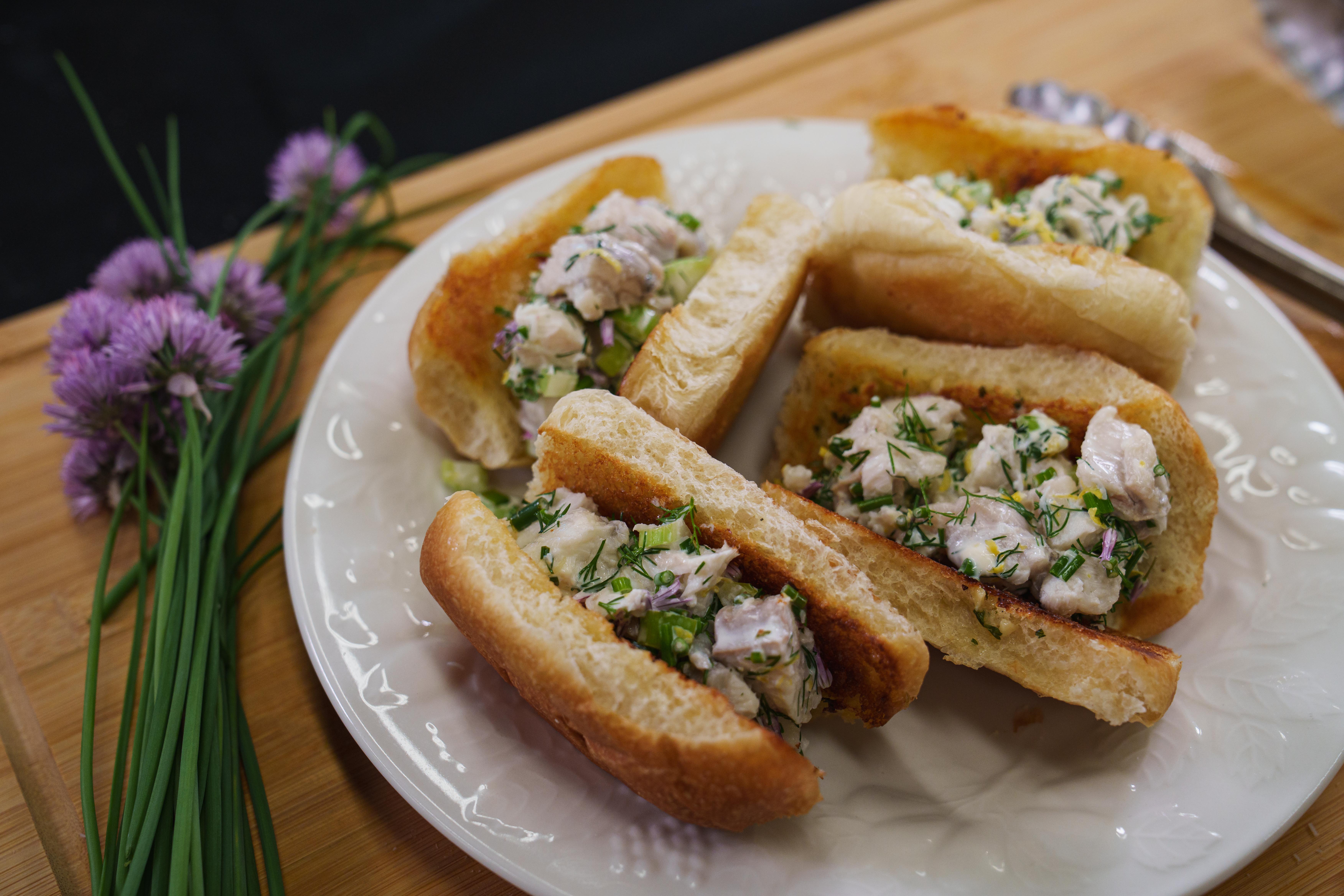
A new series of recipes and how-to videos from NH Sea Grant called Wildcat Kitchen aims to make local seafood more approachable. From instructional videos on how to shuck an oyster and filet a fish, to mouth-watering recipes that are cheap and simple, Wildcat Kitchen brings sustainable seafood to your kitchen!
Grab a seat at the table with host Brian Yurasits, for a roundtable discussion about seafood. It’s what’s for dinner.
Joining us at the dinner table are Leah Smutko, Lecturer of Culinary Nutrition at University of New Hampshire, and Zane Aguiar, EcoGastronomy Student at the University of New Hampshire. Leah and Zane will share why seafood is such an important part of our diet, and which seafood recipes might be the best for you to begin your coastal culinary journey. We’ve also invited Gabriela Bradt and Linas Kenter, who are both part of our Sustainable Fisheries and Aquaculture team here at NH Sea Grant, to explain the challenges we face in the Granite State when it comes to connecting consumers with local seafood producers. They also dive into some solutions, and yes, they involve lots of garlic and keeping a spare cooler in your car.
Grab a seat as we share our seafood stories.
A special thanks to Kylie Marozsan, NH Sea Grant Doyle Fellow, who helped film and produce Wildcat Kitchen. And to Mark Martin and Michael Coonfield, students at the University of New Hampshire, who helped to develop our first batch of recipes.
Full episode transcript is available below.
Guest Speakers
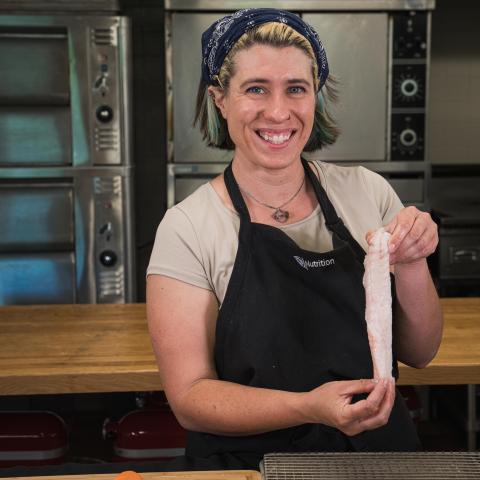
Leah Smutko
Lecturer of Culinary Nutrition, University of New Hampshire

Zane Aguiar
EcoGastronomy Student, University of New Hampshire
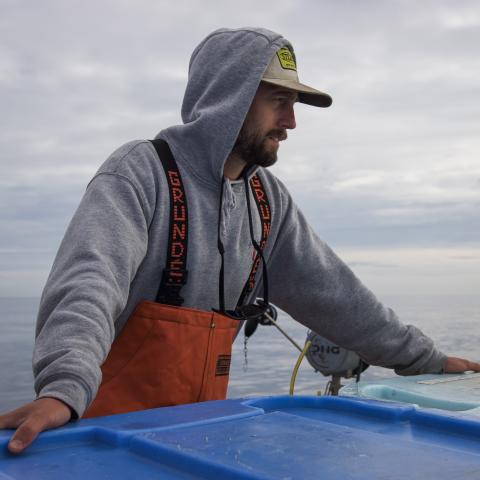
Linas Kenter
Aquaculture and Fisheries Research Scientist, NH Sea Grant and University of New Hampshire
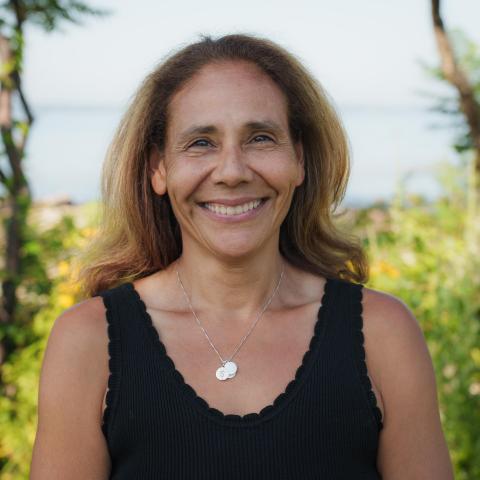
Gabriela Bradt
Fisheries Extension Specialist, NH Sea Grant and University of New Hampshire Extension
Meet Your Host
Brian Yurasits,
Host & Producer
Science Communication Specialist,
New Hampshire Sea Grant

More Episodes?
We've got you covered! Time and Tide is available wherever you get your podcasts.
Episode Transcript
Leah Smutko: [00:00:00] I think the en papillote recipe, which just means in paper, is one that I share with many students maybe for a lot of first time fish eaters because as it cooks, it essentially steams in this package. It's very hard to overcook it and it also won't envelop your entire house with the smell of fish. So, if you're nervous about that.
Brian Yurasits: I would personally recommend some of the oyster recipes as well as really good places to start. You don't even need to know how to shuck an oyster. That sauteed oyster recipe with all the garlic in there and everything, ooh, just chef's kiss.
Leah Smutko: And we're learning if you wanna impress Brian, just feed him whole cloves of garlic over and over again.
Brian Yurasits: You know, vampires have nothing on me.
Seafood is everywhere [00:01:00] along New Hampshire's coast, but for a lot of us, getting seafood onto our dinner plate can feel a little intimidating. Where can you find local seafood, and how do you know if it's sustainable? How do you cook it? And how are you supposed to know the proper way to prepare that filet of fish or raw shellfish once you bring it home?
Luckily for you, we found the path of least resistance to getting started in the culinary world of seafood. A new series of recipes and how-to videos from New Hampshire Sea Grant called Wildcat Kitchen aims to make local seafood more approachable. From instructional videos on how to shuck an oyster and filet a fish to mouth-watering recipes that are cheap and simple, Wildcat Kitchen brings sustainable seafood to your kitchen.
I'm your host, Brian Yurasits, and welcome to Time and Tide, the podcast from New Hampshire Sea Grant, where we explore the science, stories, and people behind our changing coastline. Today, we're sitting around the kitchen table with Leah Smutko, lecturer of culinary nutrition at [00:02:00] University of New Hampshire, and Zane Aguiar, an eco-gastronomy student at the University of New Hampshire.
Leah and Zane will share why seafood is such an important part of our diet and which seafood recipes might be the best for you to begin your coastal culinary journey with. Gabby Bradt and Linas Kenter, who are both part of our sustainable fisheries and aquaculture team here at New Hampshire Sea Grant, join us at the table as well to explain the challenges we face in New Hampshire when it comes to connecting consumers with local seafood producers.
They also dive into some solutions, and yes, they do involve lots of garlic.
Grab a seat at the table as we share our seafood stories.
And before we begin, I want to give a shout-out to Kylie Marozsan, our summer Doyle fellow who helped film and produce Wildcat Kitchen, and a shout-out to Mark Martin and Michael Coonfield, students at University of New Hampshire who helped to develop our first batch of recipes.
What is [00:03:00] the best seafood meal that you have ever had? Who was there with you, and what made it so special?
Gabriela Bradt: This goes back when I first started at Sea Grant, and it was my introduction to soft shell lobster. It was done by Evan Mallett, and it was just so good. I didn't need utensils. You just cracked it open, and whoomp, there it is.
It was awesome.
Linas Kenter: I'll go further back to childhood, and the first one that came to mind is we would go on a party boat fishing trip very early season in, like, April with my dad and brother, and It was very cold still. So there's a galley where they have a little kitchenette area and sell chips and hot cocoa and stuff, but the crew would run around the boat at some point during the trip and grab a couple fish and make a super basic, probably very, very cheap chowder in the galley there, and you would get it in a paper cup.
Just something about fresh fish and potatoes and bacon in cold weather [00:04:00] with a bunch of funny characters came to mind for that question.
Leah Smutko: My mom's been doing seven fishes dinners for my birthday ever since I was three years old. So to keep on the tradition, there was one New Year's Eve that my husband and I were snowed in, in a cabin in central Montana, and we made a seven fishes dinner without any kind of power equipment, using toaster ovens and a single burner.
So yeah, it's not culinary magic, but magical because there was six feet of snow outside. We were having a seven fishes dinner.
Zane Aguiar: My grandparents used to have a seasonal home on Campobello Island. It's connected to, to Maine, where I'm from. And there was this little, like, lobster shack just a couple miles down the road where they would bring in fresh lobster every day.
And so the highlight always of that trip was we'd have the lobster. I'd go, you know, help my grandma cook them, and then we'd have a big, big family dinner.
Brian Yurasits: I'm hearing a lot of the people involved. I'm hearing a lot of, like, very visceral experiences, like being warm on a cold day at sea. And for me personally, [00:05:00] it's my grandpa used to make this grilled calamari dish with just whole cloves of garlic in it.
You couldn't go out and associate with the public afterwards. You'd smell like pure garlic. You're just sweating it. But it was such a good meal, and I, I will always remember that dish. I wanted to start there, 'cause it's a really good way to introduce our topic of Wildcat Kitchen, which is this effort to create recipes here at University of New Hampshire and New Hampshire Sea Grant that are accessible to people, are affordable for folks.
Basically, we wanna get people to eat more locally produced, healthy seafood. We're gonna talk more about Wildcat Kitchen and our goals with this, and our recipes in just a second. But I wanna start with a first question for you all, which is why is seafood such a healthy and important part of our daily diet?
Zane Aguiar: I think right off the bat, what comes to mind is high quality protein and healthy fats. So, you know, seafood's gonna have a lot of [00:06:00] omega-3s. Super beneficial for brain health, cognitive function. It can also, you know, lower your blood pressure. You're gonna be at lower risk for, for chronic diseases. It's just high quality- you know, nutrients.
Leah Smutko: Yeah, I'll echo that. I think when I was first learning about seafood, it was all about the healthy fats and how fish can be such a concentrated source of these healthy fats in a way that doesn't feel greasy when you're cooking it. You can be eating it without feeling like, oh, I need to put a bunch of butter on this, or I need to put a bunch of oil on it.
It can help with cognitive focus throughout the day and just sustained energy, like mental energy, and I thought that that was just an amazing connection between how we think and how we eat. Three ounces three times a week is enough of these omega three fatty acids to show some kind of improvement in your mental health as well as your heart health.
Brian Yurasits: The dietary guidelines for Americans recommends eight ounces of seafood per week for youth and adults. Data shows that only [00:07:00] 24% of adults age 20 and older consumed seafood at least twice per week between the years 2021 and 2023.
Zane Aguiar: And I would also add that while, you know, that is the recommendation, any amount that you can get is beneficial.
Brian Yurasits: It is this healthy, essential part of our diets if you can access it and know how to cook it. Which leads me to my next question. If seafood is this awesome, you know, super important part of our diets and can lead to real health benefits, why don't people tend to eat seafood? People come up with all sorts of reasons why they might not want to cook seafood.
Maybe they want to, they just don't have access to it. I wanted to talk about this especially, uh, with Linus and Gabby. Why isn't seafood as prevalent in our diets as it can and should be?
Gabriela Bradt: Unless you are right in a lobster boat and on the water, seafood is kind of hard to, you know, access. It's also expensive.
Not even a fancy fish can run you, like, 10 bucks a pound. And then there's processing. If you go [00:08:00] and say, "I'll just have a whole fish," I don't actually really know what to do with it now. Like, do I eat the eyeballs? Like, how do I get the skin off? And some people just think it smells bad.
Linas Kenter: Not only based on kind-of geography and being close to your seafood, but also being in the United States is very different than elsewhere in the world.
We rank very low in seafood consumption compared to a lot of other cultures. Being someone who's got a young family, and I'm around others with young families, I commonly hear that only I like fish, and my kids don't eat it, so I don't buy it at the grocery store. So when you're thinking in terms of, like, being an American with a household to feed, it's not a common center of plate option to be feeding your whole family.
The question was cook or eat seafood. It's also very common for people to eat plenty of seafood when they go out to eat, and then just not be eating at home.
Brian Yurasits: I will say I also once worked in an office place where, uh, from the top down they said you cannot microwave fish in the office space that we all share because of the smell.
Gabriela Bradt: You're very [00:09:00] disconnected from the original starting point of your food, right? With fish, if you don't have, you know, the five main species that everybody knows about that is already kinda curated so that it's nice to look at and easy to cook, people don't wanna go outside of that box, if you will. That's where the intimidation comes from.
They're like, "I don't know what to do with something that isn't salmon in this very nice filet."
Brian Yurasits: Do you find at all that traceability is an issue when it comes to why people might choose not to eat seafood? 'Cause I know that, that is an issue in terms of knowing where your products are coming from. The seafood supply chain is very complex.
Linas Kenter: I see Gabby shaking her head. I would agree. I think it's kind-of a problem that you understand once you study and live around seafood for a long time, but less so of a public-facing concern compared to things like price.
Brian Yurasits: Of everything that we've discussed, what do you think is the biggest driver that leads people to eat less seafood?
Gabriela Bradt: Accessibility and price point.
Brian Yurasits: Very simple and to the point, Gabby. I wanna get to one other thing that you [00:10:00] mentioned, which is demographics as well. In New Hampshire, are there certain demographics that maybe eat more seafood or eat less seafood?
Gabriela Bradt: The people who are eating seafood are usually older, Caucasian, and have extra money, and probably live around the seacoast.
Although, we do have a researcher who's looking at the Latino population in Manchester and Nashua and trying to suss out why they are not eating more fish, and it's definitely a cultural thing. Imagine being an immigrant and you don't even know the species of fish that you can get because you're used to this other type of fish.
Linas Kenter: Younger and inland are the two key demographics for us here in the Northeast. There's definitely data that shows seafood consumption decreases really dramatically the further away you go from the coast, and then also older generations are much more likely to be procuring and cooking at home. Younger generations are eating seafood, but a lotta times it's in different [00:11:00] forms, pre-made meals or the big tinned fish movement that's happening right now.
So there's glimpses of hope for younger generation seafood consumption, but very different than- traditional methods.
Brian Yurasits: But we do have a youth in the room with us as well. Zane, does what Linus just said kinda ring true?
Zane Aguiar: I think especially in like college-aged individuals, even like two of my roommates were line cooks and so they've worked with seafood before, but even with them it's like accessibility's big.
You know, the price, it can get expensive. And I think just for like the average college student who might not have the most culinary-esque background, you know, it's scary to go out there and buy fish and try and cook fish. You're worried about, am I cooking it correctly? You know, am I gonna get sick from it?
It seems like there's a lot out there that can scare people off and it's just easier to, you know, "Oh, I'm gonna get, you know, some, some cheap ground beef, throw it in a, in a pan and cook that up really fast." Um, or just buy something frozen, 'cause I have a lack of time as well.
Brian Yurasits: So Leah, if you don't mind [00:12:00] talking about the reasons why we started this Wildcat Kitchen recipe series.
Hearing a lot of what Gabby, Linas, Zane, what we've been talking about are the reasons why not to eat seafood. How, through the recipes that we developed, did you aim to address those concerns?
Leah Smutko: I got to fall in love with fish while doing this project because as someone, as Linus described, was inland for quite some time, I had to learn a lot about what the demographics are of the fishing industry too, what types of species are around.
And when you go and buy chicken, when you go buy beef, there isn't as much variability, but when we talk about seafood, it encompasses so many different kinds of fish and shellfish and mollusks and things like that, that there's a lot to learn. There was also this idea of how can we make certain species of fish feel like household names, things that become part of the five most common fish that you're gonna see in restaurants or in households.
How do I look at a fish that's [00:13:00] not in this perfect filet form and know what to do with it? Or if it's a mollusk, how can I cook it in multiple different ways? There was the impetus to start all of these, like, creative, tasty dishes, mainly just so people could see in real time, "Oh, I can make that at home. I could probably do that with the, the skills that I have and the utensils that I have."
Brian Yurasits: That was a big goal that we had, was to have it really feel like anyone can make these dishes. They were designed to be as simple as possible and address some of these misconceptions, so we had some recipes that address the smell of fish while you're cooking them.
Maybe address some of these learning curves, like learning how to shuck a shellfish, right? Or learning how to prepare some of these different filets that you might come across. So, that was definitely a goal in there. What inspired you to come up with these recipes? Were they recipes that were handed down to you?
Were they recipes that you kind-of came across online and wanted to put your own twist on?
Leah Smutko: I would say the very first one that I wanna do a shout-out for was Linas brought in cured [00:14:00] fish to a staff meeting, and I said, "Well, we have to feature that now, absolutely." Cured fish was also something that my mom would always have.
We would just get a big filet of salmon, so not one of the species that we covered, but can be used very similarly to any fatty fish, and we would put it on salt and sugar. Three days later, we had cured fish, and it was something that was so easy for us to have for breakfasts, lunches, or snacks, and it was just something that was so part of my household that I was like, "Yeah, we should show people that this luxury item, quote, quote, could be in everybody's fridge with 10 minutes worth of prep."
Other recipes truly were after we moved to New Hampshire, uh, driving up and down and seeing who's selling what and how they're selling it, and what are people gravitating towards. So, we're seeing these grilled oysters. We're seeing how to look at oysters in the same way we would look at mussels and cook them that way.
And so the monkfish was the main one that was so unique and so key for [00:15:00] the Seacoast region. That was just talking to other people that really like monkfish, talking to the people at the fishmongers. They know so much information, and they want to talk about it. And so truly just being humble about it and saying, "I am from a landlocked place.
And I don't know about fish. What can you tell me?" 35 minutes later, you can come up with lots of different ideas for what to do with fish.
Brian Yurasits: Which recipe in this first batch of Wildcat Kitchen recipes that we have is your personal favorite? I made the trout en, am I saying this right, en papillote?
Leah Smutko: En papillote.
Brian Yurasits: I did make that for my wife as, like, a fancy dinner dish, and it was with, again, fish that Linas brought into the office. Thanks, Linas. Big shout-out to you. That was my personal favorite.
Linas Kenter: I'll throw a vote out for the monkfish. Being here in the Northeast, that's a critical species to highlight and support.
It's a, quote, "sustainable fishery," very good local species, very nice, white, versatile meat, and then the recipe literally needs a pan and [00:16:00] a stick of butter to make the fish. So, hard to go wrong.
Brian Yurasits: For any listeners out there who are looking for a recipe to maybe start with, which of the recipes that you've come up with would you recommend is the best place to start?
Leah Smutko: I think the en papillote recipe, which just means in paper, is one that I share with many students, maybe for a lot of first-time fish eaters. Because as it cooks, it essentially steams in this package. It's very hard to overcook it, and it also won't envelop your entire house with the smell of fish, so if you're nervous about that.
Plus, you put whatever kind of veggies you want in there, whatever kind of sauces. You wanna throw salsa in there and some peppers and onions, great. You wanna do cherry tomatoes and kale and white wine, you can do that. So, it fits any flavor profile and works for just about any kind of fish as well. So it's extremely, extremely versatile.
Brian Yurasits: I would personally recommend some of the oyster recipes, as well, as a really good place to start. You don't even need to know how to shuck an oyster. That [00:17:00] sautéed oyster recipe with all the garlic in there and everything, ooh, just chef's kiss.
Leah Smutko: And we're learning if you wanna impress Brian, just feed him whole cloves of garlic over and over again.
Brian Yurasits: You know, vampires have nothing on me.
Where would you recommend people look- to find their locally caught seafood here in New Hampshire?
Gabriela Bradt: We did develop the New Hampshire Seafood Finder, which is basically a map online. The idea of it is that we can search by species, whether you can find it at a farmers market, or if you have to go to a storefront.
The three places that I think are definites that you need to go are Southern Maine Crabs, which isn't necessarily New Hampshire, but it's just over the bridge. Jillian is amazing, and she was a Sea Grant intern. You can also go to the Portsmouth Fish Pier and talk to the lobstermen there. They can sell off the boat.
And then Yankee Fish Co-op.
Brian Yurasits: So again, you can search for New Hampshire Seafood Finder online. Like Gabby said, it's a [00:18:00] map.
It seems like purchasing seafood is a little more complicated than I get out of work at 6:00 PM and I'm just gonna go to my local grocery store. It seems like there's maybe a little bit more planning involved.
Do you have any recommendations to really get people, like, into the swing of this? Do you have any tips essentially for interacting with these vendors?
Gabriela Bradt: Really finding that vendor that has different spots all along the Seacoast and, you know, you can find them pretty regularly. Also, if you have a freezer, frozen seafood is not bad.
Get fresh seafood, cook what you need to, and then freeze the rest. If it requires a lot more coordination, that's what I would do. Frozen seafood gets a bad rap, but if you get fresh, you eat what you need to, and then you freeze it properly, it's a great way to stock your freezer.
Brian Yurasits: This comes up frequently here in the office.
I always wish that I brought a cooler with me when Linas comes around with squid or trout filets from your work. Whenever I see people who look like they buy fish frequently, [00:19:00] they have their own cooler with them. Do you have any recommendations or, like, tips there in terms of coming prepared? Does everyone need a cooler essentially?
Linas Kenter: It's a good life lesson to carry a cooler with you at all times. I think you both said it, just looking at the different fish markets in the area, and the smaller seafood-focused ones are gonna be better sources of information. Grocery stores can be great and have their place for getting fish to bring home, and nothing you need to do differently than bringing home a package of chicken.
The markets are going to have more pride in what they carry and be a lot more open to having a conversation with you about any questions you have for seafood. They'll do their best to source locally, but the biggest nuance that comes to mind is kinda the seasonality here in the Northeast. Not everything that we have local is available year-round.
A lot of distributors will try and fill a species niche with something from a different area. That's where it helps to know somebody behind the counter, find a couple places you like going, and asking and slowly learning what's in [00:20:00] season to make sure it is local.
Brian Yurasits: You just talked about locally caught fish.
Stepping back, my question's about sustainability when it comes to the food that we eat. I know this is something in every source of food. There's labels on everything, right? There's eco labels that tell you something is cage-free for eggs or that it's sustainably caught when it comes to seafood. What does it mean for a seafood to be sustainable?
Linas Kenter: Yeah, it's a tough and complicated question. That sustainable word gets thrown around all the time, and there are absolutely a lot of resources out there. Uh, whether or not you have the time to read them all is the big question. They are all founded on good principles, how things are grown, how things are caught, and then it gets really kinda detailed in terms of methodology, what kinda gear the fishery has, how is it managed.
Gets complicated quick. There's a lot of certifications out there, like you're saying, the stamps on the cans, the stamps on the packages. Those are all good to give a quick Google, read what their pillars are that they're considering going into them. But do not consider them a [00:21:00] silver bullet in any way for sourcing seafood.
They're founded on good principles, but they're also for-profit companies putting stamps on products. If you have the privilege of knowing a fisherman or knowing a farmer and being able to get stuff from them, easy decision there, just like anything grown on land. Consider the local fish markets.
Not everything they have is gonna have that stamp of approval on it, but they'll still know where it came from, when it got there, all that.
Gabriela Bradt: Sort of my straight-up answer for sustainability is eat New Hampshire seafood. Buy from New Hampshire vendors. You know, they can tell you more. That's the easiest traceability that I can recommend.
One of the things that my fishermen say often is, like, "We follow the rules. We are mandated by the state and federally to follow all the regulations." So, anything in New Hampshire, as far as I'm concerned, is sustainable. The more questions you ask from your local vendors, the better off you are.
Brian Yurasits: Is where your food comes from something that you both think about when you're creating recipes or you're thinking about cooking seafood at [00:22:00] home?
Like, 'cause we are in the weeds of this at Sea Grant and in the work that we do. As someone in the culinary field, is that question something that pops up?
Leah Smutko: I'm going to be biased because it's close to my heart on where I get food from, and I find joy in going to the farmer's markets and the talking to fishmongers.
That is a hobby of mine. So yes, I do care about where my food comes from because I have an interest in it. The thing that I see driving people to care more about where their food is coming from is getting the challenge of diversifying their diets. If I pose to somebody, "How else can you eat fish that's not salmon?
How else can you eat fish that's not tuna?" Then they'll start keying more into, "Well, what can I get, and what can I get for a cheaper price?" And typically, you can get something for a cheaper price because it is sourced right here, you don't have to pay transportation costs. Or you're finding out about fish like smelt.
Way smaller fish. You can see how you can fry those up just the same way you would be frying up cod and have a new experience. It's [00:23:00] not a very clear answer to your question, but I think diversifying what kind of seafood you're getting is going to be the sneaky way of learning more about where your seafood comes from.
Brian Yurasits: Leah and Zane, do you have any tips on how to tell if a fish product is fresh?
Leah Smutko: So, if you take my Nutrition 403 class, uh, we go over how to buy fish. And some of the things that you would want to look for whenever you're going, especially to grocery stores and looking at fish, is you wanna make sure, number one, if the head is still on it, look at the eyes.
The eyes should be clear. They should not be cloudy. Also, look at the scales. Uh, the scales should have a little bit of a sheen to them. They should not be flaking off in, like, big patches. You will get some scale fall-off whenever you pick up a fish. That is very natural, so don't let that freak you out.
When you are looking just at filets of fish, maybe they don't have the skin on or they don't have the head on anymore, if you touch the flesh itself and it leaves an indent and it feels kind of [00:24:00] mushy or mealy, that means that that fish has either been frozen and rethawed a couple times or been exposed to water.
There's some time and temperature abuse happening there, and you probably don't wanna be trusting that fish. However, one caveat to that, if you have excess fish and putting it in your freezer and you take it out and it has that mealy quality, that fish is still edible and totally fine to use. Put it in chowders. Put it into stews, things like that. You just won't have the same texture.
And the last thing is if you get a fish and it smells very fishy right when you get it, it means that a lot of these oils are escaping from the fish, meaning that the fish has been sitting out for quite some time and probably isn't as fresh as it normally would be.
Don't take the first sniff that you get whenever you open a package of fish. That is oftentimes there are gases that are naturally gonna build up. So open it, wait 10 to 15 seconds, then smell it, and then that is the true smell that you will get off of fish.
Okay, so then if you are not looking for [00:25:00] a fin fish and you're looking at shellfish instead, they will typically be coming in bags.
Bags will have a tag on them. Those tags will have the date that they were harvested. That's incredibly important to pay attention to so that you know how fresh that is. But essentially what you're looking for is bagged shellfish is going to be alive when you buy it. That's just natural fact. So, if they are slightly open, that's wonderful.
If you kinda tap on them, thinking oysters, I'm thinking mussels, I'm thinking scallops, you tap on them and they close, that means that they are still alive. They're reacting to the pressure of you tapping them. If after you cook them, essentially what you want to have happen is for everybody to open up, and that signals to you that the shellfish is done cooking, they are no longer alive anymore.
But if they don't open up after you are done cooking them, that does mean that you had a dead one, and that one should be discarded. Also, if you have any kind of black residue whenever you shuck an oyster or a mussel or, or any kind of bivalve, you want to get rid of that. There's [00:26:00] some kind of necrotic tissue in there that's happening or some kind of infection that's happening that you don't want to ingest.
Brian Yurasits: If you're a student at UNH or you live in this Durham, Seacoast area, what's the closest place to buy seafood in which you can make one of these Wildcat Kitchen recipes? So I'm, I'm really focusing here at the UNH area, the surrounding area.
Like Zane, where would you be going as a student to find your seafood?
Zane Aguiar: I think if you're just looking to start cooking seafood, Hannaford's is probably your most convenient. It's right on campus. It's not gonna be crazy expensive. I think that's the place I would start.
Brian Yurasits: It's a great starting place for someone who wants to get into seafood. Like Linas said, you can start there for sure.
Once you've dipped your toes into the world of cooking with seafood in a place that's accessible and close to you, then you can take that next step and meet your growers, and I'm curious what you think to that, leah as well.
Leah Smutko: When I first got started buying seafood here, I actually went through Daily Haul, and they [00:27:00] were ones that I could order ahead of time and drive down to the Emery Market, which is down the street from campus.
It was easy for me to get to, not knowing the area super well. I do actually use the New Hampshire Seafood Finder quite often to find very specific types of seafood. But honestly, just like what Zane said, if you are going into the grocery store and you are just trying to get seafood into your diet, grocery stores have gotten way better about having a selection of foods.
You can look for those labels that Linas was talking about, and just use it as a starting point.
Brian Yurasits: Zane, I have an idea for you. This sounds like maybe something that could be fun and accessible. If you have a grill, I don't know if you guys have access to any kind of a grill, grilled oysters. You can take that recipe, and this is what we're actually doing for a staff meeting.
We're gonna get 36 oysters. We're gonna shuck some oysters this week. And call ahead, see if they can accommodate as many oysters as you need for you and your friends to grill, you know, on campus, and that would be my suggestion to start.
Zane Aguiar: Yeah, I mean, most dorms have grills outside.
Brian Yurasits: Well, I was gonna say, I mean, it sounds like you just become good friends with [00:28:00] Linas and bring a cooler with you, and that's probably your quickest way on campus to some good fish.
Linas Kenter: Yeah, I'll back Zane up, and put my college shoes on for a second, and say the Market Basket around here is pretty solid for seafood, especially over in Newington. It might not be from New Hampshire. All their groundfish species are gonna be from New England. They're usually Gulf of Maine, usually pretty knowledgeable.
You're grocery shopping anyway, so it's not hard to grab something that you can cook in the next day or two after that. I would just say keep a cooler in your car. If you're out driving around somewhere and you pass a seafood market anywhere in the state, do a U-turn. You got a cooler in the car. Go in there, see what looks good, say hello, and guarantee you'll go home with something.
They'll give you a little bag of ice with whatever you buy to keep it fresh.
Leah Smutko: I haven't been to a single farmers market in the Seacoast region that didn't have at least one fishmonger there.
Brian Yurasits: Keep a cooler in your car. Check out your local farmers markets. Explore the New Hampshire Seafood Finder. [00:29:00] Talk to your local fishmongers, and check out these Wildcat Kitchen recipes for a great place to start your seafood cooking journey.
So thank you all for sharing your favorite recipes, your insight into the world of seafood.
I don't know about you, but all this talk about seafood has made me pretty hungry. I have some sauteed oysters with plenty of garlic calling my name. Check out our recipes and how-to videos by visiting our Wildcat Kitchen webpage.
You can find the link in our show notes, or you can follow us on social media, where you can see Leah and her team in action. You can also find the New Hampshire Seafood Finder in our show notes, or on any of our Wildcat Kitchen recipes.
Time and Tide is produced by New Hampshire Sea Grant. Explore more episodes featuring the latest coastal science happening right here in the Granite State wherever you get your podcasts.
And if you like what you've heard, please [00:30:00] consider leaving us a review.
See you next time on Time and Tide.
Credits
Produced by Brian Yurasits, New Hampshire Sea Grant.
Photos by Brian Yurasits.
Transcribed by Descript. Edited by Brian Yurasits.
Time and Tide is a production of New Hampshire Sea Grant at the University of New Hampshire. Views expressed on this podcast are not necessarily those of the university, its trustees, or its volunteers.
New Hampshire Sea Grant works to enhance our relationship with the coastal environment to sustain healthy and resilient ecosystems, economies, and communities through integrated research, extension, education, and communications efforts. Based at the University of New Hampshire, New Hampshire Sea Grant is one of 34 programs in the National Oceanic and Atmospheric Administration’s National Sea Grant College Program, a state-federal partnership serving America’s coasts.
University of New Hampshire is an equal opportunity employer, learn more.
Author(s)


