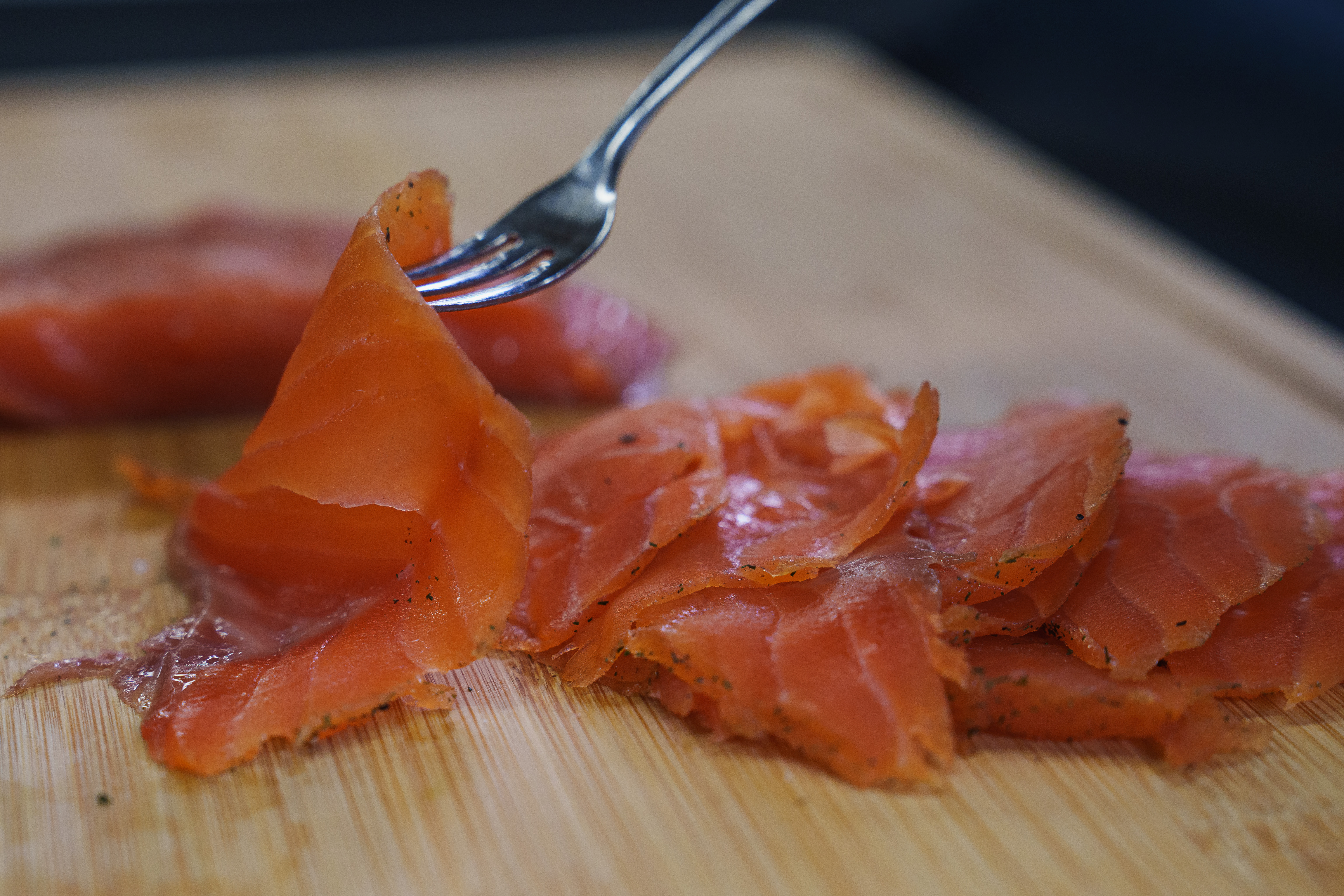
Elevate your snacks with this 10-minute prep!
Cured trout is a great addition to bagels, sandwiches, and any charcuterie board. This firm and seasoned fish creates a smooth and savory taste.
Learn from Lecturer of Culinary Nutrition at UNH, Leah Smutko, how 10-minutes of preparation will last you the whole week with this simple recipe.
Time
Prep time: 5 mins
Cure time: 24 to 48 hours
Cost
~ $15
Serving size
Makes 14 oz of cured fish
Recommended sides
Eat with a bagel and cream cheese!
Cookware and Tools
Blender
Tin
Knife
Fridge
Ingredients

1 lb trout, deboned, skin optional
4 tbsp kosher or coarse sea salt
1-4 tbsp sugar, white or brown, depending on preferred level of sweetness
1 tbsp fresh dill
1 tsp whole peppercorns
Step-by-step cooking instructions
In a small food processor, add salt, sugar, dill, and peppercorns. Pulse until the mixture is homogenous
Choose a container that can be covered and has high sides to catch moisture. I like using a glass loaf pan or 8x8 baking dish.
Put half your mixture down on the bottom, about the size of your piece of fish.
Lay your fish over the salt mixture. Generously rub down the top and sides of the fish with the remaining salt.
Cover with saran wrap or tight fitting lid.
The cure will pull moisture as it sits. Check your fish every 12 hours and flip the fish over to ensure even curing. You will notice lots of liquid pooling.
The fish will be technically cured after 24 hours, firm by 48 hours, and should not go past 3 days
Rinse the cure off and pat dry
Slice thinly as you need it to serve
Sustainability and Education
The steelhead trout used here are harvested locally in New Hampshire, a few hundred yards off the coast of New Castle at the AquaFort. It is a sustainable, floating offshore fish farm designed at the University of New Hampshire using a method called integrated multi-trophic aquaculture (IMTA).
Production Team
Brian Yurasits
Science Communication Specialist, NH Sea Grant
Kylie Marozsan
Seafood Science Communication Doyle Fellow, NH Sea Grant
Leah Smutko
Lecturer of Culinary Nutrition, University of New Hampshire
Mark Martin and Michael Coonfield
Students, University of New Hampshire
