
New Hampshire's salt marshes are valuable coastal ecosystems, but they are under threat from human activities, with an estimated 18-50% of salt marsh habitat lost. To help restore these ecosystems, scientists and coastal managers are turning to 'living shorelines', which use natural materials and vegetation to stabilize shorelines and reduce erosion. While living shorelines have shown promise, few studies have examined how well they restore the marsh’s natural functions, like cycling nutrients and storing carbon.
To address this gap in understanding, Ashley Bulseco, Assistant Professor of Biological Sciences at University of New Hampshire, and her team will use microbes as 'bioindicators' of recovery to study three living shoreline projects in the Great Bay Estuary and Seacoast. This project aims to characterize microbes in salt marsh recovery and use this data to help measure restoration success earlier and more effectively. The team will also enhance elementary and middle school students’ literacy of microbes and their role in coastal ecosystems by developing curricula centered around microbiome science.
Principle Investigator
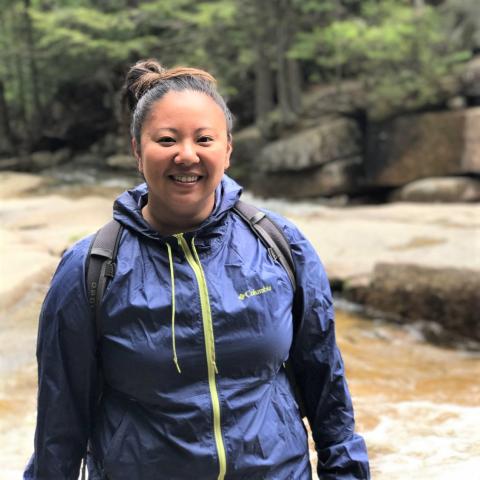
Ashley Bulseco, Ph.D.
Assistant Professor, Department of Biological Sciences, University of New
Hampshire
ashley.bulseco@unh.edu
Co-Investigators
Gregg Moore, Ph.D.
Assistant Professor, Department of Biological Sciences, University of New
Hampshire
gregg.moore@unh.edu
David Burdick, Ph.D.
Associate Research Professor, Department of Natural Resources and the
Environment and Director, Jackson Estuarine Laboratory, University of New Hampshire
david.burdick@unh.edu
Taniya RoyChowdhury, Ph.D.
Research Scientist II, Woodwell Climate Research Center
troychowdhury@woodwellclimate.org
Gracie Ballou
Coastal Education Program Manager, NH Sea Grant and University of New Hampshire
gracie.ballou@unh.edu
Project Funding Cycle
2026-2027 NH Sea Grant Biennial Research Funding
Project Abstract
Salt marshes are coastal ecosystems that provide a wide range of ecosystem services, including shoreline protection, provision of nursery habitat, nutrient filtration, and carbon storage. Despite their immense value, salt marshes are under significant threat from multiple human-driven stressors, resulting in an estimated 18-50% of New Hampshire’s salt marsh habitat lost. To combat salt marsh degradation, we have invested in a variety of restoration strategies such as ‘living shorelines,’ which is a restoration approach that “soft engineers” wetland systems using native vegetation or other natural materials. While the implementation of living shorelines (LS) has increased in recent years, in part due to its high success rate in restoring structural integrity, vegetation, and nursery habitat, there are still relatively few studies that examine their effectiveness in New England. This is especially true for studies that focus on the recovery of key biogeochemical processes, such as carbon and nitrogen cycling, which is likely due to the challenges associated with measuring these processes over time. Here, we propose to use microbes, the key mediators of these biogeochemical cycles, as “bioindicators” for recovery of salt marsh biogeochemical function. Leveraging three LS pilot projects carried out from 2016 to 2019 in NH’s Great Bay Estuary (GBE) and Seacoast region, we aim to characterize biogeochemical recovery and explore the possibility of more regularly incorporating microbial data into restoration assessments. In alignment with the priorities outlined in NH Sea Grant’s strategic plan, the goals of this project are: (1) To assess the recovery of biogeochemical function (e.g. DNF and carbon storage) in LS restored salt marshes; (2) to characterize the microbial community in LS in order to (3) evaluate the inclusion of microbial information as an innovative tool for salt marsh restoration and management; and, in recognizing the pressing need to increase public awareness around microbes in the environment, we propose to (4) enhance elementary and middle school students’ literacy of microbes and their role in coastal ecosystems by developing curricula centered around microbiome science. By identifying the trajectory of salt marsh functional health early in the process, practitioners can focus on more effective techniques and enact adaptive management, potentially improving restoration success

