Sharing the Stoke: Cold Water Surfing in New Hampshire [Podcast]
Show Notes
Surfing has become an increasingly popular way to recreate here along the seacoast, and across the US as a whole. During the summer, it’s hard to drive anywhere without seeing a longboard strapped to the roof of a fellow commuter’s car.
But why has surfing become so popular in recent years? From 2019 to 2020, the surfing population in the US grew an astounding 28 percent, and over the past five years the sport has experienced 8% average annual growth.
On this month’s two-part episode of Time and Tide, we’re paddling into the lineup with local legends of surfing to look back at the sport’s past along NH’s coastline, attempt to understand who today’s cold-water surfers are, and unpack what coastal issues New Hampshire surfers care about most?
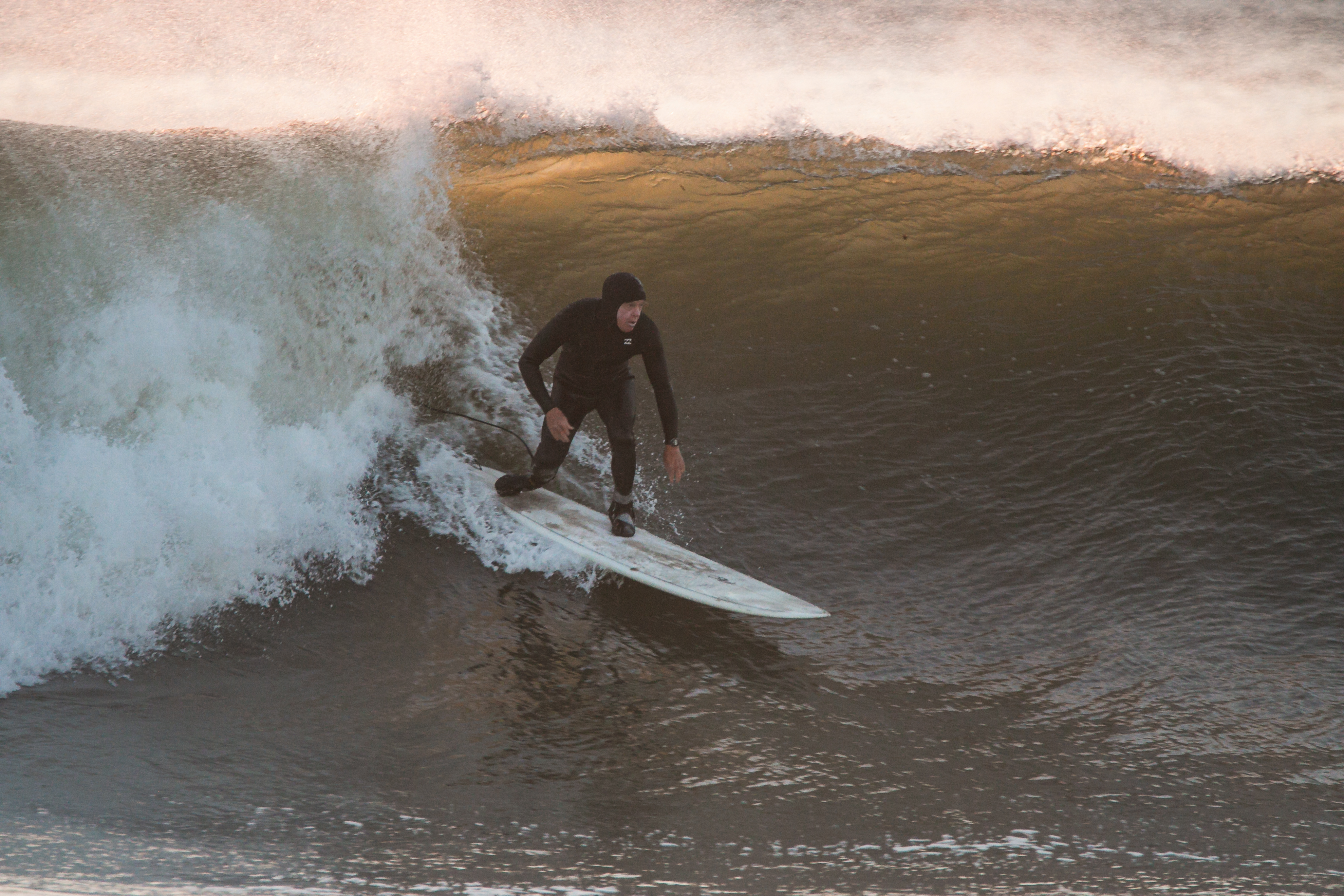
In episode 12, we paint a picture of what surfing’s past and present looks like along the seacoast. We kick things off with Ralph Fatello, a local photographer and surfer who runs a weekly surfing blog called Ralph’s Pic of the Week and has been doing so for the past 21 years. Ralph has been surfing and photographing New Hampshire waves since the 60’s, and has seen the sport, and how surfers are using our coast, change through time.
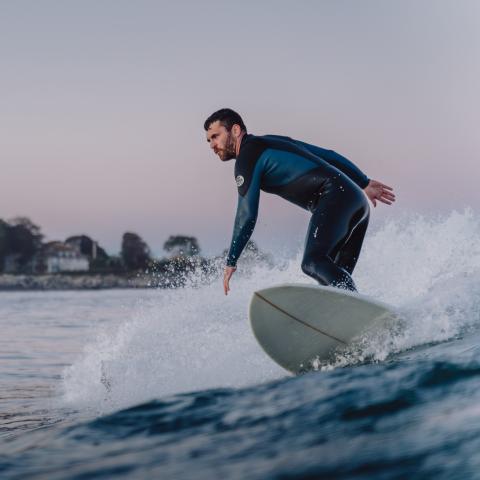
Next, Brayden Rudert shares his perspective from the water angle. Brayden is a professional photographer who helps shed light on what surfing culture looks like today, and how surfing can connect coastal communities with the ocean. We dig into the question of whether a connection to the ocean through surfing is enough to inspire surfers to protect these coastal places.
In episode 13, we explore how the sport of surfing can create community, a sense of responsibility to protect the natural world, and monetary value for coastal towns. What is the value of clean water? And just because you surf, does that mean you’re more likely to support healthy coastal ecosystems?
Becs O’Brien and Christina Dubin are two surfer friends who have formed a community of female surfers along the seacoast and are actively involved with marine conservation organizations, including Surfrider New Hampshire and Beyond Plastics. In an age where our screen-time is quickly outpacing our face-time with one another, we discuss how the antidote might just be something as simple as floating on boards with friends in the ocean. Becs and Christina also share their thoughts on how to meaningfully engage the surfing community with the issues facing our coast.
Last but not least, Scott Lemos, a Research Economist and Senior Lecturer at University of New Hampshire, gives us a lesson on surf-onomics. How much money is clean water worth, and how can a sport like surfing impact a local economy? Scott also coins the term ‘positive localism’ as we speak about how surfing can become less extractive from the natural world and leave people with a lasting connection to the natural world instead.
Full episode transcripts are available below.
Guest Speakers

Ralph Fatello
Surfer and Photographer, Ralph’s Pic of the Week

Brayden Rudert
Surfer and Photographer, Vision Lagoon

Becs O'Brien
Volunteer, Surfrider New Hampshire

Christina Dubin
Major Gifts Manager, Beyond Plastics

Scott Lemos
Research Economist and Senior Lecturer, University of New Hampshire
Meet Your Host
Brian Yurasits,
Host & Producer
Science Communication Specialist,
New Hampshire Sea Grant
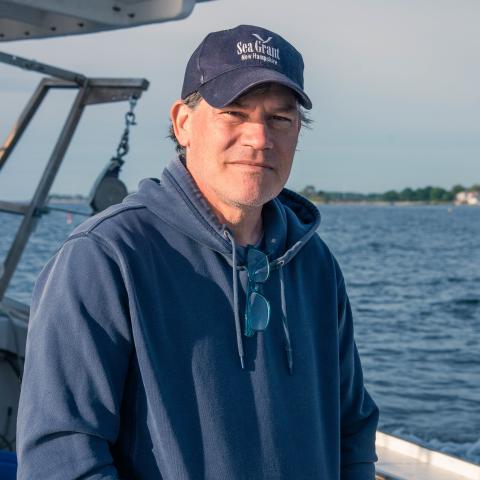
Erik Chapman, Ph.D,
Co-host
Director, New Hampshire Sea Grant
Interim Director, UNH School of Marine Science and Ocean Engineering
More Episodes?
We've got you covered! Time and Tide is available wherever you get your podcasts.
Episode 12 Transcript
Ralph Fatello: [00:00:00] Surfing is this tempest starts out to sea and creates a swell. The swell becomes this wave, and then you go out and you meet this wave at the end of its life, you ride this wave. You'll hear surfers say, I got the best wave of my life, I got this insane barrel, I got the best wave of my life. And I always say, think about where you were earlier today, if you had changed anything, if you had done one thing different, that wave was gonna be there whether you were there or not. The fact that you met this wave at the end of its life and you got that barrel at the end of its life and you're so stoked, beyond stoked, you got the wave of your life. I mean, think about how special that is. You're riding along on living liquid matter.
What else on the planet can you say that you can do that with?[00:01:00]
Brian Yurasits: The sport of surfing has become increasingly popular as a way to recreate here along the Seacoast and across the United States as a whole. During the summer, it's hard to drive anywhere without seeing a longboard strapped to the roof of a fellow commuter's car. But why has surfing become so popular in recent years?
From 2019 to 2020, the surfing population in the US grew an astounding 28%. And over the past five years, the sport has experienced 8% average annual growth. That's according to the Surf Industry Members Association. On this month's two-part episode of Time and Tide, we're paddling into the lineup with local legends of surfing to look back at the sports past along New Hampshire's coastline attempt to understand who today's cold water surfers are and unpack what coastal issues New Hampshire surfers care about the most. In part [00:02:00] one, we paint a picture of what surfing's past and present looks like along the Seacoast. We kick things off with Ralph Fatello, a local photographer and surfer who runs a weekly surfing blog called Ralph's Pic of the Week, and has been doing so for the past 21 years. Ralph has been surfing and photographing New Hampshire waves since the sixties and has seen the sport and how surfers are using our coast change through time.
Next up, Brayden Rudert shares his perspective from the water angle. Brayden is a professional photographer who helps shed light on what surfing culture looks like today and how surfing can connect coastal communities with the ocean. We dig into the question of whether a connection to the ocean through surfing is enough to inspire surfers to protect these coastal places.
I'm your host, Brian Yurasits, and today I'm joined by my co-host Erik Chapman. Here at New Hampshire Sea Grant, we work to enhance our relationship with the coastal environment to sustain healthy and resilient ecosystems, economies, and [00:03:00] communities. In order to do that, we want to understand the people who work, live, and play along the Seacoast.
Paddle out with us as we learn about the history of surfing in New Hampshire and what coastal topics connect with today's growing group of surfers.
Before starting Ralph's interview, he takes us on a tour around his house and studio, pointing out some of his favorite artwork.
It's like a museum.
Ralph Fatello: So this is where all the, uh, it all goes down.
Brian Yurasits: The magic happens.
Ralph Fatello: Yeah. This is an original Endless Summer poster.
Brian Yurasits: Yeah.
Ralph Fatello: Hey, check this one out. This was the day that David Bowie died.
Erik Chapman: Oh, wow.
Ralph Fatello: That was the first photo I took.
Brian Yurasits: Yeah.
Erik Chapman: Space Oddity.
Ralph Fatello: Isn't that wild?
Brian Yurasits: Yeah. That's cool. Do you have like a favorite photo that you've ever taken?
Ralph Fatello: No.
Brian Yurasits: No.
Ralph Fatello: No. [00:04:00]
Brian Yurasits: The next one, right.
Ralph Fatello: I've taken thousands and thousands and thousands of them. This is, was, uh, hanging at Flatbread in Portsmouth for the longest time.
Brian Yurasits: Oh, nice.
Ralph Fatello: I gave one of these to every member of my family, all the kids, you know.
Brian Yurasits: Oh, that's awesome.
Ralph Fatello: Because that's where they grew up.
Erik Chapman: Yeah, yeah.
Ralph Fatello: So, twice in my life I surfed every single day for a year. Did you know that? Here.
Erik Chapman: Here.
Ralph Fatello: Yeah. And I did it once in memory of my dad, I called it Catch a Wave for Gus, and he turned me on to surfing. I'll tell you about that later. When this little girl Molly passed away, she was, uh, had large cell lymphoma and then passed away and I was just crushed by it. So, I surfed in her memory. And this is Max again. My son is a way better surfer than I ever thought about being.
Brian Yurasits: Do you and your son get to surf a lot together?
Ralph Fatello: We did a lot when I was still short boarding, you know. My short boarding days are behind me. We just, it's what happens.
Brian Yurasits: So Ralph, we're here now sitting together in your studio surrounded by surfboards, photos, and probably [00:05:00] more stories than we could ever hope to tell in one episode.
Let's start with a story of the first time that you picked up a surfboard.
Ralph Fatello: My name is Ralph Fatello. I live in Hampton, New Hampshire, and I am in my 75th year on the planet. In 1963, you know, we were on a coastal town, Beverly, on the North Shore. My younger brother and I were training, believe it or not, to be stuntmen in Hollywood.
It was 1963, the summer of 63, and I heard my dad yell out the window, Ralphie, Ralphie, come in here and see this. And I ran into the house and on a little black and white TV in the den there were these guys on surfboards, and he's like, they're surfing. I'm like surfing, I had never seen it before. It blew my mind.
I stopped and looked at it. I'm like, what is this? And I had never seen it before. Where is this? And he said, probably California, or Hawaii. I'm like, I was fascinated. I couldn't believe what I was watching. I had never seen it before, and then it was shortly later, we were on the beach in Nahant, and there must have been a tropical storm because there were like three to [00:06:00] five foot waves.
My dad said, you know, if you had a surfboard, you could surf on those waves. And I looked up at him and looked at the waves, i'm like, he's right. Those are the same size waves we were watching on TV. And so that was our mission to get a surfboard. And that's where I rode my first wave, the summer of 64, and I paralleled that wave.
And I can remember like it was yesterday, the board chattering along on the face and that sound of the board, just that living liquid matter moving and me going. I'm like, I'm gonna do this the rest of my life. Caught my first wave in Hampton in 1966 and went through the whole longboard thing and into the shortboard stuff, you know. The shortboard revolution happened in '67.
Guys were taking their long boards and actually cutting them down to, you know, seven feet, seven and a half feet, eight feet.
Brian Yurasits: So what were wetsuits like back then? Were surfing wetsuits tough to come by, and what did they look like?
Ralph Fatello: There were no surfers wetsuits. We wore diver suits.
They were quarter inch. Divers were not doing what [00:07:00] surfers do. Eventually the surfer wetsuit came out, but it was like you wore pants that came up to your chest, and then you wore a jacket with a beaver tail that came up between your legs and you'd snap it. And then you'd wear a hood on top of that, and then gloves, and then you know in the winter, boots.
But the water would rush up inside your jacket and then fill up your pants. So you were always full of water. I'm old enough to tell you that our original wetsuits were not made for surfers.
Erik Chapman: Was there enough to call sort of a New Hampshire surf culture at that time, or did that start to happen later?
Ralph Fatello: Oh yeah, it was all coming.
What would happen back in the sixties was whatever was happening in California, we would mirror that. And our only source of information, there was no internet, there certainly weren't any cell phones, so the only thing we had was the magazine. Surfer Magazine was our Bible. You got a subscription to Surfer and that's what you learned.
And you had to look at photos 'cause there were no surf videos that we could watch. And then on TV they would run these uh, [00:08:00] contests. Once a year you got to see it on TV. And then the movies came out The Endless Summer. I showed you the original poster. So that was made in '64, but it didn't really get distributed till '66.
My dad took me to see The Endless Summer in 1966. And that was the end all to end all, it was like, this is what we're gonna do.
Brian Yurasits: How did you all know when the waves were gonna be good? What was surf forecasting like? Was it all word of mouth? Did you have anyone that you could call? And also how were the crowds?
Was it mostly just you and your friends out there, or did other people have the same idea as you?
Ralph Fatello: Back then before there was surf cams, typically the primitive, archaic way was driving down to the ocean and looking. I call it the Ralph Cam. I went down and Ralph looked, and Ralph saw, and Ralph made a decision, you know, but there was also in the Boston Globe, The Globe would show little low pressure systems and you could look and see a low, like down off the Carolinas and know that it was gonna track up. And then there was the uh, marine [00:09:00] forecast radio that you could get. And then there were knowing people who actually lived where the waves were. And so it was pretty primitive but effective. When we lived in Massachusetts and we wanted to go north, we would do a person to person collect call.
Like my friend Jeff Opes, who lived at 10th Street down here. His mother, Mrs. Opes, I would call person to person, collect, she would answer the phone and say, no, he's not here right now but he'll be back around two or three, uh, he'll be back at three or four. I'm like, oh, thank you, Mrs. Opes. So I didn't have to pay for the call, but I would get the surf report.
And Duffy McCarthy's mom did the same thing. I would call her. Person to person, collect, for the Duffy and he's not here. You know when he'll be back, he should be back around five. Okay, thank you. So, I knew it was five foot. The thing about surfing and the crowds, it ebbed and flowed. It was the sixties was popular because the Beach Boys, you know, everybody's gone surfing.
Real surfers didn't listen to the Beach Boys, but they made it so popular. And then those goofy Annette [00:10:00] Funicello and Frankie Avalon movies, that made it popular. Gidget, you know, the Gidget, uh, TV series in the sixties made it popular so that popularity created crowds, but it only created summer crowds.
You had the summer crowds, unless you were hardcore, you had to go up and buy the boots and gloves and, and suck it up and, and do it. Most of the crowds were in the summer, so Labor Day came, the crowds were gone.
Brian Yurasits: It's clear that this shared experience of surfing in itself is a connecting force between the people who ride waves.
What exactly is it about that experience that brings people together into a community?
Ralph Fatello: You're connecting with Mother Nature, you're connecting with Mother Ocean. Once you do it, once you parallel a wave and ride, like I described my first wave, and that chattering of the board and like looking down and seeing the bottom go by and just, and then once you've done it and then you have friends who've done it, you're part of this pact.
It's like we share that. And the same with uh, you know, surf photography. You take a certain photo that resonates with [00:11:00] surfers.
Erik Chapman: What is it about a surfing photo that you appreciate?
Ralph Fatello: The best surf photographers are surfers. If you've surfed and you take photos, you know, 'cause you've been out there and you've felt that, to capture that image that a surfer's gonna look at and go, oh, as a surf photographer, uh, and a surfer, you have to anticipate what the surfer is gonna do.
So, if you're shooting a surfer and you're shooting stills, you have to know he's gonna make this drop, he's gonna hit that bottom turn, and then he is gonna come up and hit that lip. And you gotta know exactly when to pull that trigger. This is before the *noise* taking a million photos. And the other thing too that I do, and if you notice all my paintings and a lot of my photos are empty waves.
And the reason why I paint empty waves, and I love taking photos of empty waves, is I don't wanna rob you of your imagination. I want you to look at that empty wave and imagine where you would be on that wave. Maybe you just paddling out and looking over, or maybe you're dropping in, you know, or maybe you're in the barrel.
Erik Chapman: So it's an invitation for [00:12:00] you to interact with the wave, the image of the wave.
Ralph Fatello: Exactly. So you looking at my paintings, or my empty wave photos, you can imagine where you would be. If I put a surfer there, that's where your eye is going. If I put a surfer on a wave, take a photo of a surfer, you're looking at the surfer. And there's nothing wrong with that.
I'm just saying for me personally, I love empty waves. And I love to paint empty waves 'cause I want you, the viewer to imagine where you would be on that wave.
Brian Yurasits: How have you seen this coastline itself change through time through your lens? I'm talking about the sport itself and how surfers relate to the ocean.
How has that changed from the sixties to the present?
Ralph Fatello: First of all, the physical aspect, the act, the ocean itself, the waves and the coastline, that hasn't changed.
Erik Chapman: Have the surf spots changed?
Ralph Fatello: The sandy beaches, the bottoms change, but the point breaks and the reef breaks they never change. The culture, the scene, you know, the surf scene, like I said, ebbs and flows. The sixties was super popular and the [00:13:00] seventies were kind of laid back, and then the eighties came and everything was really bright and in your face and, because of the photography and the new videos. The styles have went from being very kind of casual longboarding in the sixties and walking the nose, to getting barreled like Jerry Lopez at Pipeline, to the eighties where everybody was in your face, lip smacking, popping out of the wave. Everything got radical, you know?
Brian Yurasits: So it sounds like you're leading us up to today where we have. The internet and social media and surf cams. I'm curious what you think about surfing in the time that we live in now, more and more people seem to be exposed to the sport and the crowds seem to be becoming denser.
What are your thoughts on the crowds and having surfing exist in a digital world?
Ralph Fatello: As far as my blog is concerned, it's a double-edged sword. And I will not and have not named any spots except, except for The Wall. If you can drive by it, it ain't a secret. The other thing about surfing as opposed to any other sport like [00:14:00] skiing, you have black diamonds, you have the blue squares and you have the green circles.
We don't have that. And they have ski patrols to tell you you don't belong on the black diamond. You are a green circle skier. Here, in surfing, we don't have the black diamond signs, the blue squares and the green circle and the ski patrol is us. We tell you, hey, you shouldn't be out here man. Why not?
Because you're gonna get A yourself killed, or B, worse, me killed. It's that kind of a atmosphere that we live in.
Brian Yurasits: So, you really touched on two ethics of surfing here to help deal with today's inevitability of crowds. One is not sharing locations of surf spots online, um, through photos or just by pointing out the names of these spots.
And two is following surf etiquette in the water and knowing your limits, which is enforced by the locals, a term known as localism. Are there any places left along New Hampshire's Seacoast where you can score a surf session with just you and a few friends out?
Ralph Fatello: [00:15:00] You can if you open your eyes and your imagination, you could find spots.
You will find lesser quality waves, but you'll find less crowds. And just you and a few friends can still share that, those magic moments. And there are, believe it or not, places that no one has ever surfed yet.
Brian Yurasits: As someone who grew up surfing, I've always seen that surfers have this responsibility to protect the ocean that gives us this source of joy.
Are there any issues facing our coast today that you personally, and the people in your orbit, are most concerned about?
Ralph Fatello: Surfers in general are tuned into the ocean and the environment and wanna keep it clean. Just on a local level here, there's always that element of the non surfers that go to the beach and leave trash.
The culture here today is very much aware of keeping the ocean clean, you know. Surfrider is perfect example of that. Surfrider has been around a long time now, and it's a wonderful organization.
Erik Chapman: As I've gotten to know Surfrider [00:16:00] a little bit more, you know, one of their keystone issues is access.
And I can imagine if you're tied in and connected to that incredible experience that you get when you come to the ocean and the relationship between yourself and your life and the life of the tempest and the wave, you know, it's really important to you to feel like you can, you can have access to that.
Ralph Fatello: As far as beach access, people get crazy about the ocean and wanna keep it for themselves. Surfers will always find a way to get to those waves. Whether they have to walk around your property. That's the one thing about the surf, if you can see those waves, you're gonna get to those waves. You know, we did it during pandemic.
They shut the beaches down. My son went out and surfed one of the point breaks. They parked their cars inland, walked down, scrambled over the rocks and the beaches were closed, but they paddled out and this state cop pulls up and goes, what are they doing out there? I said, they're surfing. He said, they're not supposed to be out there.
They're a quarter of a mile out the sea. You and I right now are way closer, you know, but surfers will find a way.
Brian Yurasits: A through line that comes [00:17:00] up anytime that you talk about surfing is the word community. And I'll share a quick story I have. So, when I first moved here to New England 10 years ago, I didn't know a single soul.
I started paddling out at these New Hampshire surf breaks, slowly working my way into the lineup, seeing the same people each and every time. And eventually I found my people and made friends with plenty of surfers here. Surfing gave me much of my New Hampshire community and I was wondering what your perspective was on how surfing can build community in a time when the world seems to be in desperate need of these shared in-person experiences away from our phones.
When you're surfing there's not a single phone in sight, which is such a refreshing thing.
Ralph Fatello: We are a tribe 'cause everyone has to go through it, you know, ease your way into the lineup. You don't paddle out at some spot for the first time and paddle beyond everybody and sit the furthest out, 'cause that's gonna get you nowhere.
You paddle out, sit on the inside, watch everybody get their wave, give a wave, [00:18:00] get a wave. You give a wave, let someone take a wave, then you eventually work your way in. It's really simple. It's a slow process, but the end result is so worthwhile to be part of that, sharing those waves, because once everybody's getting waves, there's nothing but smiles and good vibes, right? On the other hand, there's also, there's those rules about dropping in on somebody. That drop in rule is pretty basic. And I always say it's like crossing the street when you're a kid. Look left, look right, then left again. When you're going for a wave and there's two or three guys, you look over, the guy is deeper to the breaking part of the wave, has possession of the wave.
Erik Chapman: Everything you're describing is the reason why I pretty much go where there's nobody. And I'll take whatever waves are there 'cause I'm just, it's hard enough for me to just find a wave and get on it, you know, let alone deal with all the people and figuring out, I just don't wanna do anything wrong out there.
Brian Yurasits: Well, how has it been for you, Erik? As someone who's newer to the sport and learned later in life, were you aware of everything that Ralph has been describing when you first hopped in?
Erik Chapman: These days, if you wait this [00:19:00] long, like it took me 50 years, you know about the social dynamics. So I was very cautious and I still am. I go far away, but you know, when you described your first wave, I'm just so thankful that I know what you're talking about. I know that feeling, the sound, that kind of just miracle moment.
Ralph Fatello: That sensation.
Erik Chapman: That sensation, and I just am so just thankful that, and grateful that I've been able to experience that.
Ralph Fatello: Welcome to the tribe, my brother.
Brian Yurasits: What would you recommend, Ralph, for someone listening who's just starting to surf?
Is there a place you would recommend that they go or avoid? Are there any other tips you would share for someone who wants to connect with the ocean through surfing?
Ralph Fatello: First, I wanna say that Erik, you're on the right path and eventually you will graduate to those other spots. Once you start riding the wave, once you start getting better and better and understanding the mechanics of the wave, understanding the pecking order. As far as a new surfer, too many surfers paddle out at like the point breaks because it's easy to [00:20:00] paddle out. You don't have to duck dive through a beach break. You paddle out in the channel and there's no signs there saying this is not a beginner break. So, there's a reason why you don't paddle out to those breaks until you know what you're doing. You know, surf the beach breaks, take the waves on the head.
Learn the way we all did. You know, you learn how to paddle for starters, you know. Paddling is 90% of the game. Don't be that beginner bunny slope paddling out into a black diamond break. The men and the women, and there's a lot of women who are surfing really good these days, really good, and they've earned their way out there.
They've earned their way in the lineup.
Erik Chapman: There's no ski patrol out there, but I know what a ski patrol is. They're the ones who kind of give you the guidance. They tell you what to do, and that's a service. They're there for your safety.
And so it's not about just like, protecting it for me, probably a little bit about that, but it's largely about keeping people in the places that they should be and they're gonna have the best experience for themselves.
Brian Yurasits: I think your blog is awesome for a lot of different reasons, but there's something about being a surfer, seeing yourself catch a wave and [00:21:00] surf.
I know whether you're doing a lot better than you thought, or you're doing a lot worse than you thought.
Ralph Fatello: It's usually a wake up call, like, uh, that's not how I remember it.
Brian Yurasits: Have you heard from people who have seen photos that you've taken of them on your blog.
Ralph Fatello: I took a couple of photos of this one kid, and I'm like, the wave itself was really crisp looking.
He saw it on the blog and I don't know who the guy is, and freaked out. Oh my God, this is the best photo I've ever seen of me surfing, do you, do you sell them? I'm like I do sell them, so I sent him what I had of him and uh, he was so happy about it. That's happened to me hundreds and hundreds of times over the years.
There's not a surfer on this planet who doesn't want to see them in a photo of them surfing because of what I described to you earlier about that sensation of riding that wave, how special that is. And to have a photo of you riding on that wave. Dude, everybody wants that because it's that special.
And that's the beauty of surf photography, and that's the beauty of my blog. I love to hear from people for the first time, or even the jaded ones who've seen a million photos of themselves. If [00:22:00] I can get one that stops them and say, that's a great photo, man. I know I still, I still have my finger on the pulse.
Brian Yurasits: I'm sure that there are hundreds of maybe thousands of people out there that have a printed photo of themselves from you. Like you were saying earlier, this wave traveled from across the ocean all that way. You put yourself in that moment and you captured that moment. That's a special thing. What do you hope for the future of surfing?
Ralph Fatello: I just hope that the vibe, the stoke that happened in the sixties and is happening today will be here 30 years from now.
Brian Yurasits: That's a good way to put it. But Ralph, thank you so much for. Sharing that stoke.
Ralph Fatello: Well, I appreciate you having me. It was fun.
Brian Yurasits: Next we meet with Brayden Rudert, a professional photographer who lets us swim alongside as he captures the water angle of surfing.
And shares his perspective on the anatomy of a swell. Brayden is a University of New Hampshire alumni who has also spent some time on the West Coast. We explore how social media is changing the surfing seascape and what makes New England [00:23:00] surfers unique. Stay with us.
If you could paint your ideal day of surfing, when does it start, what are the conditions like and who's there with you?
Brayden Rudert: Perfect day surfing. Surfing always has to do with time. I'd start late morning. I don't really like waking up early. I will if I have to, but it's, it's really not actually a preference of mine.
Yeah, probably anywhere like chest to head high and kind of some peaky beach break. People kind of spread out. Have your own zone. It's funny because I think a lot of people, they want a perfect right hand point break, and some of my best sessions have been just kind of maybe more mellow, but clean offshore, like warm day and yeah.
Brian Yurasits: Who's there with you? Like are you just going to this peak yourself?
Brayden Rudert: I've got a couple good friends that I kind of surf with frequently, but I also am maybe somewhat notorious for just like showing up to the beach. You know, I just like, I know where the waves are gonna be good and that's like, honestly, there's a lot of people who socially, that's just where I see them and that's the relationship I kind of have is [00:24:00] just you show up, you end up seeing some people in the water that you know, I mean, you being one of 'em.
Brian Yurasits: So Brayden, how does someone become a professional photographer and videographer in New Hampshire? Can you tell us a little bit about the path that brought you here?
Brayden Rudert: So I grew up in Massachusetts, went to UNH, and then it was shortly after coming to UNH that I started getting a little bit more into surfing.
And then we were in a weird housing situation in Portsmouth, which there are plenty of them. And so we ended up looking at winter rentals down in Hampton and that is when we got a winter rental on The Wall. I was shooting photos at the time, or I just decided to go freelance and shoot video and photo. And so yeah, I decided to grab a waterproof housing and in a lot of ways I was introduced to surfing more through photography than I was through actually surfing.
I feel like the surfing community can be a bit, it can be a little bit gated, and the reality of it is, is like people love the guy with the camera and especially when you're the one in the water with the camera. And I'm not naive to the fact that I feel like I was able to expedite the process of meeting people by nature of having a camera in my hand and [00:25:00] people liking my work.
Erik Chapman: What are you kind of aiming for when you're shooting someone surfing? Like what kind of things make a really good shot for you?
Brayden Rudert: The basic equation is like for a great shot is like good light, good surfer, good wave. I think around here. The light is actually usually really beautiful. A lot of the storms, they move out to sea and then the following morning is this sort of like clearing of the clouds and the sun's coming up and it's amazing.
I think the hardest thing around here is like lining up a good wave. A wave that actually when you're photographing it looks proper and feels like something that other people from around the country or around the world, they're like, oh, that's a good wave.
Brian Yurasits: You take photos from the water, which is something that it seems not many people in New Hampshire do.
Can you talk a little bit about the differences between capturing surfing photos from land versus the water angle?
Brayden Rudert: I like to shoot from shore because I think a good lineup shot or a good cultural moment, it helps kind of complete the story. So, if I'm thinking about a swell, I'm thinking about a set of photos and to me it's, you know, a good lineup shot, maybe a [00:26:00] really good shot from shore with a surfer on it turning.
Maybe it's someone waxing their board at the car or something beforehand. And then there's maybe the water component as well. And I feel like if you put all those together, like you shot a swell really well, but I just really enjoy getting in the water and just kind of being out there and like a bit more a part of the action and around here it's far rarer to see someone swimming with a waterproof housing.
Erik Chapman: You mentioned photographing a swell, I've never heard that kind of term before, but I know what you're talking about, but I'm wondering if you could kind of describe what is a swell and what are the parts of a swell that you want to capture?
Brayden Rudert: I mean, I think when I'm talking about a swell, I'm thinking about a cluster of days where it's like one particular storm or one hurricane or system or something that's creating the wave. So, the leading edge of it, maybe you get some small days as the storm builds, then you probably have a day where it's gonna be like wildly stormy, like tomorrow's gonna be.
Then there's usually like the cleanup day around New England. And then I just feel like the speed at which the storm goes out to sea depends on how many of those clean days that we get as it starts to fade. A lot of times I like [00:27:00] to shoot during the very peak of it. 'cause my ability as a shooter is, it's much better than that as a surfer.
But then when it's leaving town and stuff and a lot of people are surfed out, I also think that's a really great time to get clean, fun leftovers.
Erik Chapman: I'm at the point where I've surfed enough, so I kind of understand like 80% of the things that you just said. But the, so the cleanup, the cleanup day was one that like, what is a cleanup day?
Brayden Rudert: The cleanup day is clean up in the sense of crowd where people get surfed out the first day, the next day it's a little bit smaller, and you can kind of find your way around a little bit more.
Brian Yurasits: First off, I want to say you are a really good surfer as well. I saw you out there the other day, but you do make a great point in that every swell has its own unique fingerprint in a way, and I think as a surfer, your relationship to a swell really depends on your work and life schedule and balance. Could you talk a little bit more about what it's like being an East Coast surfer where we don't have consistent waves every week. We have these prolonged stretches of not being able [00:28:00] to do what we love, and then when a swell hits, you have to drop everything. So, what does it take to actually be there when a swell does hit?
Brayden Rudert: Yeah, it sucks. It's funny because when I was on the West Coast, it was almost the opposite, where you always had the excuse to go surf if you wanted to. And then on the East Coast you really do have to be patient. You really just have to take advantage of the waves when they come. So yeah, clearing schedules and moving things around and luckily, you know, if you have patient people in your life, I think most of 'em understand that.
Brian Yurasits: Yeah, it's certainly a life choice that we make to pursue this sport.
Brayden Rudert: The people I know that surf on the East Coast, I think are very interesting people. I do think surfers on the East Coast tend to be really multidimensional. Because you can't just sit around with your surfboard all day, like waiting for the next swell 'cause it could be weeks.
Brian Yurasits: I wanna hone in on this West Coast versus East Coast conversation a bit more. You're someone. Who spent time living on both coasts. If you were talking to someone who's landlocked and has no relationship to surfing, how [00:29:00] would you describe surfers on the West Coast versus in a place like New Hampshire?
Brayden Rudert: I mean, obviously you are far more quote unquote unique if you're a surfer in New England versus California. But the same thing applied to being a photographer and a filmmaker. In California, you go to a dinner party and I can guarantee you half of them are photographers or working in the creative space in some way.
And then the other 80 to 90% of 'em surf and a hundred percent of 'em have probably stood up on a surfboard before. Versus New England, I mean, most of my friends, like really close friends, they didn't grow up surfing or they don't surf at all. So, I do think it kind of like creates a bit more of a unique aspect to the culture around here, like a slightly more tight knit, because you kind of see that one person that you can talk to about surfing at the party or the grocery store or whatnot. Here it's like a bit more defining for a lot of people.
Brian Yurasits: I probably lived in New England, I came up from New York about 10 years ago, and I feel as though in that time, I've seen it become a more popular thing. Really, especially since COVID. Like you [00:30:00] hear of COVID surfers, right. I'd say broadly when it comes to outdoor recreation, that it's become a more popular thing. I don't know if it's driven by social media or the drive to take these cool pictures and people just have more access to seeing what's out there.
I'm curious if you could talk about how you've seen the coast here change in your time, surfing and photographing it.
Brayden Rudert: First off, surfing is like so hot right now from an advertising perspective. I mean, every Ford commercial has somebody walk into a car with a surfboard under their arm. Every lifestyle brand has some photo in their catalog of someone at a beach holding a surfboard.
It's extremely photogenic. People on the outside perceive it as cool, so brands leverage it all the time for their advertising. I think around here, the big thing is there's just more people moving to the Seacoast in general. It's a long drive to the mountains. This is my non-professional opinion. When something's in your backyard, it's just so much easier to get into it.
And I think when the local people that live on the Seacoast or closer to the ocean, realize like, oh wow, there's like actually [00:31:00] waves on the East Coast and like, oh wow, it can actually get really good here. People started realizing like, oh, this is like an alternative thing that I can do besides driving three hours to the mountain, I can put on like a really nice modern wetsuit and get in the water. It's really not that bad.
Erik Chapman: That's exactly what happened to me. I grew up hiking and I rock climb also, but I got so tired of driving.
Brayden Rudert: You can do it before work.
Right, like you can go surf and then you can show up to work later in the day.
Erik Chapman: In theory.
Brian Yurasits: Speaking of waking up early, it's not like surfers are crazy. We're just so driven to get out there and put ourselves where the waves are, no matter how early or how cold it is. What drives both of you personally to cold plunge into the Gulf of Maine?
To catch a wave before work?
Brayden Rudert: The literal reason that I would get up early is because I think the conditions are just going to be best in the morning. Like the storm's moving fast away. It's gonna be biggest in the morning. The light's gonna be best for photos in the morning. I need to be up early if I want to photograph things like in a way that I want to.
And then [00:32:00] around here too, it's really tide dependent. If the window's in the morning, you just have to get up when you have to get up. Sometimes, I struggle getting up in the morning, but I never regret it.
Erik Chapman: When you go surfing. In certain conditions, you know where the surf is gonna be good. So there's a lot of knowledge that you have about what's happening with the coast of New Hampshire.
Can you describe a little bit about that kind of knowledge? What do you think about what is at play and what are the things that kind of determine where you're gonna go?
Brayden Rudert: But I mean, you're really looking for, you know, the right tide at the right spot, the right swell direction at the right spot and the right wind.
I don't know really anything about the ocean bathymetry off the coast. I know that the Shoals shadow East swells. I know that South swells, obviously we get shadowed by the Cape. So, having just that basic level of understanding of which direction the swell is coming in from. And then in terms of wind, I mean, you want it offshore, you can just look at a map.
Brian Yurasits: It takes years to gain this knowledge both through your own trial and error and from acting like a sponge with all the people around you. So we have more people surfing on the coast than really ever before. A lot of people moving to [00:33:00] this area of the coast. What coastal. Issues do you think that people care about the most?
Brayden Rudert: Conservation of obviously that coastal land. Coastal access is huge. I just feel like access to the ocean is, is something that we should all have and everyone should be able to, you know, find a trail within five, 10 minutes of their house and go walk in the woods as well. Our water is still really clean.
The more that we develop and the more that we pave over things that absorb water and stuff, the more all of that runoff like just inherently ends up back in the ocean.
Brian Yurasits: The act of simply just catching one wave might change your entire life like it did for it sounds like both of us. And it can change the way you think about the ocean, your relationship to the outdoors and how you think about conservation.
This was kind of you. I'm hearing coastal access. I'm hearing water quality. Do you think that the other people in your surfing community, are environmental topics or coastal topics on the front of people's minds who are enjoying the coast?
Brayden Rudert: I mean, I would honestly say that almost a hundred percent of all New England [00:34:00] surfers are in some way ocean stewards.
How we get there is maybe disagreed upon right now. No one that I know in the surf community is going to eat a Snickers bar and throw the wrapper out the window. We have thankfully reached that level of like environmental awareness. I feel like things like pollution in the ocean and coastal access, these are things that I've just seen within my circle of people, seem to be things that people are really passionate about. Things become a lot more controversial on different subjects, even though I do feel like everybody wants the best for the ocean or wants the best thing, it's just there is a lot of things that people disagree upon right now.
Brian Yurasits: I want to ask you about a singular word and how it relates to photography and to surfing, the word respect.
Brayden Rudert: Trying to not, as best you can, blow up a spot by just consistently posting photos that show a backdrop or that kind of give away the location of the wave. And then the other thing I definitely see a lot is posting right after a swell or during a swell.
I mean, people should just know that I feel like I'll go and shoot a sandbar [00:35:00] somewhere and then the next swell there's a lot more people out, 'cause word spread that like the sandbars were good, the photos looked great and like next thing you know, it's busier. If there's gonna be swell in town for a few days, like holding back on posting some photos of some spots can definitely help alleviate the pressure and stuff on a lineup.
I also think, going back to the fact that it's a respect thing. There are people on the Seacoast that have like put in their time, and they have shot a lot of photos and they're extremely respectful of everyone in and out of the water. And this is still, for some people, not a lot of people, but for some people it's still their job.
It's something that they love to do, and they don't wanna be held back from like posting a photo just because you can see a lighthouse or a outcropping of rocks in the background.
Brian Yurasits: Well, I had to ask this question. It's very relevant because of the way people use social media today. And this is across not just surfing or photography, fishing is another
Brayden Rudert: Yeah.
Brian Yurasits: huge place.
Brayden Rudert: I know fishermen dude, they're even eggier about their spots.
Brian Yurasits: Yes. It's, it's something [00:36:00] like if you spend time on the coast, you're protective of your spots, like you feel this sense of, not ownership, but like connection to that spot.
If you didn't have to do the whole online Instagram thing, where would you like your photos to end?
Brayden Rudert: In a book. Books are the best. To take an individually beautiful photo is so challenging. To take a picture that is like moving and beautiful and it might not even be a photo that you wanna like put on your wall, but an individually good photo is extremely challenging. And then all of a sudden when you mix in great photos with other great photos, the sequencing of those photos completely helps tie the story together.
I feel like the page is really just a vessel to the next page.
Brian Yurasits: And it slows you down. I just wanna say, Brayden, thanks for taking the time and sharing your perspective from behind your lens.
Brayden Rudert: Totally. Yeah. Thank you for, uh, thanks for having me on and
Brian Yurasits: yeah, maybe I'll see you out there tomorrow.
Brayden Rudert: Yeah, I don't know, we'll see.[00:37:00]
Brian Yurasits: As you've heard from Ralph and Brayden, like the waves we surf, the sport of surfing is in constant motion. The feeling of riding a wave is unmatched and a connecting force between those who do know it. We've covered the history of surfing along the Seacoast with Ralph and insights into the anatomy of a swell with Brayden.
You can see Ralph's photos and videos from the latest New Hampshire swells by visiting his blog at Ralph's Pic of the Week. And you can follow both Brayden and Ralph on Instagram to visualize everything we've been speaking about today. You can find those in today's show notes. Stay tuned for the second episode in this two part series where we continue our journey to understand the impact that a sport can have on our lives and the coastal environment.
We'll chat with Becs O'Brien and Christina Dubin, two surfer friends with a background in marine policy to understand how surfing can build community and a sense of responsibility to protect the ocean. We'll then try to answer the question, how much is clean water [00:38:00] worth? With Scott Lemos, a Research Economist and Senior Lecturer at University of New Hampshire.
The Time and Tide is produced by New Hampshire Sea Grant. Explore more episodes featuring the latest coastal science happening in the Granite State, wherever you get your podcasts. And if you like what you've heard, please consider leaving us a review.
See you next time on time and tide.
Episode 13 Transcript
Becs O'Brien: [00:00:00] Well, and it kind of sets me off on the right trajectory for my day. It's quiet out there. There's no like hustle and bustle. I move my body, which feels really good. I'm outside, which is even better.
Christina Dubin: It could be any condition. It could be like a two foot wave no matter what, on the way to the parking lot I'm nervous. It's excitement, I always get butterflies.
Becs O'Brien: Christina and I have talked about this a lot, given like my schedule I have between six and seven in the morning. Right before work, going to the station, getting kids off to school, whatever it is. So, I kind of just go like, that's my, I have to go.
And if it's flat, then I go in. If there's swell, I go in.
Brian Yurasits: Anytime that there's swell in the water and I choose to sleep in, I always regret it. Guaranteed.
Christina Dubin: But do you ever regret going?
Brian Yurasits: No. Maybe a little bit, but generally speaking, no.
Becs O'Brien: And listen, like I know some people have said, oh, Becs I can't believe like you went out this morning.
I always see you when it's super flat out there and you're still out there. So I kind of feel like a goofball, but at the same time, [00:01:00] it kind of keeps me level. I definitely don't take myself too seriously, but don't ask me for a condition report. Do not ask me.
Christina Dubin: Fabulous.
Becs O'Brien: It's fabulous. It's great, you should go.
And they get down there and it's terrible. Like there's no swell, there's nothing.
Brian Yurasits: Thanks for tuning into the second episode of our two part series on surfing in New Hampshire. Today we'll be trying to understand how the sport of surfing can create community, a sense of responsibility to protect the natural world and monetary value for coastal towns. What is the value of clean water?
And just because you surf, does that mean that you're more likely to support healthy coastal ecosystems? Becs O'Brien and Christina Dubin are two surfer friends who have formed a community [00:02:00] of female surfers along the Seacoast and are actively involved with marine conservation organizations, including Surfrider New Hampshire and Beyond Plastics.
In a time when our screen time is quickly outpacing our face time with one another, we discuss how the antidote might just be something as simple as floating on boards with friends in the ocean. Becs and Christina also share their thoughts on how to engage the surfing community with issues facing our coast.
Next, Scott Lemos a Research Economist and Senior Lecturer at University of New Hampshire, gives us a lesson on surf-onomics. How much money is clean water worth? And how can a sport like surfing impact a local economy? Scott also coins the term positive localism as we speak about how surfing can become less extractive from the natural world and leave people with a lasting connection instead. I'm your host, Brian Yurasits and today I'm joined by my co-host, Erik Chapman. Here at New Hampshire Sea Grant, we work to enhance our relationship with the coastal environment [00:03:00] to sustain healthy and resilient ecosystems, economies, and communities. In order to do that, we want to understand the people who live, work, and play along the Seacoast. Paddle out with us.
Do you all have a group text for surfing with your friends?
Becs O'Brien: There's a group of women in Rye that are pretty religious. Like they'll go down there no matter what. They might not necessarily get in the water, but I find they'll run on the beach or they'll walk on the beach and they're there. And there's a group of Maine women that we're on a text thread with that more go to like Long Sands.
Christina Dubin: And then we're on a Surfrider thread.
Becs O'Brien: Surfrider thread. I'm part of the Seacoast Paddleboard Club too. So, there's like the SUP paddle group too, requires sort of different conditions. It's a different group of people.
Brian Yurasits: Little flatter, a little less windy.
Becs O'Brien: Yeah. Mm-hmm.
Brian Yurasits: Do you all coordinate with each other to surf or do you just have your spot in mind and you're seeing if anyone else has the same idea?
Christina Dubin: Especially after breaking my ankle, I try to have at least [00:04:00] one person in the water with me. You know, if it's summertime and there's a ton of people in the water, I'm not worried about it. You know, I can lock eyes with another surfer and I do feel that there's a sense of community. We, you know, are watching out for each other.
We'll, notice if you didn't come up and your board's floating towards the land. And I also enjoy surfing more when I'm with someone. It's so fun to share that with somebody.
Becs O'Brien: I mean, when I learned to surf, which was only like 15 years ago I was in my thirties when I learned, I've always just gone with other people both to learn and then just the encouragement of it.
Brian Yurasits: I mean, you need someone who can attest to the awesome wave you just caught. Otherwise, how will anyone believe you?
Becs O'Brien: I do think it's interesting, I was thinking about this, when we're out on the water together, how long it takes us to get through a story. Because you'll be talking about something and you're like, hold on, I'm just gonna catch this left.
You're gonna go right. And then you paddle back out to each other on the outside and you're like, so, and you just pick up like right where you left off.
Brian Yurasits: When I see either of you in the water and it's been a while. This is exactly what happens.
Christina Dubin: I love [00:05:00] that about it. I love that we prioritize the wave.
Brian Yurasits: So what better place to start our conversation about how surfing relates to coastal conservation and community than how we all originally met Christina and Becs, could you tell our audience a bit more about yourselves?
Christina Dubin: So, I'm Christina Dubin. I live in Portsmouth where I've lived for the past 13 years, and I started surfing in my early to mid thirties. I currently am on the development team for an organization called Beyond Plastics, helping groups on policy advocacy for plastics reduction.
So I've been working in waste and reduction of plastics for a long time.
Becs O'Brien: So, my name is Becs O'Brien, Rebecca O'Brien, everyone calls me Becs. I also live in Portmouth, New Hampshire. I started surfing, a friend of mine took me out, I was actually pregnant with my second daughter. I still feel like I'm learning how to surf all these years later in different points of my life.
I was surfing for like a year or two and then we moved to Australia, and then we came back. And when we came back I was introduced [00:06:00] to Surfrider because I was pretty involved with this zero waste group that had formed. From the zero waste perspective that really spoke to me. You know, when we say plastics, pollution, it's a pretty gnarly, big issue.
Brian Yurasits: The connection between the three of us is volunteering with Surfrider New Hampshire. And that leads me into my next question, which is how did you find your surfing community? Like how did those group chats with your friends form?
Becs O'Brien: There was another good friend of mine, Karen, who was also learning to surf at the same time, so that was fun.
We were just kind of like stumbling, fumbling both a little bit spooked by the water. To be totally fair, like I have become so much more comfortable now. I don't mind going, don't mind paddling out. And then through Surfrider, people were actively like, hey, let's meet up. I wanna teach you how to paddle into a wave, I want you to get on the outside. For a good year or two I wouldn't even paddle out. I would flop around on the inside, 'cause I was scared to paddle to the outside. You moved down the street
Christina Dubin: yep.
Becs O'Brien: And we [00:07:00] started surfing together.
Christina Dubin: Yes. And then I just was welcomed graciously into your, your circle of surfers that were being built, and then we've just added
Becs O'Brien: yeah
Christina Dubin: as we've gone along.
Brian Yurasits: Personally, in my 20 plus years of surfing, I see more women surfing today than I ever have before, and I'm curious if you feel the same and why you think there are so many more women surfers out there in the lineup today.
Becs O'Brien: I completely agree with you. That's why I would always gravitate to going out with another friend who looked like me, and you would hardly ever see another woman out. And I would say probably in the last, what, four or five years? That's really changed. And as far as why,
Christina Dubin: part of why I think there's more women in the lineup is those first women who are getting in the water, and then other women are seeing them and saying, oh, oh, they're out there.
Okay. I feel safe enough because there are people that look like me in the water. So, whether it's gender or race or you [00:08:00] know, whatever it might be, I do think that more women in the water makes it a more inclusive space overall. If you know the waves are firing, it can be aggressive, and very competitive and scary. And sometimes, actually a lot of times, unsafe. Somebody wants to get their wave and they're willing to take your wave. They're willing to maybe plow into you with their surfboard to get said wave, and I feel like more women showing up in the lineup and taking their waves and calling out when somebody took a wave that was not theirs and saying, hey, we have etiquette here and there is a lineup, has made it a safer space.
Brian Yurasits: Whenever I talk to my wife about surfing and see if she ever wants to try it, one thing she always mentions is that surfers can be so mean. Like they really aren't as laid back and chill as people think. There are these elements of localism and etiquette that can really make it like truly intimidating to pick up the sport.
But let's get into safety now. [00:09:00] I know this is a topic that you both care about and can make surfing a better experience for everyone. Where do you think we should start?
Christina Dubin: Beginners shouldn't be out back on a six foot day. So, it's creating that safe, welcoming space and letting people have their turn when it's their turn. Right. And also, don't put yourself in situations, like as a beginner, you have to learn how does a lineup work. Who has right of way? It's just like driving. Know what to do if your board gets away from you. What happens when you go through the washing machine? Do you grab your board?
Do you let your board go?
Becs O'Brien: So much of surfing when you talk about safety, popping up on your board and catching it left, catching it right, like whatever you wanna do, and not bumping into anybody, that's just like such a small portion of the whole experience. It's like, how do you paddle out? Not paddling behind somebody, right, who's paddling out. So, when you try to explain that to somebody who's maybe never surfed before, there's a lot to it.
Brian Yurasits: And who do you think is gonna teach you all [00:10:00] of this etiquette and safety? It's the people in your orbit, in your community. So I know you have a story about a surf safety retreat that you all put together, and I would love to hear more about that.
Becs O'Brien: There was a few of us that were sort of rattled a couple of summers ago. An acquaintance, he went into cardiac arrest and he was out on the water and a couple surfers were able to paddle him in. This happened at Jenness a couple years ago. And we were all like really rattled by that. I kept thinking like, well, what would I have done in that situation. I work for the fire department and I work with the lifeguards and all of that, but I paddle with a lot of people that are in the water that are super strong and they're mentally really strong, but you still need to know those skills, like would I do. Because it was a surfers that saved his life.
That's what inspired us to start having conversations like, hey, there's a group of us that are always surfing together, like what would we do? And that's what inspired us to put together this retreat and we learned some skills and everyone's CPR certified and one of the lieutenants from the Rye Fire Department who's head of our ocean rescue [00:11:00] program, he came and he did a whole morning session with us on, you know, using your board.
We've got lifeguards that have the rescue boards. We're essentially surfing with a rescue board. And then we practiced if someone was unconscious, your patient was unconscious, or your friend, how would you get them off the beach? It was like a two and a half day retreat.
Christina Dubin: Yes, we all, yeah, we rented a house together.
So there's a big community aspect that we're gonna enjoy this natural resource, we're going to care for it, and we're gonna take care of one another and find joy together.
Becs O'Brien: Yeah, Christina, we were down at Foss that day when you got hurt, and if you had been there by yourself, you're over that berm, right?
Nobody can see you. Christina broke her lower leg. She gave us the all sign, like, I am not okay. A couple of us paddled in and it was like everybody went into place. You've got the surfboards, you get them up over the berm, you get Christina, you stabilize the wound.
Brian Yurasits: Thankfully you had your friends there to help you, but it definitely sounds like it could have been a lot worse.
I want to transition from talking about human health [00:12:00] here to the health of the natural world around us while surfing. What coastal issues resonate with you both and the people around you?
Christina Dubin: So, I'm gonna start off with one that might not sound environmental, but it is, which is access and equitable access.
So there are ongoing efforts to reduce access to the water, to the beach, and to the water. Surfrider foundation, New Hampshire chapter in the past has played a role in trying to prevent limiting access and again, equitable access, right? So, we don't want just people who can afford a certain amount of money for parking passes or whatever it might be, being able to access the beach.
It is a public good, it is a public resource. You know, the beach is not a private property. So, I'll say that. And why I think it pertains to environmental protection is that once people enjoy this resource, they will be more apt to wanna protect the place that they play. And you also can see the problems, [00:13:00] whether it's microplastics, macroplastic pollution, sewage contaminating the water, you're more hip to all these issues when you're actually there.
Becs O'Brien: And then on the access point too, Brian, like how many times have you seen posted signs up too? Like beach is closed because of fecal bacteria. Sometimes people are still not making that connection. I feel like sometimes it's a bit of an uphill battle to continue to connect those dots.
Christina Dubin: It's easier to make that connection too with like marine debris for instance.
Most of what's in the ocean is from land-based sources. It's not all derelict fishing gear. So, you make that connection and then you understand we have to reduce the land-based sources. How do we do that? Where is it coming from? And that's where beach cleanups can bring awareness, and you want people to be able to get to that beach cleanup so that they can start to see, oh, this is a problem in my community.
Brian Yurasits: You've hit on the issues of beach access, water quality, and marine debris here. And these are all issues that you will undoubtedly experience if you spend [00:14:00] a summer surfing. Do you think that participation in outdoor recreation like surfing is enough to make people get involved with environmental conservation efforts?
What do you think can help get surfers to feel that sense of responsibility for the health of the ocean and not just use the ocean for its waves.
Becs O'Brien: Unfortunately, I don't think it's inherent. I think my circles, the people that I feel a connection to, my community, they care about the environment and they care about the health of the ocean and the water because it's all connected. But I don't know if those that are perhaps new to the sport or in different circles, it might just be a sport, I want my parking spot, I wanna get in the water, do my thing, get out.
Christina Dubin: I mean, I think it's groups like the New Hampshire chapter for Surfrider, but there's many other groups in the Seacoast area to be involved in, and it's getting folks connected into campaigns.
Those of us that are in these groups, continuing to bring new people in, but also having some kind of community engagement where [00:15:00] we're continuously, right, reaching out to the general public to provide opportunities, whatever those opportunities might be, and typically we want them to be fun. We want them to be enjoyable.
Brian Yurasits: I have an inkling of an idea here to build off that Christina, in our world today, people are very dug into their own beliefs and ideas based on what our phones feed us every day. But while you're surfing in the water, we have a chance to connect one-on-one with people in a very human way. Face-to-face, I think people are open to conversations and new ideas and listening to what each other has to say. What do you both think about that?
Christina Dubin: You know, beach cleanup will never be a solution to the plastic pollution crisis. But, when people stop by, well, why are you picking that up? Why is that dangerous?
Why does it matter if that stays on the beach? Why does it matter if it ends up in a fish? Why does it matter if it ends up in a bird, right? And so it just opens the door to those conversations. So, we have to keep building community and engaging community.
Becs O'Brien: I think opening the door to the conversations is such a great point.
The way the world is [00:16:00] right now, it's sometimes hard for people to have just a conversation. But if you're entering the space in a good relationship and you feel safe, right, these are big issues but if we can keep tackling them in little ways in our local community, we can make little change.
Brian Yurasits: There's almost nothing more inspirational than when you're surfing and you see someone spot a plastic balloon or a piece of trash in the ocean and they paddle over, grab it, and tuck it away into their wetsuit. It's a small action that makes waves in the lineup. If I see someone do that, I'll give them a wave out there anytime.
Let that be known.
Christina Dubin: You can't see it and not respond, you know it doesn't solve the problem, but again, it's gonna open the door to a conversation and it's in line with your values and it's a way to demonstrate that.
Brian Yurasits: How do you think that surfing can make us better people as a whole.
Becs O'Brien: You just feel better when you've moved your body and you're outside and you're in the salt water, like, ugh.
Your skin feels amazing. Like you just have to be a happier person getting out of the water.
Christina Dubin: Again, feeling like you're part of something. [00:17:00] You get in the ocean. It's like looking up at the stars. You're so small, right? The universe is so big and it puts everything into perspective. There's so much that's out of our control and it takes you out of that.
It makes you feel connected to something larger and greater. And then you're connected with this community because you're gonna be. If you get out in the water, you are going to be connected to a community, period. And belonging and having a sense of place and purpose and belonging is another way that we become better people.
And I would say too, I know this is focused on surfing, but we see so many other water people out there, right? There's open water swimmers, there are photographers now in the water. So, there are many ways to enjoy the ocean and to be a part of a community and to care for that resource.
Brian Yurasits: Well, thank you both so much for sharing your insights into how surfing can connect people to each other and the natural world around us.
Becs O'Brien: Thank you, Brian.
Brian Yurasits: Next we speak with Scott [00:18:00] Lemos, who's actually joining us virtually from Bolivia. Scott is a Research Economist and Senior Lecturer here at University of New Hampshire and helps break down the value of environmental services to surfers. How much is clean water worth, and what are the pros and cons to a rise in surfing's popularity along the Granite State's coastline?
We break down these surf-onomics with Scott, who also as you may have guessed, is a surfer himself. Stay with us.
Scott Lemos: My name is Scott Lemos. I am a Senior Lecturer at the Paul College of Business in Economics at UNH. I am an economist by training, so I have my PhD in economics and my research field technically is called environmental economics.
The best way to describe it is an attempt to take environmental goods, be it clean air, clean water, you know access to trails, access to surf break, and sort of recognize that they exist in a market, you know, in the way we think about sort of normal markets for, you know, any of the goods that we buy. Effectively, just try to put a [00:19:00] price tag on these different environmental amenities, recognizing that they do actually carry weight. They do carry value in our society and our investigations are largely just trying to understand how much would we be willing to pay for X, Y, or Z. Understanding what this podcast is about, I'm totally internally conflicted because much of the work that I do kind of on the economic side is very different than my personal life and sort of the way I think about surfing.
And I'm just like, no, this is priceless. What are we doing? How can we put a price on the thing? Like, no, no, no, no, let's be pragmatic about it. So, I've always had this really interesting internal conflict. So, I grew up in the south coast of Rhode Island. Been surfing about close to 25 years now. I had uncles who surfed and they're the ones who kind of got me into it originally.
Yeah, I've sort of centered my life around the ocean as much as possible since then.
Brian Yurasits: Have any of these experiences shaped research questions throughout your career? You mentioned right off the bat that surfing is priceless and, you know, that's how a lot of us do feel. What made you want to be more pragmatic and recognize the value to putting a monetary value on these [00:20:00] natural resources?
Scott Lemos: A story I think that really solidifies this all for me is actually really recently. So, for a number of years now I've been working on research questions related to water quality and PFAS contamination and it was last May, classic Nor' Easter swell, went up to Long Sands right when the wind switched, you know, waves were bombing.
I was like, oh, this is great. Got in the water, smelled something kind of funky, surfed for a few hours, fantastic session. I think it was about a day and a half later, the worst GI symptoms I could imagine, and that persisted for days. And then turned out that I had E. coli poisoning. Really wasn't until I was directly impacted by E. coli, right?
So, this runoff coming from land down to the water, that I realized how incredibly powerful clean water is. It was a miserable, miserable experience. Lots of economic costs related to that. It's not like I had this transformative experience early on. It's actually like this really interesting transformative experience during the process.
You know, after thinking that I knew all these things were true and it would just solidify it for [00:21:00] me.
Erik Chapman: Where did you take that in terms of research and what did you learn as you started to think more about the economic costs of, kind of what you experienced?
Scott Lemos: The first thought that comes to mind as you're experiencing those symptoms, how come we didn't know that was there?
How come there's not more information that would allow us in real time to understand that? Of course, I smelled something in the water, but that's not entirely uncommon. It's really just been a question of monitoring. How can we monitor better, you know? So, what technologies exist that allow for more accessible monitoring? What technology exists out there that allow for real time monitoring or something closer to it? How do we get access to that? How would that get paid for in any meaningful way across communities? Yeah, if anything, it's just opened up a bunch of questions.
Brian Yurasits: What you mentioned and what you experienced is something that anyone who surfs, anyone who spends time under the water before work usually brings with them, right?
If I caught a wave and I ate it and I come into work afterwards, you know, I got a little water that's running outta my nose while I'm sitting at my desk. When it comes to the sport of surfing, what are some environmental [00:22:00] issues that truly do impact surfers directly and can impact us monetarily, impact us personally?
I know you really mentioned clean water. How exactly does that impact a town or an individual financially? And are there other environmental issues that you think are at that level of clean water?
Scott Lemos: In the half a year since this episode, I've a little bit turned my thinking that water quality is on par with beach access. Because you can have access to a beach, but if the water is filthy, you're not going into that beach anyways.
So in my mind, you know, anything related to storm water runoff, sewage spills, agricultural runoff, all those things can directly affect our health. And so thinking about the real costs of health episodes like that, if you are an hourly worker and you're taking days off work, so your salary is a direct economic cost. You know, any health bills that you might receive are a direct economic cost, but to think about some other environmental issues, issues related to erosion, sea level rise. I think like a little bit less climate change [00:23:00] direction, it's more just around development. We know that coastal development can alter wave patterns. They can damage reefs. They can destroy breaks entirely through things like construction projects like jetties, harbors, sea walls, right? They fundamentally change how water moves through the ocean.
The issue of beach access. It is absolutely critical. And beach access is really interesting and kind of fascinating on how it intersects with economics, equity, and also community health. When beaches or surf breaks are restricted in some way, be it through any number of means, like private property claims, lack of parking, fees, it can create a lot of problems. Economically it could hurt local communities, right?
So if we think about Rye, for instance in this very moment, you know, if there is paid parking and Rye, sure that's gonna generate some revenue through fees associated with parking. But who's it gonna push away from the beach? Where are they gonna go? Are they gonna go south to Hampton, right? Are they gonna find themselves tending north further? Restricting beach access or beach access has really profound economic, uh, consequences. There's a really interesting, of course, equity dimension related to [00:24:00] that. $15 is really meaningful for some. So, all of those things are really meaningful and create tensions in communities.
Erik Chapman: Awesome, Scott, I'm wondering if you could talk a little bit more about the mechanics of the work you do and describe how do you go about placing an economic value on clean water?
Scott Lemos: So the toolbox of an environmental economist. I can give you a quick little glimpse into what that looks like. So, the way that we think about measuring value related to any kind of environmental good is we can break down an individual's behavior into either something that is revealed, meaning something that they do, or something that is stated, meaning something that they say that they would do under a hypothetical situation.
On the revealed side, this is what we'll call revealed preference. So we're just trying to understand individual's preferences and then effectively use those preferences to generate a dollar value. So, on the revealed preference side, we have a few different methods in this toolbox. So, the first is, of course, travel cost.
Very simply, we can think about how much are individual surfers spending to actually get to a break. So, that would be gas, [00:25:00] time, effort, how much did they spend on the surfboard what about the wetsuit. That travel cost method is, say, the first step approach in attempting to understand how much are individuals actually revealing that they'd be willing to pay to actually just get to the beach itself?
Another really interesting revealed preference is to ask ourselves, how are property values around a beach break affected by the quality of that break? In certain parts of the country, particularly on the West Coast, we see that there are meaningful increases in property values because of the quality of the break, or the quality of the water near that break.
I ran a property value study a number of years back for New Hampshire beach breaks. So, identified all of the beach breaks along our 18 miles of coastline, rated them by quality of break, how consistent are they? And then I was able to get access to a bunch of Zillow data on recent house sales for the 10 years prior and I didn't really find anything meaningful.
That's one part of our toolkit is the revealed preference. The stated preference side, there's a few different ways we get at understanding what people [00:26:00] would say that they would do. The simplest way to do this is choice experiment. So effectively, could just be me, the researcher, going up to you, Erik, or Brian and I provide you two hypothetical scenarios.
The scenarios could be identified by water quality, size of the wave, these other things that kind of characterize your surf session. And then I say, would you be willing to pay X for that? And then I give you another scenario, same set of characteristics, quality of the wave, uh, quality of the water, temperature, all that sort of stuff.
Would you be willing to pay Y? And then effectively I ask you, which of these two things would you prefer? And you responding to those hypothetical scenarios over and over and over again, allows us to at least get at what you say that you value. As economists, that's our main toolkit is we ask people what they value.
That's kind of the easy thing, it's easy to survey. But then we try to back up what we find with what are we seeing people are actually doing? Are they specifically avoiding certain beaches that are known for, say, high water contamination, traveling an extra [00:27:00] 10 miles down the road. Is that meaningful economically?
What's the dollars associated with that extra 10 miles of travel?
Brian Yurasits: New Hampshire is a unique place to surf and play on the coast in that it's a small stretch of coastline that increasingly feels like it's changing a lot. I feel like you do see more people wanting to access our coastal resources, more development happening on our coast.
There's a lot of conversations about like how we're using our coast and who should be using our coast. And I'm curious if you could speak to the economics of our changing coast and the changes to how folks are using it.
Scott Lemos: There's a real tension that exists. Between recognizing that the boom in surfing, starting from about 2019 to now is fantastic from a spending standpoint.
The tension that I see though is does that increase in popularity, is it a positive contribution to our ecosystem? Or you know, are there some real negative parts of that? In one way you'd say yes, there are absolutely positive [00:28:00] contributions, particularly through that spending. That spending is going to added tax revenue, more resources for something I care about, which is, you know, water quality monitoring. Those kind of things.
On the other hand, it's a question of are all of those people who are now surfing, do they actually care about the environment that they're in? And my big concern is that much of the boom in surfing, and that's not true for everybody, and I'm not targeting you Erik, 'cause you're a new surfer, right? But much of the boom is extractive. I have a potentially controversial opinion, which is I think that localism can be a really good thing if done well. Because if you think about it, surfing is one of the only sports or activities where there are no real predefined rules dictating what you can and can't do. You go to a ski resort, you've got ski patrol saying, hey, you can't go out of bounds here.
There's nobody in the lineup saying, hey, yeah, it's your turn, you know, you take that wave. Hey, don't go there. The issue of is it purely extractive, really depends upon, can we sort of [00:29:00] transform all of these new surfers into stewards? Is the quote unquote localism that we're practicing, is it positive or negative in nature?
Is it teaching somebody something or is it intimidating somebody? I think localism it can be really positive if you are teaching new surfers in the lineup, when is your time to actually take a wave? Do not drop in on this person. Don't go over to that break. If you're teaching them really meaningful ways to be safe, if you're teaching them really meaningful ways to recognize if you see a little walkway through a dune, just stay in that.
That way you are minimizing your footprint. You know, if you're the local and you're teaching about that stewardship, then I think that's a fantastic way to sort of turn that purely extractive experience into something that's more additive.
Erik Chapman: I just really appreciate, Scott, your willingness to, kind of, get into some of these ugly areas where there's internal conflict and just acknowledging that and helping us understand that a little bit more.
It's really super interesting and I think it's just important for us certainly to have opinions, but also to be able to explore the space in which our opinions evolve. It might be helpful [00:30:00] to hear you talk a little bit more about localism and what that means.
Scott Lemos: So the idea behind localism is simply that you've been surfing in this place, for most of your life, you feel like it's yours.
You feel like you have access to it? Why are all these people showing up and taking the wave that have been surfing forever? I've been the steward of that place. It's argumentation. It's intimidating people out of the water, creating an environment that's not open. What I see as a really positive version of localism is purely about education and kind of a mentorship in the water.
Brian Yurasits: Erik, have you ever experienced localism?
Erik Chapman: That's a good question. I have not, and I think it's mostly because I really avoid, I just go to a beach break and I try to go to a place where I'm not gonna be bothering anybody. I'm very sensitive to, um, interfering with people's experience. I think I maybe have heard about the localism a little bit, but I'm also just like really just looking for a space that I can learn in without having to worry about causing any trouble out there.
As a beginner, I would be really, I think I've been looking for that positive version of localism. I'm very coachable. I'm very [00:31:00] interested in stewarding the experience and also just honoring people who have been there for a long time and have a sense of ownership.
Scott Lemos: I think that if done in the right way that it can create very real positive economic benefits. So, educating and mentoring individuals in the lineup through that, your teaching
you know that person that you're educating, that the ecosystem that you're in is critically important. They start to have this deeper, sort of more meaningful experience.
Brian Yurasits: There's this balance of, it's a good thing to have more people experience this, like indescribable joy of catching a wave. It connects you to the ocean in a way that no one else can understand except for the people that are out there with you, right?
So the more people that you do get to experience that, theoretically you have more people in this community that care about stewarding natural resources. And then there's that balance where overcrowding can truly harm the experience, especially when the folks aren't taking it that next step, becoming a [00:32:00] part of the community.
They're kind of just using their natural resource and leaving. How do you balance more people recreating on the coastline with meaningfully connecting them with the community and the natural resource so that they do feel like a steward of it.
Scott Lemos: It's that more isn't necessarily better in the water, but higher quality experiences are better in the water.
The fact that there are so many more surfers in the water now can create more ocean advocates, right? They can create more individuals who are positive stewards for the environment around them. It has to be really intentionally done. The economic spending associated with more and more and more surfers, it seems, will be dwarfed by the environmental damages if that intentional culture building isn't sort of front and center.
And so it is through surf shops, it is through people like myself and both of you who are locals on the water with regularity, who are kind of creating that really positive environment. I keep arriving at the same conclusion over and over again that if [00:33:00] you have people in the water who care and show that they care, other people will care around them.
Brian Yurasits: Scott, thank you so much for sharing all of your experiences and helping us to put a monetary value on this growing sport on our small stretch of coastline here in New Hampshire.
Erik Chapman: Thanks a lot, Scott. It's been a pleasure.
Scott Lemos: Good talking with you both. Yeah, thanks for having me on.
Brian Yurasits: As you've heard from Becs, Christina, and Scott, surfing is an experience that everyone should be able to access and those who do choose to paddle out find tremendous value in clean water and quality waves. There doesn't seem to be a silver bullet to fix the impending crowds as the sport becomes more popular, but education, mentorship, and community seem to be good places to start.
Learn more about Surfrider New Hampshire by clicking the link in our show notes. You might just see one of us at their beach cleanups. You can learn more about Scott's research at the University of New Hampshire by visiting our show notes as well.
This is the end of our two-part journey into the minds of local surfers. Before closing out this [00:34:00] series, I want to give a personal shout out to my mother who supported my love of the sport in my youth by driving me to the beach constantly, waiting there for hours while I learned the waves of the waves.
She still keeps tabs on me during big storms.
Time and Tide is produced by New Hampshire Sea Grant. Explore more episodes featuring the latest coastal science happening in the Granite State wherever you get your podcasts, and if you like what you've heard, please consider leaving us a review.
See you next time on Time and Tide.
Credits
Produced by Brian Yurasits, New Hampshire Sea Grant.
Cover photo by Brian Yurasits.
Transcribed by Descript. Edited by Brian Yurasits.
Time and Tide is a production of New Hampshire Sea Grant at the University of New Hampshire. Views expressed on this podcast are not necessarily those of the university, its trustees, or its volunteers.
New Hampshire Sea Grant works to enhance our relationship with the coastal environment to sustain healthy and resilient ecosystems, economies, and communities through integrated research, extension, education, and communications efforts. Based at the University of New Hampshire, New Hampshire Sea Grant is one of 34 programs in the National Oceanic and Atmospheric Administration’s National Sea Grant College Program, a state-federal partnership serving America’s coasts.
University of New Hampshire is an equal opportunity employer, learn more.
Author(s)


