Cod on the Rod: The Complex Science Behind Management of an Iconic Fish [Podcast]
Show Notes
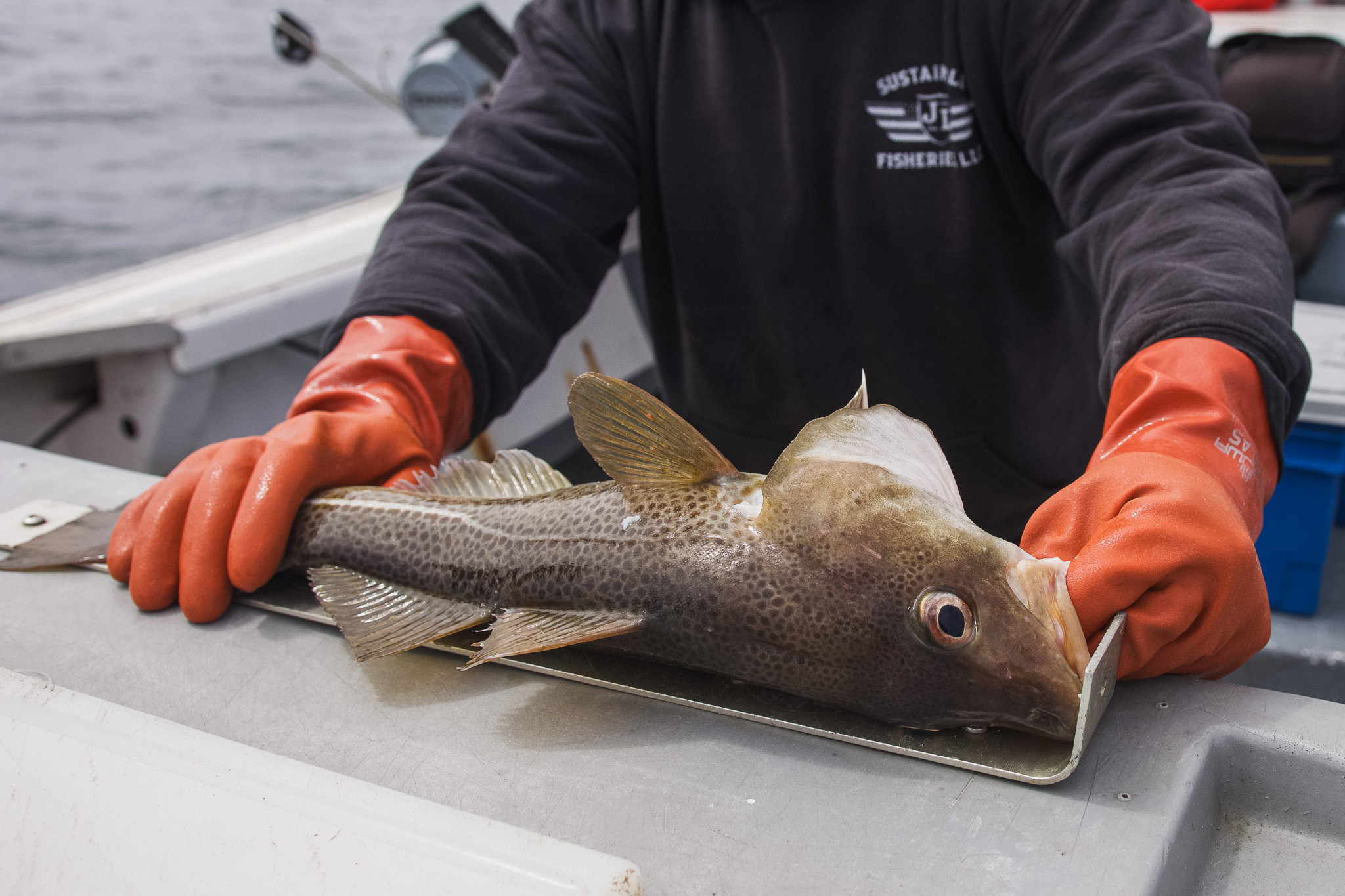
Here in New England, Atlantic Cod (Gadus morhua) is woven into the fabric of our coastal history. For centuries, this species has fueled economies, fed communities, and even left its mark on the map — a testament to the powerful connection between cod and the region it helped define.
But just as cod shaped New England, human activity has shaped cod.
Today, this historically significant fishery is tightly regulated in an effort to rebuild depleted stocks. And yet, effective management depends on understanding something researchers are still uncovering: not all cod are the same.
In this episode of Time and Tide, we explore how scientists, fishers, and managers are rethinking what we know about Atlantic Cod in the Gulf of Maine. Managing fisheries has often been compared to managing a forest, except the trees are invisible and constantly on the move. When it comes to cod, that challenge is even more complex.
Researchers at the University of New Hampshire (UNH) are leading a Sea Grant–funded study examining two distinct stocks of Atlantic Cod in the western Gulf of Maine. Principal Investigator Adrienne Kovach and Co-Investigator Linas Kenter share how winter-spawning and spring-spawning cod differ biologically, and why those differences matter as ocean temperatures change.
In Act Two, we hear from longtime fisherman David Goethel, who brings decades of experience on the water to the conversation. He reflects on how groundfishing in the Gulf of Maine has changed over time and why collaboration between scientists and fishermen is critical to sustaining both the resource and the communities that depend on it.
Finally, Renee Zobel, Marine Program Supervisor with the New Hampshire Fish and Game Department, connects the dots. What do these scientific discoveries mean for the future of fisheries management in New England, and how can management respond to a changing ocean?
Whether you cast a line offshore or order a fish sandwich at your favorite local spot, this episode dives into more than cod biology. It’s a story about the enduring ties between coastal communities and the sea.
Full episode transcript is available below.
Guest Speakers

Linas Kenter, Ph.D.
Aquaculture and Fisheries Research Scientist, New Hampshire Sea Grant and UNH
Adrienne Kovach, Ph.D.
Professor, UNH Department of Natural Resources and the Environment

David Goethel
Commercial Fisherman, Research Biologist and Fisheries Manager
Renee Zobel
Marine Program Supervisor, New Hampshire Fish and Game
Meet Your Host
Brian Yurasits,
Host & Producer
Science Communication Specialist,
New Hampshire Sea Grant
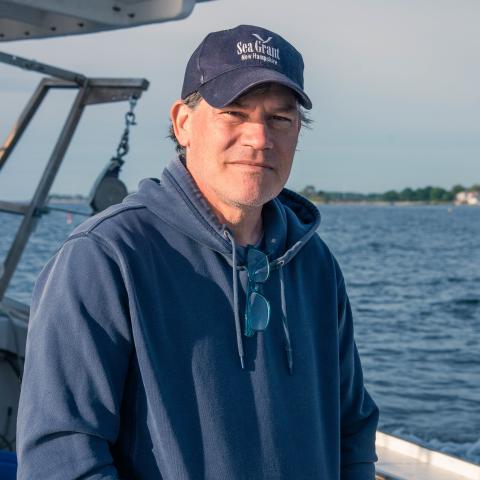
Erik Chapman, Ph.D,
Co-host
Director, New Hampshire Sea Grant
Interim Director, UNH School of Marine Science and Ocean Engineering
More Episodes?
We've got you covered! Time and Tide is available wherever you get your podcasts.
Episode Transcript
Linas Kenter: [00:00:00] I mean, they're good at surviving in deep, dark water, and with that skill comes a lot of interesting physiological powers that we don't think about on land. And they got those big eyes for seeing in the dark, and they have that whisker on their chin is kind of a neat superpower that I wouldn't mind having once in a while.
Brian Yurasits: Can you describe that whisker? What is it called?
Linas Kenter: Ooh. The whisker is a neat sensory organ called the barbel, and it actually has taste buds on it, and it can feel things tactically. So when they're down in that deep, dark water looking for things on the bottom, that little whisker can kind of be scouting things out for them before they eat it.
So it's pretty much like if you could taste something with your finger before you put it in your mouth.[00:01:00]
Brian Yurasits: Here in New England, Atlantic Cod, Gadus morhua, is an iconic fish. It's the state fish of Massachusetts. The Isles of Shoals were named for the abundance of cod. And who can ignore that large landmass that goes by the name Cape Cod. For over 400 years, groundfish such as Atlantic Cod have culturally and economically shaped New England.
However, through that same time human activity has shaped cod populations as well. This historically significant fishery is heavily regulated today in an attempt to bring cod back. But to manage cod effectively, there's still more that we need to learn from them.
I'm your host Brian Yurasits, and welcome to Time and Tide, the podcast from New Hampshire Sea Grant where we explore the science, stories and people behind our changing coastlines.
On today's cod-cast, I'll be joined by my co-host Erik Chapman.
Managing fisheries is hard. It's like managing a forest in which the trees are invisible and keep moving around. [00:02:00] And when it comes to Atlantic cod, researchers, managers, and fishers are all rethinking our understanding of how we manage this species.
As it turns out, not all cod fish are the same. Researchers at UNH are working on a Sea Grant funded study to determine how stocks, or groups of Atlantic Cod, are biologically different from one another, and what this means for how we manage this fish in a changing Gulf of Maine.
First, we'll speak with Adrian Kovach and Linas Kenter. Adrienne and Linas will set the stage with some basic cod history and biology before diving headfirst into their team's latest research. We'll learn why some cod spawn in the winter and others in the spring, and which are more inclined to survive as the waters they live in change.
In Act Two of today's episode, we get the fisherman's perspective with David Goethel, who has a lifetime of experience fishing for groundfish in the Gulf of Maine.
David helps us understand why fishermen should be engaged with the science behind the fish that their livelihoods [00:03:00] rely on, and he shares accounts of how fishing in these waters has changed through the years.
Finally, we'll ask the big question with Renee Zobel, Marine Program Supervisor at New Hampshire Fish and Game. What does all of this mean for the future of fisheries here in New England?
So, whether you enjoy casting a line offshore or eating a fish sandwich, stick around because this is more than a fish story. It's a story about science, resilience, and the ties that bind our communities to the sea.
Let's get underway.
Adrienne Kovach: I am Adrian Kovach and I'm a professor in the Department of Natural Resources and the Environment, and my focus is in wildlife population ecology, and conservation. I use a lot of genetics in my research.
Linas Kenter: My name's Linas Kenter. I am a Fisheries and Aquaculture Research Scientist here with UNH and New [00:04:00] Hampshire Sea Grant.
Brian Yurasits: I saw a fact on NOAA's webpage for Atlantic Cod that mentioned that when they spawn, they have up to 9 million eggs.
Adrienne Kovach: Yeah.
Brian Yurasits: Why do cod release so many eggs when they spawn?
Adrienne Kovach: Most of 'em don't make it.
Linas Kenter: Yeah, survivorship is so low in the ocean and in their environments. That's their evolutionary strategy is just to produce as much as you can in the hopes that some single digit percentage makes it to maturity someday.
Adrienne Kovach: The eggs are floating on the open ocean, they're gonna drift along. Just imagine that a lot of them are just gonna get carried away by the currents, and a lot of 'em just aren't gonna make it.
Brian Yurasits: What kind of other species rely on cod?
Linas Kenter: A lot of things in the same environment will be eating the juveniles, mostly when they're settling to the bottom. At maybe like a couple inches long, then yeah, anything will eat them, even adult cod will be eating the juveniles. Dogfish, hake, anything else down on the bottom there, they'll be very susceptible. But once they get to a certain size around New England [00:05:00] waters, there's not much of anything that'll be eating an adult cod.
They are technically our residential apex predator out there in terms of groundfish.
Adrienne Kovach: Just sharks.
Brian Yurasits: What is the largest that a cod will grow to be?
Adrienne Kovach: Six feet long and 200 pounds, but that is extremely rare. It was more common in the past. There's those iconic photos of children holding cod fish that are like feet taller than them. But nowadays we rarely see them that big, but it can happen.
Linas Kenter: Just another fish physiology fact that unlike humans, we have determinant growth. So like the number of cells in our body and the amount we grow is determined, there's an end point to it. But fish, especially ones like cod that can live really long lifespans like 20 to 30 years, and they're in these deep environments, they don't stop growing for their whole life.
So they're constantly gaining muscle fibers, other types of cells in their body and getting bigger and bigger and bigger. So there's no end to a fish's [00:06:00] growth and that's pretty much universal among fish.
Brian Yurasits: So they just grow until they're eaten or,
Linas Kenter: yep, until the end of life.
Adrienne Kovach: Until they die.
Brian Yurasits: What would you consider to be a very large cod today?
Adrienne Kovach: 40 pounds is a big fish.
Linas Kenter: Yeah, that's huge and I think the key word is today, 'cause it has changed a lot in the last few decades. The average size, the age at maturity, those things are gradually decreasing with all the challenges caught are facing. Yeah, we'll even get excited for like a 15 pound cod nowadays.
Adrienne Kovach: 15 is common, right?
Linas Kenter: Even when I was a kid, we'd be catching 40 pounders on day trips and it's nowhere to be found now.
Brian Yurasits: When you look at a picture of, you know, someone holding up a cod that they've caught, you see this line that runs down the side of it's body. Could you describe what that is as well?
Linas Kenter: It's called the lateral line, and it senses changes in pressure or vibration around the fish's body. Slight differences among species, but basically it's like a channel in their skin that has little sensory cells with hairs on them and they [00:07:00] can very acutely sense changes in water movement and vibration.
So that's how fish school together and they can all feel how they're moving together in that giant school. They can use it during hunting if there's something that moves next to 'em, that's how they can quickly spin around and snatch it. All fish have 'em, but they are kind of that beautiful light brown color on cod, so it sticks out a little bit more than other species.
Brian Yurasits: What else identifies a cod or separates it from other of our local fish, like pollock or haddock? What makes cod, cod?
Linas Kenter: I think other defining characteristics compared to other groundfish, they're this pretty olive-brown color across their body. Traditionally in the offshore fish, they have this nice white, pearly-colored belly. There are other populations of cod inshore and elsewhere where it's a little more olive or red. People debate the reasons behind that, but the traditional offshore cod has that nice brown color, pale lateral line, nice big tail, and also a very big head, very big noggin on a cod [00:08:00] fish.
Brian Yurasits: What do cod consume?
Adrienne Kovach: Yeah, they like lipid rich fish. Forage fish is what they call 'em. So fish that have a high energetic yield for the cod. So things like herring and sand lance and capelin and other they call them clupeids. They'll also eat crab, but crab is less nutritious. The prevailing thought is that cod are eating more crab these days and less of the nutritious forage fish because there are less of those available.
Brian Yurasits: Through time has the forage fish that cod are targeting changed? And through their life cycle, does that change at all?
Linas Kenter: Yeah, it's absolutely changed over time. The oceans are changing, things are getting exploited in different ways. New species are moving up here. I mean, 30 years ago was hard to find a squid around here, and now we get waves of squid every single summer. They've moved up in the food chain priority for cod. While things like Adrienne said, the herring and the capelins, they've become a little [00:09:00] more scarce, so they were historically super important and now harder to find. But overall, the cod is a very opportunistic species. As juveniles, they're a little more foraging off the bottom, literally eating everything, crabs, small lobsters, sea stars. You never know what you'll find in a cod stomach, and as they grow older and older, they tend to really prefer the fish, smaller fish in their diets.
Brian Yurasits: I want to now move the conversation to the history of cod fishing in New England, as that relates to this story of your research on cod.
If you were to tell the story of cod, what do you think are some of the most important chapters to discuss?
Adrienne Kovach: Well, I think we'd have to start with cod have been fished by humans for a very long time, and indigenous peoples fished cod in various ways. They focused a lot on inshore cod, but there's some evidence that they also went a little bit offshore to get cod and cod fishing goes way back.
Cod is really what, [00:10:00] in many ways led to the colonization of North America. It really brought people here. The European waters had been already fished for a long time, pretty heavily, and when folks came here, they saw this incredible abundance of sea life, including incredible amounts of cod fish. Cod then of course, famously fed the colonists.
Brian Yurasits: I mean, you have a whole cape named after cod. You have the Isles of Shoals. I think it's the state fish of Massachusetts as well. Where would you say that our relationship to cod changes?
Adrienne Kovach: I think that would be in the first half of the 1900s. When fishing became more industrialized and the technology became better, for lack of a better word, where more could be landed at that point.
Yeah, the scale of fishing really increased where we went from a single or a few individuals in as small boat doing a lot by [00:11:00] hand to bigger vessels that went out for longer distances and longer periods of time with more equipment, which could get a lot more fish at a time.
Brian Yurasits: If you have heard the story of cod in New England, you hear of the term the collapse of cod. How did that happen? Why did it happen and when did it happen?
Adrienne Kovach: I think the collapse probably started in the early 2000s. There's a study that recreated the history of fishing from fishermen's log books from the late 1800s, and these historians, they were able to, from the log books, estimate that in the 1870s there was an estimated total landing per year of about 80,000 metric tons of cod.
That's a lot. If you move up early 1990s, they were still landing somewhere around 20,000 ish metrics tons. So gone down quite a bit, but still pretty, uh, substantial. As we move into the [00:12:00] 2000s, those numbers declined really rapidly to where over the last several years, the landings are less than 500 metric tons.
And the quota for 2025 was only 345 metric tons.
Brian Yurasits: Wow. What led to that collapse?
Adrienne Kovach: I think there's a lot of theories on that and a lot of contributing factors. So fishing is certainly one piece of it. Fishing pressure was heavy. Management may have been a factor, and assessments and how regulations were made may have been a factor. And a changing climate is also a contributing factor.
So I think those three things in concert have all contributed.
Brian Yurasits: My, I guess final chapter of this story of the history of cod would be, where are we today? Are people still commercially fishing for cod? If you could describe the population of cod in the Gulf of Maine today, how would you describe it?
Linas Kenter: There are definitely still people fishing and excited when a cod comes up out of the water.
But similar to landings, the [00:13:00] effort also mirrors those stats. In the 1980s in New England, we had over a thousand boats going out and groundfishing, and in 2015 ish, that was down to a couple hundred. Today in New Hampshire, we have about. Three groundfish boats at any given time, actively fishing out there.
And then when they are fishing, they are doing everything possible to avoid catching cod because that quota is so small and if you do start catching cod, it becomes very expensive to get that quota space. So the less people are fishing, it also leads to weaker and weaker data. So it's just this compounding effect. Recreationally, we still do have a month here or there in the spring and a month here or there in the fall where people are allowed one cod fish a day at the moment. For the most part, other species have taken priority in terms of market capacity and feasibility to catch, so they're much better off going out to catch monkfish, going out to catch pollock.
Targeting species like that, that are a little more robust at the moment.
Brian Yurasits: You use this term [00:14:00] groundfish. Could you explain that? Like what other species are in that umbrella of a groundfish?
Linas Kenter: Yeah, I might miss one or two here, but it basically encompasses this environment that ranges from about 10 to 60 miles offshore.
This bottom environment where things like cod, haddock, pollock, monkfish, hake all kind of coexist. For the most part, they are on the ground in the ocean.
Brian Yurasits: Are groundfish looked at by scientists and managers in a different way than other species are.
Linas Kenter: They definitely all have their unique quotas and their own surveys.
Basically it's just the fishing industry and seafood buyers that lump these fish together in a category. They can all be treated the same way on the dinner table, and they make these very high quality, nice white, flaky fish that all have kind of similar life histories.
Brian Yurasits: And quickly, before we get into your specific research on cod, what other natural threats are cod [00:15:00] populations faced with, today especially?
Adrienne Kovach: There's a landmark study about a decade ago that found warming waters in the Gulf of Maine have a negative effect on the recruitment of young cod, but they also can negatively impact survival of slightly older cod. And this particular study found that at age four, survival was negatively correlated with warming waters.
Linas Kenter: Yeah, the environment can impact a cod at every single life stage. How long and well an egg develops. It'll determine how, once it hatches, that little larval, helpless cod can get its food availability. Determines where they're drifting and when they're drifting 'cause they need to be landing in the right place to survive. And then, yeah, all the way up to adulthood when those mature fish are looking for a, very often, precise temperature cue, photothermal cue, things from the environment to tell them when and where to spawn.
And if they're not getting that when and where they need it, things aren't gonna be as successful as they could [00:16:00] be. Cod are very social fish. They have migration patterns. They're not like a tuna fish swimming around the entire Atlantic Ocean, but they do move inshore and offshore. And then there's these theories that younger cod learn these migrations from older cod. When a fishery is typically catching those larger, older fish, the younger ones might not learn all the same behaviors that get passed down. And they can even produce different kinds of vocal noises. This is right up your alley with all these microphones right now. They've dropped these things down into spawning cod and you get all kinds of weird vocalizations.
So these fish are talking and learning from each other. When the environment's changing and there's different types of pressures on them, it's gonna cause disruption in their life history.
Adrienne Kovach: And that's an important point about their spawning aggregates. They are very particular about where they spawn and they come back to the same areas to spawn every year, typically. It seems like there are fewer of these locations where they aggregate than there used to be. If the conditions aren't right, [00:17:00] they're not gonna be spawning there.
Linas Kenter: Yeah, so even if they do spawn somewhere else, those single digit survivorship of the young that we talked about is going to be even less when they're not in the place they should be.
Adrienne Kovach: And they select the places where they spawn, their spawning locations are typically in locations where the eggs and the larvae ultimately get retained better, rather than being swept way out to sea with the currents. So that's why the locations where they spawn are actually very important.
Brian Yurasits: This is fascinating, the complexities of cod.
What depths or like what temperatures are ideal for cod outside of these spawning aggregations, like what is an ideal Gulf of Maine look like for cod to thrive?
Linas Kenter: Some of these spawning aggregations are pretty close to shore, and that's where these giant cod were coming in, reproducing, and then leaving again in the summer and going back out to 50 feet of water inshore to 400 feet of water offshore. They like it nice and rocky and rough [00:18:00] bottom 'cause they can use that structure to find and catch their prey. But then they're also in temperatures of usually less than 10 degrees C.
Brian Yurasits: I want to transition here into your research together. There's a specific project that's funded by New Hampshire Sea Grant that we will get into. I figured we could start with what kind of questions were the two of you trying to answer?
Adrienne Kovach: I started working on cod about 20 years ago when colleagues here at UNH told me about these seasonally distinct spawning populations. There are cod that spawn in the winter and cod that spawn in the spring, sometimes in the same bays. That was just a fascinating situation that everybody was puzzling about. Are they different populations? And so they recruited me to study this with genetics to see if they were genetically distinct populations. And they are. Figuring that out led to a series of projects and more collaborations with other cod researchers in the area.
And [00:19:00] together we were really focused on disentangling this population structure of cod across all of the places in US waters where they are spawning. From that, we learned that they do have a pretty complex population structure and there are differences among populations. By now, there are multiple lines of evidence. Multiple projects and collaborations have shown what the distinct populations are, and the managers have used this information to redraw some management boundaries and some management units for the cod fishery. We're currently really interested in looking at the fishery and trying to determine the composition of the fishery with respect to these different populations.
Brian Yurasits: So there's a spring spawning population and there's a winter spawning population. Why would that happen with cod? And are there any distinctions between those two populations?
Adrienne Kovach: It's characteristic of Atlantic Cod in general, so across the range [00:20:00] people have found that cod are very diverse. We call it biologic complexity.
They have a lot of different populations within the species, and there's differences among these populations. It's been shown that there are some potentially ecological differences amongst some of these populations. They might differ in life history strategies, in growth rates, in migratory strategies.
Some of them might be more resident. Some of them might be more migratory, some of them might tend to be more inshore and others spend more time offshore. So there's a series of ecological and physiological differences that can exist amongst these different populations, which basically just adds a lot of diversity to the species. If there's a lot of diversity within the species, there's a lot of potential for it to be able to adapt to different situations. Hasn't put all of its eggs into one strategy, one basket completely.
Brian Yurasits: What methods did you use to [00:21:00] find the cod and research them?
Adrienne Kovach: All the work has been highly collaborative. In my work, I've worked with the fishing community and a lot of fishers have contributed to this effort.
Brian Yurasits: Are they both commercial and recreational fishers?
Adrienne Kovach: Well, in the past to understand the population structure, our samples always came from commercial fishers. But in our new project, we are working with recreational fishers.
Linas Kenter: Cod are just one of those species where if there's a project going on and an opportunity to be involved, boats want to be involved.
There's just such this community out there that, if there's science happening, they wanna be up to date on it and they want to be a part of it. But this one in the Western Gulf of Maine is mostly rec focused, which they're allowed to fish in areas that are different than commercial fishers. So we also want to be looking at what these different areas have in terms of population structure.
The methods are engaging with a boat, whether that be like a six person head boat, or a 50 person party boat. We can meet with captains and crew, go over the [00:22:00] objectives of the project, talk fishing for a while. We have a really nice infographic showing the life history of cod and the fact that there's spring and winter spawners, the crew collects a fin clip off it.
So that's another interesting little technique. We just collect this pinky nail-size piece of the tail fin into a tube that eventually makes it back to the lab where Adrienne has people working. So not only do like captains and crew get a little refresh on the status of cod and be able to get involved, but then over the course of a season, there's thousands of people going out on these boats and getting a little glimpse about fishery science, cod as a species, going home not just with some fish to eat, but also a story.
Brian Yurasits: While working with the fishers, do they ever share intel that they have from their experiences out on the water that you've found useful?
Linas Kenter: So this has definitely led to more questions, especially based around the diet. What are these cod eating? Also a lot of different color theories out there. So there's the white bellies and the olive [00:23:00] bellies, and the red cod, and which ones are where and when. It's not published information anywhere, the only place to hear it is on docks or on boats talking to these people.
Adrienne Kovach: Fishers, they just have a lot of firsthand observational knowledge. Of course, about the fish, but also about the ecosystem as a whole. They have pretty detailed knowledge about the fish population. They know the spawning areas. They know when they know the behaviors. If the fish aren't there, they often know why they're not there.
They have a ton of. Really great expertise and like Linas said, a lot of it is not in a book.
Brian Yurasits: Working with the recreational fishers, what are your research goals in this Sea Grant-specific project?
Adrienne Kovach: We're really interested in trying to understand the composition of the fishery. So we know these two different populations, the winter and the spring spawners, in the winter and spring that they're separate. But the rest of the time they are overlapping, they're mixing, and when they're mixed, that's when the [00:24:00] fishermen can fish them.
When they're being fished, there's really no way of knowing whether that's a winter spawning fish or a spring spawning fish. While we know that these populations are distinct, and so they warrant being managed separately. There's no way to manage them separately if you don't know what you have, if you can't assess them separately.
And the only way you can assess them separately, if you can figure out what's the composition of the fish that are being landed, and so that's what we're trying to do. We have some genetic tools that let us identify which population the fish belong to, and so we're trying to sample the fishery in different ways.
And so in this project, we're trying to sample the recreational fishery, 'cause as Linas said, the recreational fishers go to different places from the commercial fishers. One of the reasons why that's important is we know that the spring spawning cod population is on the decline and it is declining more so than the winter [00:25:00] spawners.
So none of them are doing great, we heard about that. But the spring spawning population is of concern. It will be important to know what proportion of the fish that are being fished are springs spawners. And that will really help managers make decisions about what sort of guidelines they need, what sort of regulations they need on the spring spawners.
Brian Yurasits: Is there any lesson that you've learned that's like stuck with you from doing this field work?
Linas Kenter: I just really appreciate this community science approach in fisheries management. 'Cause it's just a win, win, win type of situation. The public is getting educated on a specific species and research project.
We're, as researchers, able to collect very large amounts of samples very efficiently.
Brian Yurasits: What do you think the future holds for cod in the Gulf of Maine from your research and what you've found so far?
Adrienne Kovach: Well, I'm optimistic that with time, the stocks will rebuild. One of the reasons I think so is that if we take, as an example, Newfoundland Cod.
They're an example that we can look to. Cod stocks [00:26:00] collapsed there in the early 1900s. After that, there was a complete moratorium on cod fishing for decades. But in the last 15 years or so, populations have been slowly rebounding. Hopefully with time they can rebound, and I think it'll be a combination of management and time.
Linas Kenter: I think there's a lot of factors at play here. My optimistic point is that management is also adapting, especially in terms of ecosystem based management, where we're no longer only looking at a single species, numbers going up and down, they're starting to factor in other variables.
The biology of the cod, the fact that it can reproduce in like two years, not 10. The fact that it can produce 9 million eggs from a single female instead of a couple hundred thousand like those are all in its favor and you just need a couple good year classes and the fishery could be back in some degree.
Brian Yurasits: Thanks for taking the time and helping us tell this story of Atlantic Cod.
Adrienne Kovach: Thank you.
Brian Yurasits: [00:27:00] Up next, we speak with David Goethel, the owner and operator of the Ellen Diane, a 44 foot fishing trawler out of Hampton, New Hampshire. David has been fishing since the age of 13 and throughout his career as a commercial fisher, has been actively involved in marine science and policy.
He's also the author of his memoir, Endangered Species: Chronicles of the Life of a New England Fisherman and the F/V Ellen Diane. David shares his personal journey as a small boat fisherman in a changing industry while describing how and why more fishermen should be engaged with marine science.
Stay with us.
David Goethel: My name's David Goethel, I'm a semi-retired commercial fisherman. I started fishing in 1967 as crew on a party boat in Seabrook. Progressed from there to getting a license to carry passengers, which paid for my college education at Boston University, where I graduated with a degree in biology [00:28:00] in 1975. I worked at the New England Aquarium doing original research on Atlantic menhaden.
I went back to fishing in 1977, and I fished continuously until 2022 when I semi-retired. My primary fishery was groundfish. Cod, haddock, pollock, things like that, both on the party boats and in the commercial fishery. I had a small day boat dragger that I had built in 1982, drag a net across the bottom. My target was primarily Atlantic Cod because you got the best price for 'em, and it was the most consistent price.
It didn't jump around tremendous amounts like some other fish.
Erik Chapman: You said you're semi-retired. What keeps you going?
David Goethel: I can't sit still for two seconds. That's what keeps me going. I bought a center console and got a open access handgear B-permit, which allows me to catch 25 pounds of cod, 300 pounds of haddock.
In addition to doing that all summer, I still keep my hand in research on Atlantic cod, which is what I've been most interested in.
Erik Chapman: Can you describe, you know, something that really, like when you're fishing, that this is what keeps me coming back?
David Goethel: I'm at home at sea. I'm not at home on [00:29:00] land. My wife likes to tell me, you get into trouble on land. It's bigger than us all, and if you fight the ocean, I guarantee you're gonna lose.
You have to learn to live with it. Nature holds all the cards and she decides who's dealing.
Brian Yurasits: It sounds like you've been based out of New Hampshire, and I'm just curious how you've seen New Hampshire's fishing fleet change through time.
David Goethel: Well, I think the recreational fleet, what I call commercial recreational, party boats, six passengers, remained relatively constant in terms of total number of people they can take out to sea. But the commercial fishery has first expanded relatively rapidly. Then it started this long shrinking program to where it's nearly gone now. I think we have maybe five active boats, and we had in the early 2000s, nearly a hundred.
Brian Yurasits: Okay, so that's a significant decline throughout your career that's specific to groundfishing, you would say?
David Goethel: That's specific to people that fish for fish. A lot of those people left Groundfish and went to lobstering, so the lobster fleet is probably risen during this time period. But now that has limits on the number of [00:30:00] licenses too.
So it can't really grow anymore for somebody to get in somebody else has gotta get out.
Brian Yurasits: Why was it cod for you? What hooked you on cod earlier in your career, and what drove you to see commercially fishing for cod back then as a viable career for you?
David Goethel: People somewhat derisively call cod the cows of the sea, they grow quite large.
They're very robust in terms of populating themselves and they have a lot of meat on the fish. So there's a good yield from the point of view of the person who cuts it and sells it to you. And it tastes good, a mild, flaky white fish. It's basically sustained a fishery in this part of New England for well over 400 years.
Europeans came here to catch cod, to send it back to Europe. That was their original mission. To go back even further, native Americans fished here for at least 10,000 years.
Brian Yurasits: That market for cod, would you say that's something that connected with you to get into that type of fishing, that fishery itself?
David Goethel: We fish for dollars. I mean, I'd rather catch a thousand pounds of fish at a dollar a pound than 10,000 pounds of fish at [00:31:00] 10 cents a pound. You know, cod are relatively easy to clean. You know how to catch 'em. They're relatively easy to catch. They provide a consistent price in the market.
All the groundfish people in New Hampshire, we're unique. We're a small state, but we're also a small boat state. We participate in the day boat fishery using various gear types. But basically we leave sometime early in the morning. I used to leave at 4:30am. And we are back by six o'clock at night to unload our catch, which is then shipped to market the following morning.
It arrives in the various markets by 6:00 AM and it is then distributed around New England to restaurants and fish markets and other people that want quality white fish.
Erik Chapman: Can you describe, you're not fishing for cod all year round. How does the seasonality work for there?
David Goethel: I like to say we fish for what comes to us, as opposed to large offshore trip boats that target usually one species.
Roughly from April 1st to July 15th, we would fish for cod, haddock, pollock, flounders. From July 15th through maybe the end of October, first part of [00:32:00] November, we would fish for silver hake, which are locally called whiting, red hake and Atlantic herring. Then back to cod, pollock, things like that in the late fall into early winter.
And then we would switch to Northern shrimp, which was a small red pandalid shrimp and fish them in the dead of winter.
Brian Yurasits: It sounds like you're very in tune with the local ecology, how these species are moving, how they're reproducing. How as well do regulations impact your, your year? How do you find out about regulations?
How do you interact with regulators generally? How does that affect your business operations?
David Goethel: So that's over 90 sets of regulations that have been put in place since 1977. They cover all manner of things. Who can fish, where you can fish, when you can fish, what the minimum size limits for the fish are you can catch, uh, how many fish you can keep. The most recent ones are a plan called a sector plan that puts you in groups of fishermen and gives a whole group, not you as an individual, a set amount of fish based on a landing history. Very, very [00:33:00] complex regulations, and quite frankly, if you don't keep up with 'em, very easy to run afoul of.
I used to keep on my dragger of like a bookcase in the forecastle. It had nearly three feet of regulations in it. You had to keep track of everything and make sure when you get in, one of the gentlemen with the tinted windows, the antennas, and the, you know, ear pieces didn't come down and pay you an unpleasant visit.
Brian Yurasits: Who are the regulators that you're working with making these regulations? What are the entities that are involved?
David Goethel: There's another layer of complexity. There are state regulations out to three miles. Then there are federal regulations from three miles to 200. The New England Fishery Management Council writes those federal regulations and NOAA fisheries can accept, reject, or reject the part for a specific legal reason before they're put into effect.
NOAA Fisheries enforces the federal regulations. The state uses State Fish and Game to enforce state regulations, and federal government pays the state to enforce federal regulations at the dock. In addition to that, the [00:34:00] Coast Guard can board you at sea anytime and do a warrantless search. They basically could turn your boat upside down.
They can be looking for anything, undersized fish, could be drugs, anything. There's a lot of enforcement.
Brian Yurasits: I want to leave this creatively up to you. How would you go about telling the story of cod through your years of fishing? Where would you like to start, personally?
David Goethel: Otter trawling, which is dragging the net across the bottom, was introduced in New England, roughly 1905 or so. And this was a big advance in technology. We caught a lot more fish. It also was a very powerful tool. Fishermen always keep careful record. We keep our log books, so yes, we fill out a log book for the feds, but it asks the wrong questions. And over a period of time, you start to look at these and you see very patterns develop. And these fishermen in Gloucester had seen this pattern where most of 'em were day boat fishermen, but with the advent of larger boats, people started trip fishing and fished day and night. So they noticed this decline in the cod and they didn't really know why, but [00:35:00] they knew they had to do something about it.
The fishermen in Gloucester got together and they decided that nobody would fish at night in Ipswich Bay. These were all family boats, Portuguese and Sicilian primarily. A lot of times captains and crews were interrelated by marriage. So they could enforce their own, what I would like to call crude, but effective regulation.
We as fishermen tried to get the New England Fishery Management Council to pass a regulation that you couldn't fish at night, in Ipswich Bay. They got laughed out of the room. The managers didn't understand why. The scientists said, well, what difference does that make? That's really one of the first interactions I had with people who fished for cod.
A man who built my nets was an old time Sicilian. He'd fished from east of the Grand Banks all the way to Cape Henry, Virginia. He was in his eighties. When he finished my nets, you know, I helped him. But when we got all done, we're loading him in the truck to take 'em back to New Hampshire, he told me to bring a bottle of whiskey and be there at nine. I got there at nine. He performed some kind of a blessing in, I don't know if it was Italian or Latin, [00:36:00] on the nets. Sprinkled about a third of the bottle of whiskey over them. Then basically had me swear like a blood oath over a shot of whiskey that I would not use his nets to fish in Ipswich Bay at night. That's how important this was to them. And I didn't. I never did.
Brian Yurasits: It paints a really interesting picture of this community of people and how they started off self-regulating in many ways. Why not fish at night for cod?
David Goethel: Why not fish at night? Well, it turns out that cod spawn at night and they actually have a courtship ritual, and this takes place at night.
It wasn't till the early 2000s that scientists in Scotland actually figured out that this was the case. Again, this is a case where the fishermen knew it but couldn't prove it. The scientists had never really thought about it. And they also need some quiet, they have this ritual they perform. It would be interrupted by fishing gear, crashing, banging on the bottom.
Brian Yurasits: What changed through time? 'cause I know that people refer to the collapse of cod. This story of cod turns into kind of a story of a population that is struggling out there. What year [00:37:00] would you say that comes onto your radar as a fisherman?
David Goethel: Going all the way back to the eighties, we had this kind of boom and boat building and the federal government supplied low interest loans, they wanted to have a first world fishing fleet. So we went on a building boom, and we built too many boats way too quickly, without thinking about the consequences. The result of that building boom was that George's Bank, which is offshore, was depleted. So in 1996, they closed big sections of George's Bank to groundfish, and those boats had to go somewhere.
So where did they go? They came to have Ipswich Bay. When you drove through Hampton Beach on your way home at night, you'd look out there and it looked like a city with all these 80 to a hundred and ten-footers, going back and forth, hoovering up the spawning cod. And sure enough, by 1998, we had no fish in the Gulf of Maine.
The fishermen weren't surprised at all. And so then they started with a whole new round of closures and trip limits. Once they finally got those trip limits low enough and gave the fish half a chance, by the mid-2000s, they were coming back. So we went back to trip limits. It was 800 pounds. To [00:38:00] me, that was perfect.
I get down, I set my gear out on Stellwagon Bank. I'd lock the winches up, go in and take a sip of coffee and start hauling the gear back, and I'd have between 800 and 1200 pounds of card for five minutes. Things were looking good. The trip boats were unhappy, 800 pounds of cod wasn't enough to support a hundred foot boat, so they lobbied the New England Fishery Management Council for a new kind of management, which brought us sectors in 2010.
And by 2014, we collapsed the cod population again.
Erik Chapman: How are those stocks managed and how does that impact you as a fisherman?
David Goethel: Cod were originally broken up into two stocks in American waters. There was Gulf of Maine and George's Bank, so all of Southern New England, New Jersey, all those places were considered George's bank.
The Gulf of Maine was everything to the north of 42 20, to the Canadian border. Those delineations came from the 1950s, when people were first trying to figure out how to manage fish. We had seen things to indicate that they weren't correct, and I worked with scientists to work on this question of [00:39:00] stock boundaries, because if the stock boundaries are wrong, the scientific assessment that occurs based on those stock boundaries has to be wrong. Now, to complicate matters further, research ultimately turned up the fact that there were two cod stocks in the Western Gulf of Maine. Those are ones that spawn in the winter and those that spawn in the spring. So we have two stocks that intermix. They don't intermix when they're spawning, but the intermix in the summer when they move offshore of feed.
So it's a challenging management question, how to make sure you don't take too much of one and too little of the other. So we're still reconciling those issues at the science and management level today. Everybody agrees we want a sustainable fishery, but how you get there involves various amounts of pain inflicted on various people with various types of gear.
The fact is, a dead fish is a dead fish. Doesn't matter whether it's a recreational fishermen going out on a weekend and catching a cod, it's me with my dragger, it's a gill-netter. You've got to figure out the total mortality and then you gotta figure out how to [00:40:00] curtail it by an amount that's going to allow the stock to rebuild.
Brian Yurasits: You through time have found yourself in this role as a translator between the scientists, the fishermen, and the regulators who are all kind of speaking different languages. I'm curious what that was like, and why do you think these three different groups have such a tough time communicating?
David Goethel: I've been trying to figure that out for 40 years.
We're doing better, I would say. People are listening and hearing more than they used to. Part of our problems were, for lack of a better word, societal. Most fishermen don't have college degrees, a lot don't have high school degrees. And then you come in and use these three syllable, four syllable words in a meeting, and they're just sitting there going, what are these people talking about?
But they could talk to each other. Then the managers would talk. Managers are political. Their job is to try and keep the lid on the kettle. There has to be a belief that we're working for the common good and that by following these regulations, I'm going to benefit in the future. It's a [00:41:00] very interesting dynamic.
You probably should go to a council meeting and watch. It's like a minuette and it's very formal, everything means something, but you've gotta figure out what that is on the fly, while you're there.
Erik Chapman: Each have a different set of knowledge, and I guess strengths to their perspective to offer the common good.
What are the strengths of fishermen and what are the strengths of the perspective and knowledge of the scientists and even the strengths of the perspective and knowledge of the managers?
David Goethel: I mean, the fishermen obviously have an economic and social incentive to fish. And they want to do it in a sustainable way.
From the science perspective, good scientists are neutral. They don't come in with a preconceived notion of what the world looks like. They create an experiment and they test it, and they collect robust data that's repeatable. And then knowledge advances. The managers are oftentimes scientists. Sometimes they're straight out politicians, and there are fishermen there as well.
So the management process is a little more complex. Again, as I've said earlier, there's no one right way to manage 'em. So you've got 18 people sitting [00:42:00] around a table, and you might have four or five different ideas on how to get to where we want to get. Then it becomes a matter of who can get 10 votes 'cause it's a majority of people present that vote on a management measure.
Erik Chapman: You felt like the relationship between scientists and fishers is improving. I wonder if you have kind of a vision for how scientists and fishermen could work together ideally. You know, how would you describe how that would work in a way that leverages the knowledge of the fishermen and the approaches of the scientists?
David Goethel: Take a trip back in history to around the year 2000 when our then Senator Judd Gregg was really getting sick of hearing from both sides. But what you had was people seeing two sides of the same coin. His solution was, he appropriated a pot of money to create what was called cooperative research.
Basically told both groups of people, okay, you're a fisherman, find a scientist. Two of you go out and you study these cod, and you come back to me with an answer you can both agree on. That was the birth of cooperative research and we started first with tagging studies to show the depth and breadth of the cod [00:43:00] population, and then we moved on after that to spawning studies where we would put these acoustic tags to prove when they were spawning.
After that, we moved on again to genetic work. Working again with people at UNH. We collected DNA samples, which are basically, you just take a little clip off the tail fin, put it in a vial of alcohol, and from that they can extract the DNA of the fish. What that showed was we had subpopulations of cod within these greater stock boundary areas.
We have got a much clearer handle now on cod than we had 25 years ago, and that's a good thing. I personally believe that we need all our work done by fishermen and scientists working together. And I don't mean the fishermen goes out and tows the net, catches the fish and the scientist collects the data and analyzes it and writes the paper.
Everything I've been involved in, I've been involved from writing up the hypothesis through collecting the fish with the scientist on board, making sure the data was accurate. Yes, the scientist, for the most part, writes the paper, but I have edited papers substantially over my career to make [00:44:00] sure they say what we mean and that they're understandable to more than just the scientific community and that our conclusions are easily understood.
It's one of the bright spots I see in my older age.
Brian Yurasits: What you just said leads directly into the work that Sea Grant is funding with Dr. Kovach and Linas Kenter, who's a part of our team, and their research is doing exactly what you just described, David, using these technologies to differentiate these different stocks of cod.
The spring stock is in rougher shape than the winter spawning stock. I'm curious if you could talk a little bit to what you're seeing in terms of how the Gulf of Maine itself is changing and how that is factoring into the ecology of cod.
David Goethel: The water temperature issue is critically important. Cod are basically moving deeper.
They seek a constant water temperature. Water temperature is critically important. They're still spawning in the same way they used to, but they're doing it in different places. Where those eggs are laid and then float in the water column for a period of time, they're being [00:45:00] distributed differently than they were in a cold water regime.
The Western Gulf of Maine has a cold water gyre in it. The part of the area around the Isles of Shoals down towards Ipswich is controlled by the Merrimack River, the outflow. And the water comes out, kind of swirls around, and it butts up against the prevailing offshore current, which is the remnants of the Labrador current coming down along the Canadian coast into the Bay of Fundy, then down the coast of Maine, and here it passes by roughly in 50 fathoms of water.
We call it the 50 Fathom front. And the water travels to the southeast out there, whereas the water inside of it is trapped in a circle. So when the cod spawn closer to shore, the eggs and then ultimately the larvae are trapped in the Western Gulf of Maine. They swirl around. They hopefully settle on a lot of the hard bottom there near the coast in New Hampshire and Massachusetts.
When they spawn in 50 fathoms, they're swept away to the southeast. There is no structure there for them. There's nothing to eat, and so they, they die. And so that's why you get this [00:46:00] poor recruitment in these warm water regimes.
Brian Yurasits: Where is it that you would like to see more support for this industry?
What maybe makes you hopeful and what areas do you think folks like Sea Grant can lend the biggest helping hand to the commercial fishing fleet that we do have here in New Hampshire waters.
David Goethel: I am hopeful, I think we're traveling down the right research road. You know, the research going on right now that you mentioned earlier.
I collected 385 samples last year and from that I'm gonna be very curious to see how many are winter spawners and how many are spring, because they were caught across a fairly wide geographic area of the Western Gulf of Maine. And I think those types of programs we need to continue to fund. I don't think fishermen, per se, need monetary support.
I actually think that's counterproductive. What they do need is to freeze the footprint of the fishery. We need small boats. The current management regime is to get us down to a relatively small number of relatively large boats, [00:47:00] but it's not good for the fish. Taking an entire school of fish with one large vessel is very different than a number of small vessels, taking small amounts of a number of schools of fish.
We need to keep those large vessels on George's Bank where the small boats really can't go, but they gotta stay there. And conversely, in the regional areas, you need, doesn't have to be a huge number of boats, but it's probably more than five in New Hampshire that are given quotas that are big enough that they can survive.
And so that's probably gonna require a little more economic and social science studies.
Brian Yurasits: Is there anything else that you would want our audience to know, or any other stories that you would like to personally share?
David Goethel: These fish are much more complex than they are painted in textbooks. These fish, when they're spawning, they move out in the mud at night to do it.
But then during the day, they move back on these adjoining pieces of rock, real hard bottom. And they yarn up almost like deer in the winter. Very dense aggregations of these really big fish just sitting on top of each other. I also think [00:48:00] people should know that female cod stop feeding when they get close to being ready to spawn.
Probably to protect themselves, 'cause how do you most often get caught? You open your big mouth and you bite on something you shouldn't. And so they stop feeding, they resorb their livers for energy. That's very important because you've gotta have a big liver, which means you have to have eaten stuff with a high metabolic content.
I see the underwater landscape. People say, well, counting fish is like counting trees in the forest, except you can't see the trees and you don't know how big the forest is. But I see the forest three dimensionally in my head. I know the Western Gulf of Maine in my head better than I know my own backyard.
If you don't believe me, just ask my lawnmower when I whack rocks all the time. 'cause I spent way more time in the Western Gulf of Maine than I spent in my backyard mowing.
Brian Yurasits: Yeah. I just wanted to say, David, thank you for sharing all of these stories.
David Goethel: My goal is to get people to try and understand what's, what's happening here.
And I, I don't mind putting time into it.
Brian Yurasits: Finally, Renee Zobel, Marine Program supervisor at New Hampshire Fish and Game [00:49:00] shares how this cod research has impacted how Atlantic Cod are managed at the state level. Stay with us as our podcast comes to a close.
Renee Zobel: New Hampshire Fish and Game and New Hampshire Sea Grant have been long-term collaborators. Two of the biggest aspects that we've really valued here are exploring research questions. The other is outreach and engagement with commercial fisheries. The cod stock structure work that Dr. Adrienne Kovach has done has changed the way that we manage cod and that is moving forward right now. We have a transition plan. Direct implications of her work will go into effect as we move to more cod stock, which is exactly what the commercial fishermen have been telling us for many years. So it's nice to see their on the water knowledge backed up by the research done by New Hampshire Sea Grant.
Brian Yurasits: That concludes our story of Atlantic Cod on today's episode of Time and Tide. A species that once fueled economies and named land masses like the [00:50:00] Isles of Shoals, now stands as one of the most powerful reminders of how connected we are to the ocean around us. As we heard from Adrienne Kovach and Linas Kenter, not all cod are the same.
Winter spawners and spring spawners are distinct stocks navigating multiple pressures. Their Sea Grant-funded research is advancing our knowledge of Atlantic Cod and engaging fishing communities throughout the process, in the hopes that this helps managers protect the future of this fishery.
From David Goethel we heard what that story feels like on the deck of a boat, the shifts in abundance, the weight of regulation, the pride, frustration, and resilience of a fishing community that wants to be part of the solution.
And from Renee Zobel, we learned how this evolving science is shaping management decisions right here in New Hampshire.
The story of Atlantic Cod is not just about collapse, it's about complexity. It's about learning, sometimes the hard way, that ecosystems are dynamic, that fish populations are not just numbers on a chart, and that good management depends on good science, [00:51:00] collaboration, and trust.
The Gulf of Maine is warming faster than much of the global ocean. But if there's one thing that this cod-cast makes clear, it's that adaptation is possible when researchers, fishers and managers work together. Whether cod will once again thrive at historical levels remains uncertain. What is certain is that the decisions we make today will shape what our coastal communities look like tomorrow.
Time and Tide is produced by New Hampshire Sea Grant. Explore more episodes featuring the latest coastal science happening here in the Granite State, wherever you get your podcasts. And if you like what you've heard, please consider leaving us a review.
See you next time on Time and [00:52:00] Tide.
Credits
Produced by Brian Yurasits, New Hampshire Sea Grant.
Cover photo by Brian Yurasits.
Transcribed by Descript. Edited by Brian Yurasits.
Time and Tide is a production of New Hampshire Sea Grant at the University of New Hampshire. Views expressed on this podcast are not necessarily those of the university, its trustees, or its volunteers.
New Hampshire Sea Grant works to enhance our relationship with the coastal environment to sustain healthy and resilient ecosystems, economies, and communities through integrated research, extension, education, and communications efforts. Based at the University of New Hampshire, New Hampshire Sea Grant is one of 34 programs in the National Oceanic and Atmospheric Administration’s National Sea Grant College Program, a state-federal partnership serving America’s coasts.
University of New Hampshire is an equal opportunity employer, learn more.
Author(s)


